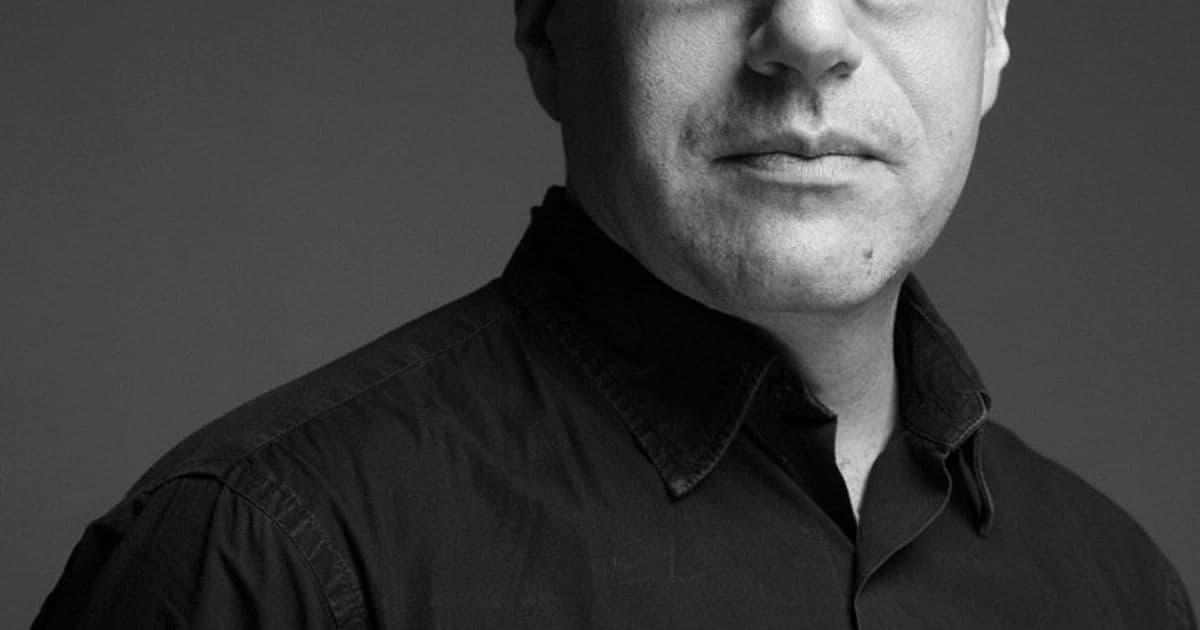
The tech community mourns the loss of Gilles Dowek, whose groundbreaking work on formal methods and the Dedukti framework revolutionized automated reasoning. His interdisciplinary legacy bridges theoretical computer science, philosophy, and advocacy for trustworthy computing.
Gilles Dowek, Pioneer of Automated Proof Systems and Computational Logic, Dies at 58
Gilles Dowek, the visionary French computer scientist whose work redefined automated proof systems and formal verification, has died in Paris at age 58 after battling cancer. His passing marks a profound loss for theoretical computer science, where his contributions to logical frameworks and computational philosophy continue to shape modern software verification, AI safety, and type theory.
Architect of Formal Reasoning
A graduate of École Polytechnique (X1985) and Université Paris-Diderot, Dowek earned his doctorate in 1991 with the thesis "Démonstration automatique dans le calcul des constructions"—a foundational exploration of automated proof within constructive type systems. His career spanned academia and research, including roles as professor at École Polytechnique (2002–2010) and senior scientist at INRIA, where he remained affiliated with the Méthodes Formelles lab at ENS Paris-Saclay until his death.
Dowek's most enduring technical achievement was his pivotal role in developing Dedukti, a universal logical framework enabling interoperability between proof assistants like Coq and Lean. Dedukti's architecture allows mathematical proofs to be written, shared, and verified across formal systems—a breakthrough for software correctness and collaborative theorem proving. This work cemented his status as a leader in formal methods, directly addressing today's challenges in secure software development and reliable AI.
Philosopher of Computation
Beyond code and proofs, Dowek masterfully connected technical rigor with philosophical inquiry. His 2007 book, Les Métamorphoses du calcul (The Metamorphoses of Calculation), dissected how computation transformed mathematical practice, arguing that algorithms represent a new epistemological paradigm. This work earned him the Grand Prix de Philosophie from the Académie Française—a rare honor for an informatician. Later collaborations, like Le temps des algorithmes (The Age of Algorithms) with Serge Abiteboul, examined societal impacts of computational thinking, from privacy to ethics.
His interdisciplinary ethos extended to theater: In 2023, he co-authored Qui a hacké Garoutzia?, an Avignon Festival play exploring human-AI interaction, blending technical insight with narrative creativity.
Legacy of Rigor and Advocacy
Dowek’s influence resonates in critical tech domains:
- Formal Verification: Dedukti underpins efforts to eliminate software vulnerabilities through machine-checked proofs, crucial for aerospace, cryptography, and critical infrastructure.
- Type Theory: His research advanced dependently typed systems, enabling more expressive program specifications.
- Accessible Scholarship: Through award-winning books and lectures, he demystified complex concepts for broader audiences, emphasizing computation’s cultural significance.
Notably, Dowek balanced technical excellence with social advocacy, chairing an organization fighting for LGBTQ+ immigration rights—a testament to his belief in technology’s role in human dignity.
Why Dowek's Work Endures
For engineers and researchers, Dowek’s insistence on "proofs as first-class objects" remains vital amid escalating cybersecurity threats and generative AI uncertainties. His frameworks empower developers to build systems where correctness is mathematically guaranteed—not merely tested. As the industry grapples with technical debt and opaque algorithms, Dowek’s vision of transparent, verifiable computing offers a north star: one where logic serves not just machines, but human trust.
Source: Wikipedia
Comments
Please log in or register to join the discussion