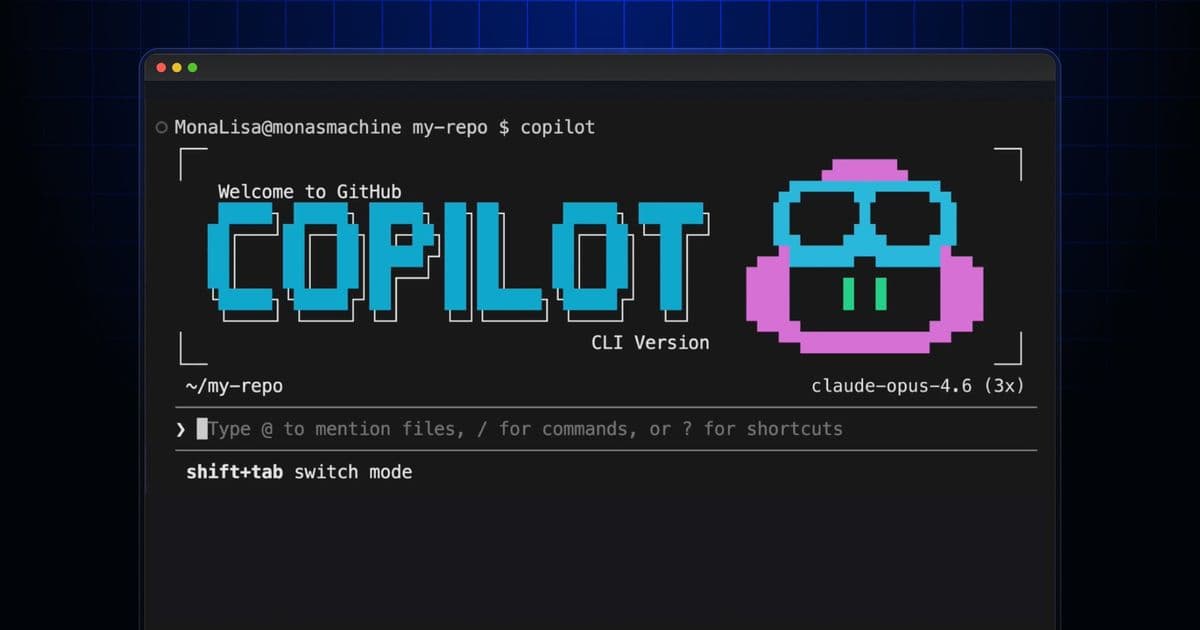
GitHub's latest Copilot CLI enhancement enables simultaneous multi-agent collaboration through the /fleet command, transforming how development teams approach complex, multi-file tasks.
GitHub has announced a significant evolution in its Copilot CLI capabilities with the introduction of /fleet, a slash command that enables parallel execution of multiple AI agents working on different files simultaneously. This advancement represents a fundamental shift from sequential to concurrent processing, potentially accelerating development workflows for complex tasks that span multiple components.
What Changed: From Sequential to Parallel Processing
The /fleet feature introduces an orchestrator layer that fundamentally changes how Copilot CLI approaches tasks. Previously, Copilot would process requests sequentially, working through one file or component at a time. The new architecture decomposes user objectives into discrete work items, identifies dependencies between them, and dispatches independent items as background sub-agents that can execute concurrently.
Each sub-agent operates with its own context window while sharing the same filesystem. The orchestrator coordinates their activities, polling for completion and dispatching subsequent waves of work as dependencies are resolved. This approach mirrors how human development teams operate, with specialists working on different components in parallel while a project lead coordinates integration.
The implementation addresses a key limitation of single-agent systems: context window constraints. By distributing work across multiple agents, /fleet enables Copilot to handle larger codebases and more complex refactoring operations that would overwhelm a single agent's context capacity.
Provider Comparison: GitHub's Approach to Multi-Agent Orchestration
GitHub's implementation of multi-agent orchestration differs from approaches taken by other AI coding assistants in several key aspects:
Architecture Philosophy: GitHub's /fleet emphasizes explicit task decomposition and dependency management rather than attempting to infer parallelism automatically. This provides users with more control and predictability over how work is distributed.
Resource Management: Unlike some competitors that attempt to parallelize within a single context window, GitHub's approach isolates sub-agents while maintaining filesystem coherence. This design prevents context overflow but introduces coordination overhead.
Customization: The ability to define specialized agents in .github/agents/ with unique models, tools, and instructions provides a level of specialization not commonly found in other platforms. This allows organizations to tailor different agents for specific tasks like documentation generation, API development, or testing.
Comparison to Existing Solutions: While other platforms offer parallel processing capabilities, GitHub's integration directly into the CLI workflow represents a more developer-centric approach. Unlike browser-based interfaces that require context switching, /fleet operates within the familiar terminal environment, maintaining the developer's context and workflow.
Business Impact: Productivity and Workflow Transformation
The introduction of /fleet carries significant implications for development teams and organizations:
Accelerated Development Cycles: For tasks involving multiple independent components—such as API development, UI implementation, and test writing—/fleet can reduce completion time from sequential to parallel execution. The potential time savings scale with the number of parallelizable tasks, potentially cutting hours off what would previously be full-day efforts.
Improved Code Consistency: By applying the same model or specialized agents across related components, /fleet can promote greater consistency in code style, patterns, and architecture decisions that might vary when handled by different developers or sequential AI interactions.
Enhanced Maintainability: The explicit dependency mapping required for effective /fleet usage encourages better architectural thinking. Teams must consider component relationships and boundaries, potentially leading to more modular, maintainable codebases.
Resource Optimization: Organizations can strategically assign appropriate models to different tasks—using lighter models for documentation and heavier models for complex logic—optimizing both cost and performance.
Adoption Considerations: The transition to /fleet requires a shift in prompting strategy. Teams must learn to structure objectives with clear deliverables, explicit boundaries, and declared dependencies. This represents an investment in learning but pays dividends in more effective parallelization.
Implementation Strategy and Best Practices
Organizations looking to adopt /fleet should consider the following approach:
Start with High-Parallelism Tasks: Begin with refactoring exercises across multiple independent files or implementing features with separable components (API, UI, tests). These scenarios demonstrate /fleet's value proposition most clearly.
Develop Prompt Engineering Patterns: Effective /fleet usage requires a new prompting discipline. Teams should establish patterns for:
- Specifying concrete deliverables rather than vague objectives
- Defining clear file boundaries and constraints
- Explicitly declaring dependencies between work items
Establish Custom Agent Standards: For organizations with specialized needs, creating standardized agent definitions in .github/agents/ ensures consistent application of appropriate models and instructions for different task types.
Implement Verification Workflows: The /tasks command provides visibility into parallel execution progress. Teams should establish protocols for reviewing parallel execution plans and adjusting prompts when parallelization isn't achieved as expected.
When to Use /fleet
/fleet excels in scenarios with natural parallelism:
- Multi-file refactoring operations
- Documentation generation across several components
- Feature implementation spanning API, UI, and tests
- Independent code modifications with no shared state
For strictly linear, single-file tasks, traditional Copilot CLI remains simpler and equally effective, as /fleet introduces coordination overhead that isn't justified for simple operations.
Conclusion
GitHub's /fleet represents a significant advancement in AI-assisted development, moving beyond single-agent assistance to coordinated multi-agent workflows. While it introduces new complexity in prompt engineering and dependency management, the potential performance gains for complex development tasks make it a compelling addition to the developer toolkit.
As organizations explore this capability, the most successful implementations will likely combine technical understanding of /fleet's orchestration model with strategic consideration of which development scenarios benefit most from parallel processing. The teams that master this balance will position themselves to achieve substantial productivity gains in their development workflows.
For more information on implementing /fleet in your development workflow, refer to the official GitHub Copilot CLI documentation.
Comments
Please log in or register to join the discussion