
GitHub Security Lab releases seclab-taskflow-agent, an extensible framework enabling community-driven vulnerability discovery through AI-assisted workflows and Model Context Protocol integration.

GitHub Security Lab has launched an open-source framework that reimagines collaborative security research through AI automation. The seclab-taskflow-agent enables security researchers to create shareable workflows combining natural language processing with traditional security tools like CodeQL, representing a strategic shift toward community-powered vulnerability discovery.
The Framework Architecture
At its core, the framework uses YAML-based taskflows – customizable sequences of security research steps executed by AI agents. These taskflows integrate specialized toolboxes through Model Context Protocol (MCP) interfaces, creating a modular system where:
- Agents handle task execution using predefined personalities
- Toolboxes provide security capabilities (e.g., GitHub Advisory API access)
- Memcache facilitates inter-task data sharing
Strategic Differentiation
Unlike closed-source AI security tools, GitHub's approach emphasizes transparency and collaboration:
| Capability | seclab-taskflow-agent | Proprietary Alternatives |
|---|---|---|
| Audit Process Transparency | Full workflow visibility | Opaque analysis |
| Knowledge Sharing | Public taskflow repositories | Vendor-locked insights |
| Extensibility | Community-contributed toolboxes | Closed ecosystem |
| Cost Structure | Open-source (PyPI packages) | Subscription-based |
Implementation Pathways
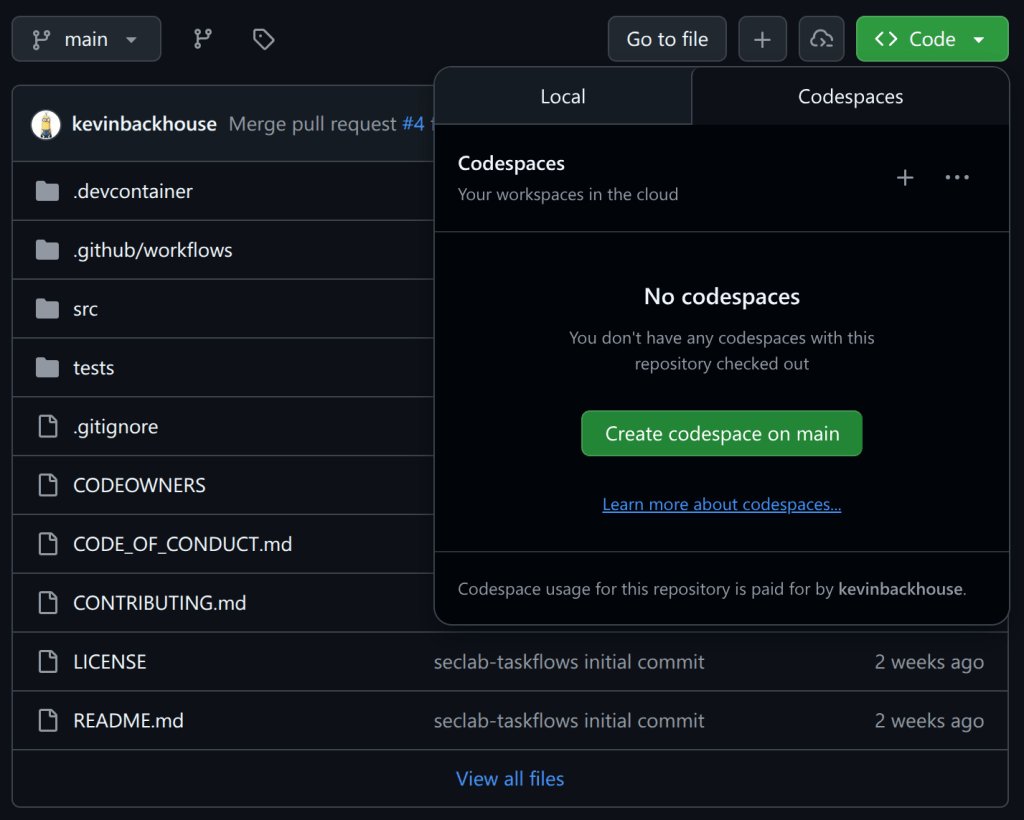
Organizations can deploy the framework through multiple runtime environments:
- GitHub Codespaces (recommended for quickstart)
- Local Linux environments (installation guide)
- Docker containers (pre-configured with security tools)
Business Impact
This framework fundamentally changes vulnerability discovery economics:
- Accelerated Research: Taskflows automate repetitive audit steps, reducing investigation time
- Knowledge Preservation: Shared workflows institutionalize security expertise
- Vulnerability Surface Reduction: Community contributions scale impact across ecosystems
- Migration Path: Integrates with existing CodeQL investments via MCP extensions
Collaboration Model
The framework uses Python's packaging ecosystem for community contribution:
- seclab-taskflow-agent provides core runtime
- seclab-taskflows offers sample implementations Developers can create custom taskflow packages using hatch and publish to PyPI.
Future Vision
GitHub Security Lab positions this as foundational technology for collective security advancement. By transforming vulnerability discovery patterns into shareable taskflows, organizations gain:
- Reduced dependency on individual researcher expertise
- Consistent application of security heuristics
- Scalable audit capabilities across dependency graphs
The framework is currently experimental but available for immediate deployment. Security teams can start exploring its capabilities using the variant analysis demo on GitHub repositories.
Comments
Please log in or register to join the discussion