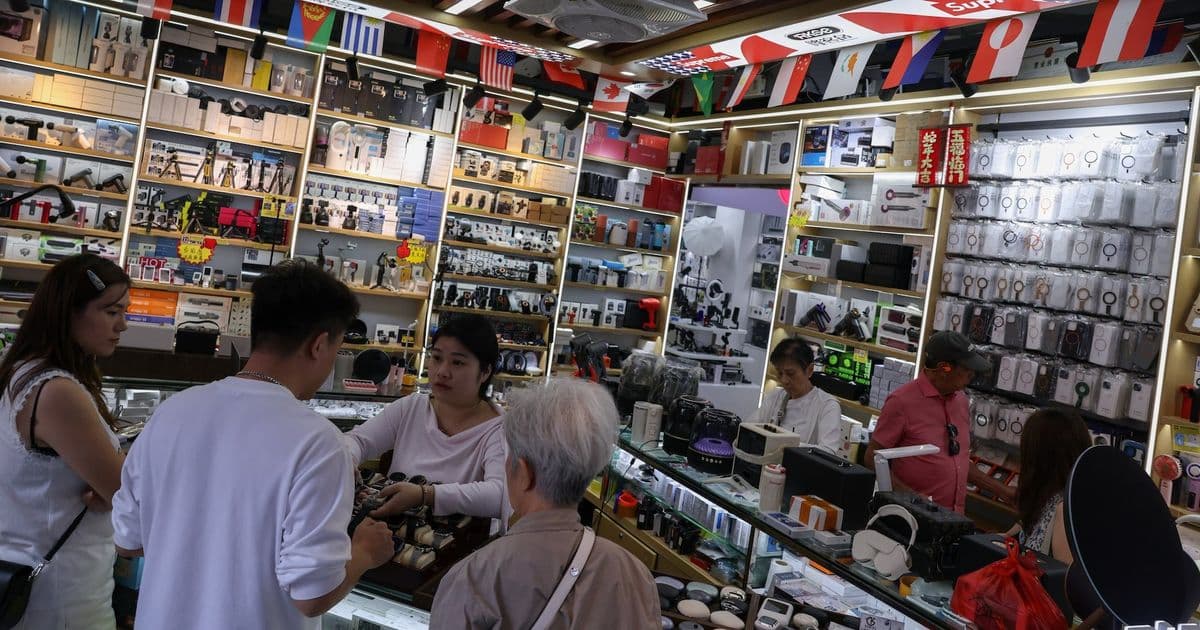
IDC forecasts the largest-ever decline in global smartphone shipments as surging memory prices drive up device costs, with 1.12 billion units expected in 2026.
Global smartphone shipments are projected to plummet by 12.9% year-over-year in 2026, marking the market's largest-ever decline, according to a new forecast from International Data Corporation (IDC). The research firm predicts shipments will fall to 1.12 billion units, the lowest level in over a decade, as surging memory prices drive up device costs and dampen consumer demand.
The dramatic forecast comes amid a perfect storm of challenges facing the smartphone industry. Memory chip prices have skyrocketed due to supply constraints and increased demand from AI applications, data centers, and other high-performance computing devices. This has forced manufacturers to either absorb higher component costs or pass them on to consumers through more expensive devices.
"The smartphone market is facing unprecedented pressure from multiple directions," said Ryan Reith, program vice president with IDC's Worldwide Mobile Device Trackers. "Memory price increases are just one factor, but they're particularly impactful because memory represents a significant portion of a smartphone's bill of materials."
Memory Price Surge Drives Up Device Costs
The memory chip market has experienced extreme volatility over the past year. Prices for DRAM and NAND flash memory have surged by double-digit percentages as demand from AI servers and data centers has competed with smartphone manufacturers for limited supply. Major memory producers like Samsung, SK Hynix, and Micron have struggled to keep pace with demand while managing production capacity.
This has created a challenging environment for smartphone makers who must now decide whether to reduce profit margins or raise prices. Many have chosen the latter, leading to higher average selling prices (ASPs) for new devices. However, this strategy risks alienating price-sensitive consumers who may delay upgrades or opt for cheaper alternatives.
Consumer Behavior Shifts Amid Economic Uncertainty
Beyond component costs, broader economic factors are contributing to the projected decline. Global economic uncertainty, inflation concerns, and geopolitical tensions have made consumers more cautious about discretionary spending. The smartphone upgrade cycle, which had already been lengthening in recent years, is expected to extend further as people hold onto devices longer.
"We're seeing a fundamental shift in how consumers view smartphone purchases," noted Nabila Popal, research director with IDC's Mobility and Consumer Device Trackers. "What was once considered a regular upgrade is now being treated more like a major appliance purchase, with consumers waiting until their current device is truly obsolete before replacing it."
Regional Variations in Market Performance
The impact of these trends varies significantly by region. Developed markets in North America and Western Europe are expected to see the steepest declines as consumers there have greater access to financing options and are more sensitive to price increases. Emerging markets in Asia, Africa, and Latin America may fare slightly better, though they're not immune to the global supply chain disruptions.
China, the world's largest smartphone market, presents a particularly complex picture. While domestic brands like Huawei, Xiaomi, and Oppo continue to innovate and compete aggressively, the overall market is saturated and facing demographic headwinds from an aging population and declining birth rates.
Industry Response and Strategic Shifts
Smartphone manufacturers are responding to these challenges in several ways. Some are focusing on premium segments where margins are higher and consumers are less price-sensitive. Others are exploring new form factors like foldables and rollables to create differentiation and justify higher prices. Still others are doubling down on software and services to create ecosystems that lock in customers and generate recurring revenue.
"The industry is at an inflection point," said Anthony Scarsella, research manager with IDC's Mobile Device Trackers. "Companies that can successfully navigate this period of transition by offering compelling value propositions and innovative features will emerge stronger, while those that rely solely on incremental hardware improvements may struggle."
Looking Beyond 2026
While the 2026 forecast is grim, IDC sees potential for recovery in the longer term. Several factors could drive a rebound, including the maturation of 5G networks, the emergence of new AI-powered features, and potential stabilization in memory prices. Additionally, the replacement cycle for smartphones purchased during the pandemic may create a natural bump in demand as those devices age.
However, the research firm cautions that the industry may never return to the growth rates seen in previous decades. The smartphone market appears to be maturing into a replacement-driven business rather than a growth market, similar to what happened with personal computers and televisions.
Impact on the Broader Tech Ecosystem
The projected decline in smartphone shipments has implications beyond just device manufacturers. App developers, accessory makers, and component suppliers all depend on a healthy smartphone market. A prolonged downturn could force consolidation in the supply chain and accelerate the shift toward integrated hardware-software services models.
Chip manufacturers, in particular, may need to diversify their customer bases as smartphone demand softens. Many are already investing heavily in AI, automotive, and industrial applications to reduce their dependence on consumer electronics.
Historical Context
If the forecast proves accurate, 2026 would mark the largest single-year decline in smartphone history, surpassing the 10.1% drop seen in 2020 during the early months of the COVID-19 pandemic. The industry has weathered previous downturns, including the 2008-2009 financial crisis, but those were typically shorter and less severe than what's being projected for 2026.
The current situation is unique in that it combines supply-side constraints (memory prices) with demand-side pressures (economic uncertainty) in a way that creates a particularly challenging environment for manufacturers and consumers alike.
What Comes Next
As the industry braces for this significant downturn, all eyes will be on how major players like Apple, Samsung, and emerging Chinese brands adapt their strategies. The next year will likely see increased experimentation with pricing models, financing options, and new product categories as companies seek to maintain revenue growth despite declining unit sales.
For consumers, the outlook suggests that while there may be fewer new smartphone models introduced in 2026, those that do arrive may offer more advanced features and capabilities as manufacturers focus their R&D efforts on premium segments. The challenge will be whether these innovations can justify the higher prices that memory cost increases are likely to necessitate.
Comments
Please log in or register to join the discussion