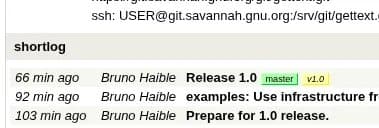
After more than three decades of development, GNU gettext has finally reached version 1.0, introducing new LLM-powered translation tools alongside traditional internationalization improvements.
After more than 30 years of continuous development, GNU gettext has finally reached version 1.0, marking a significant milestone for one of the most fundamental tools in open-source internationalization. The journey began in the early 1990s when Sun Microsystems started developing gettext, with the GNU Project taking over development in 1995. Today, this ubiquitous localization system powers multi-lingual support across countless open-source projects and has been adapted for numerous programming languages.

The leap from version 0.26 (released last July) to 1.0 represents more than just a number change. This release introduces several substantial improvements while maintaining backward compatibility with existing projects that depend on gettext for their internationalization needs.
New LLM-Powered Translation Tools
Perhaps the most notable addition in GNU gettext 1.0 is the integration of Large Language Model (LLM) capabilities through two new programs: msgpre and spit. These tools represent a significant evolution in how developers can approach translation workflows.
msgpre: Applies machine translation to an entire PO (Portable Object) file using a locally installed LLMspit: Provides machine translation for individual messages
The decision to implement LLM support locally rather than relying on cloud-based services aligns with the free software philosophy that underpins the GNU Project. This approach ensures that translation workflows remain under the user's control and don't introduce dependencies on proprietary services.
However, the documentation accompanying these new features includes an important caveat: users must carefully consider the licensing of any LLM they choose to use. This warning reflects the GNU Project's commitment to free software principles and ensures that developers remain aware of potential licensing conflicts when incorporating AI-powered translation into their localization workflows.
Traditional Improvements
Beyond the AI-powered features, GNU gettext 1.0 includes several traditional enhancements that improve the core functionality developers have relied on for decades:
- PO file handling improvements: Enhanced parsing and processing capabilities for translation files
po-fetchprogram: A new utility to automatically fetch translated PO files from translation project websites- Ocaml and Rust improvements: Better support for these increasingly popular programming languages
These improvements demonstrate that while GNU gettext is embracing modern AI technologies, it remains committed to strengthening its core functionality and supporting the languages that developers actually use in production environments.
The Significance of 1.0
Reaching version 1.0 after more than three decades is a symbolic achievement that reflects the stability and maturity of the gettext system. For years, the project maintained a 0.x versioning scheme, which typically indicates that a project is still evolving rapidly or hasn't yet reached a stable API. The move to 1.0 suggests that GNU gettext has achieved a level of stability where breaking changes are less frequent and the core API can be considered mature.
This milestone is particularly noteworthy given gettext's role as infrastructure for countless other projects. Many developers interact with gettext indirectly through frameworks and libraries rather than using it directly, making its stability crucial for the broader open-source ecosystem.
Looking Forward
The integration of LLM features into a tool as fundamental as gettext signals how AI technologies are becoming integrated into the core tooling that developers rely on daily. Rather than being a separate, specialized tool, AI capabilities are being woven into established workflows in ways that enhance rather than replace existing processes.
For developers working on internationalized applications, GNU gettext 1.0 offers an interesting preview of how AI might augment traditional localization workflows. The ability to leverage local LLMs for translation tasks could significantly speed up the development process while maintaining the control and privacy that many organizations require.
GNU gettext 1.0 is available for download from GNU.org, where developers can access the full release notes and documentation for the new features.
Comments
Please log in or register to join the discussion