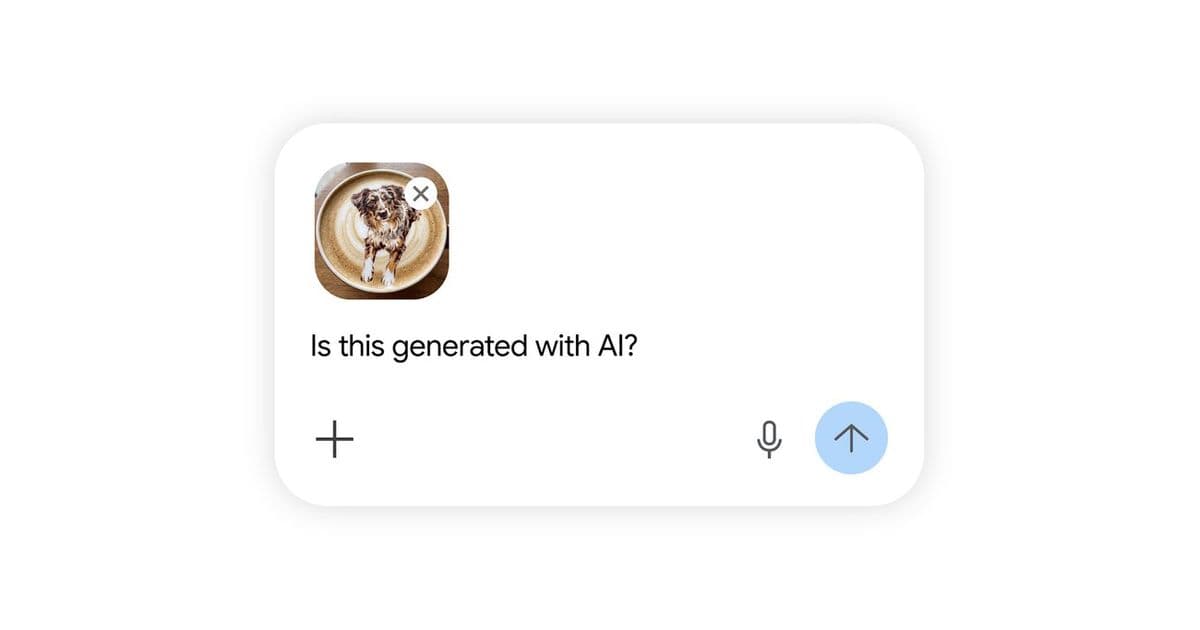
Google is rolling out comprehensive content transparency tools across its cloud and consumer platforms, integrating SynthID watermarking with C2PA standards to help users verify digital content origins. The expansion includes new verification capabilities in Search, Gemini, Chrome, and Pixel devices, along with an enterprise API for businesses to detect AI-generated content.
Google's latest announcement represents a significant evolution in digital content verification, reflecting the growing need for transparency in an era of increasingly sophisticated generative media. The company is expanding its content provenance tools across multiple platforms, creating a comprehensive ecosystem that addresses both consumer-facing verification needs and enterprise-level content authentication requirements.
Expanding the Content Verification Infrastructure
At the core of Google's approach is the continued development of SynthID, their digital watermarking technology that embeds imperceptible signals into AI-generated content. Since its introduction three years ago, SynthID has watermarked over 100 billion images and videos and 60,000 years of audio—a remarkable scale that demonstrates the technology's maturation and adoption.
What's particularly noteworthy is Google's dual-pronged approach: SynthID for Google's own generative media, combined with C2PA (Coalition for Content Provenance and Authenticity) Content Credentials as an industry standard. This hybrid strategy allows for both proprietary watermarking and broader industry interoperability, addressing the complex nature of digital media ecosystems where content flows across multiple platforms and services.
Platform-Specific Implementations and Comparisons
Google's implementation varies across platforms, each tailored to specific use cases:
Consumer Devices: Pixel Camera Authentication
The Pixel 10 introduced native Content Credentials for images in its camera app, with plans to expand video support to Pixel 8, 9, and 10 devices in coming weeks. This represents a significant differentiator in the smartphone market, where Apple and Samsung have yet to implement comparable native content verification at the point of capture. By embedding authentication directly in the camera hardware, Google creates an immutable record of content provenance that's difficult to manipulate or remove.
Search and Verification Tools
Google is integrating verification capabilities into Search through Lens, AI Mode, and Circle to Search features. The addition of conversational queries like "Is this made with AI?" represents a natural progression from traditional metadata inspection to more intuitive verification methods. This approach contrasts with Microsoft's similar Bing efforts by leveraging Google's vast dataset of indexed content and its Gemini AI model for more nuanced analysis.
Enterprise Solutions: Google Cloud AI Content Detection API
Perhaps most significant for enterprise customers is the new AI Content Detection API on Google Cloud's Gemini Enterprise Agent Platform. This tool allows businesses to identify AI-generated content from both Google and other popular models, addressing a critical need for platforms managing large volumes of user-generated content.
Comparing this to similar offerings:
- AWS has Rekognition for content moderation but lacks specific AI-generated content detection
- Azure's Content Moderator focuses more on policy compliance than content provenance
- Google's solution appears more comprehensive, offering detection across multiple model types rather than just proprietary solutions
This enterprise API enables businesses to implement content verification at scale, with applications ranging from backend operations like feed sorting and fraud prevention to user-facing content labeling and fact-checking systems.
Industry Collaboration and Standards Development
Google recognizes that content verification requires industry-wide cooperation, not just proprietary solutions. The company's partnerships with OpenAI, Kakao, and ElevenLabs to adopt SynthID technology demonstrate a commitment to cross-platform compatibility. Similarly, the collaboration with NVIDIA to watermark AI-generated video from their Cosmos world foundation models shows how content verification can be integrated into the generative AI pipeline itself.
As a member of the C2PA steering committee, Google is helping shape global standards for content provenance. This positions the company as a thought leader in the space, with Meta's recent announcement to label camera-captured media with Content Credentials on Instagram demonstrating the growing industry adoption of these standards.
Business Impact and Strategic Implications
The expansion of Google's content verification ecosystem has several significant business implications:
Trust and Reputation Management
For media companies and platforms, these tools offer a way to maintain trust with audiences by providing clear information about content origins. This becomes increasingly important as AI-generated content becomes more indistinguishable from human-created content.
Regulatory Compliance
As governments worldwide begin implementing regulations around AI-generated content (like the EU's AI Act), having robust verification tools becomes essential for compliance. Google's comprehensive approach positions the company to help customers meet these emerging requirements.
Competitive Differentiation
In the cloud services market, content verification represents a new frontier for differentiation. While AWS and Azure offer various AI and ML services, Google's integrated approach spanning from consumer devices to enterprise cloud creates a unique value proposition.
Content Monetization and Rights Management
The ability to verify content origins has significant implications for intellectual property rights management. Media companies can better protect their content from unauthorized use, while creators can more easily prove ownership of their work.
Implementation Considerations and Challenges
Organizations considering adopting these content verification tools should evaluate several factors:
Technical Integration
Implementing content verification requires integration with existing content pipelines. For media companies, this means modifying content management systems to support metadata preservation and verification. For social platforms, it requires developing user interfaces that clearly communicate content provenance information without overwhelming users.
User Experience Considerations
The effectiveness of content verification tools depends on adoption, which in turn depends on user experience. Google's conversational approach in Search and Gemini represents an attempt to make verification more accessible, but the challenge remains balancing transparency with information overload.
Interoperability Concerns
While standards like C2PA promote interoperability, the reality is that different platforms may implement content verification in different ways. Organizations should evaluate solutions that work across multiple ecosystems rather than being locked into a single provider's approach.
Looking ahead, Google's content verification strategy appears to be part of a broader vision for a more transparent digital ecosystem. By integrating verification at multiple levels—from the device that captures content to the cloud services that process and store it—Google is creating a comprehensive approach to content provenance that could set the standard for the industry.
The success of these efforts will ultimately depend on adoption across the entire content ecosystem, from creators and platforms to consumers and regulators. As digital media continues to evolve, the ability to understand content origins will become increasingly important, making Google's expansion of these tools both timely and significant.
Comments
Please log in or register to join the discussion