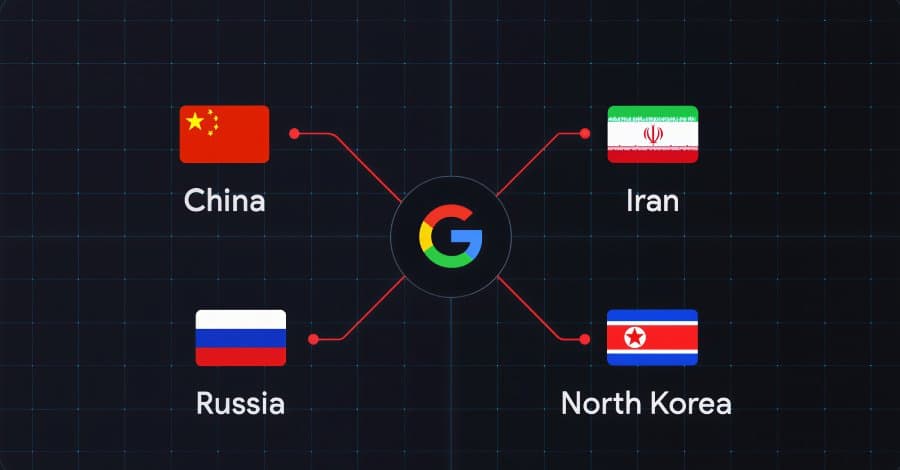
Google Threat Intelligence Group reveals state-sponsored actors from China, Iran, Russia, and North Korea conducting multi-vector cyber operations against defense industrial base entities worldwide.
Google Threat Intelligence Group (GTIG) has unveiled a comprehensive analysis of coordinated cyber espionage campaigns targeting the global defense industrial base (DIB) sector, revealing sophisticated multi-vector attacks orchestrated by state-sponsored actors from China, Iran, Russia, and North Korea.
The Four-Pronged Attack Strategy
The tech giant's threat intelligence division identified four primary attack vectors being employed against defense entities:
- Battlefield Technology Targeting: Striking defense entities deploying technologies on the frontlines, particularly in the Russia-Ukraine conflict
- Employment Process Exploitation: Direct approaches to employees and manipulation of hiring processes by North Korean and Iranian actors
- Edge Device Exploitation: Use of network appliances and edge devices as initial access pathways by China-nexus groups
- Supply Chain Vulnerabilities: Manufacturing sector breaches creating cascading security risks
"Many of the chief state-sponsors of cyber espionage and hacktivist actors have shown an interest in autonomous vehicles and drones, as these platforms play an increasing role in modern warfare," GTIG noted in its analysis.
Russian Threat Actors: Advanced Tactical Operations
APT44 (Sandworm)
- Targeting encrypted messaging applications (Telegram, Signal) after physical device access
- Deploying "WAVESIGN" Windows batch script to decrypt Signal desktop app data
- Focus on battlefield intelligence gathering in Ukraine
TEMP.Vermin (UAC-0020)
- Distributing malware including VERMONSTER, SPECTRUM, and FIRMACHAGENT
- Lure content centered on drone production, anti-drone systems, and video surveillance
- Strategic targeting of defense technology development
UNC5125 (FlyingYeti/UAC-0149)
- Highly targeted campaigns against frontline drone units
- Reconnaissance via Google Forms questionnaires
- Malware distribution including MESSYFORK (COOKBOX) to UAV operators
- Android malware "GREYBATTLE" (Hydra trojan variant) targeting Ukrainian military AI company
UNC5792 (UAC-0195)
- Exploiting Signal's device linking feature for account hijacking
- Targeting Ukrainian military, government entities, and international organizations
- Expanding operations to Moldova, Georgia, France, and U.S. entities
UNC4221 (UAC-0185)
- Similar Signal exploitation tactics to UNC5792
- Android malware "STALECOOKIE" mimicking Ukraine's DELTA battlefield management platform
- ClickFix delivery of TINYWHALE downloader leading to MeshAgent remote management software
UNC5976 & UNC6096
- Russian espionage clusters conducting phishing campaigns
- Malicious RDP connection files and WhatsApp-based malware delivery
- DELTA-themed lures targeting Ukrainian telecommunications infrastructure
UNC5114
- Suspected Russian cluster delivering CraxsRAT Android malware
- Masquerading as Kropyva combat control system updates
- Targeting Ukrainian battlefield applications
North Korean Cyber Operations
APT45 (Andariel)
- Targeting South Korean defense, semiconductor, and automotive manufacturing
- Deploying SmallTiger malware for persistent access
APT43 (Kimsuky)
- Infrastructure mimicking German and U.S. defense entities
- Deploying THINWAVE backdoor for espionage operations
UNC2970 (Lazarus Group)
- Operation Dream Job campaign targeting aerospace, defense, and energy sectors
- Leveraging AI tools for enhanced reconnaissance capabilities
Iranian Cyber Activities
UNC6446
- Using resume builder and personality test applications as malware delivery vectors
- Targeting aerospace and defense sectors across U.S. and Middle East
- Custom malware development for specific industry verticals
Chinese Cyber Operations
UNC3236 (Volt Typhoon)
- Reconnaissance against North American military and defense contractor portals
- ARCMAZE obfuscation framework for attribution evasion
UNC6508
- Targeting U.S.-based research institutions via REDCap exploit
- Deploying INFINITERED malware for persistent remote access and credential theft
- Intercepting application upgrade processes
APT5 (Keyhole Panda/Mulberry Typhoon)
- Targeting current and former aerospace and defense contractor employees
- Tailored phishing lures based on insider knowledge
UNC1549 (Nimbus Manticore)
- Targeting Middle Eastern aerospace, aviation, and defense industries
- Malware families including MINIBIKE, TWOSTROKE, DEEPROOT, and CRASHPAD
- Lazarus Group-style Dream Job campaigns for credential harvesting
China's Advanced Evasion Techniques
Google observed Chinese threat groups utilizing operational relay box (ORB) networks for reconnaissance, significantly complicating detection and attribution efforts. These networks mask the true origin of attacks while maintaining persistent access to target systems.
The Broader Threat Landscape
The defense industrial base faces a "state of constant, multi-vector siege" according to Google's assessment. Beyond state-sponsored espionage, financially motivated actors conduct extortion campaigns against the sector and broader manufacturing base.
"The campaigns against defense contractors in Ukraine, threats to or exploitation of defense personnel, the persistent volume of intrusions by China-nexus actors, and the hack, leak, and disruption of the manufacturing base are some of the leading threats to this industry today," GTIG concluded.
Key Takeaways for Defense Organizations
- Enhanced Messaging Security: Implement multi-factor authentication and device verification for secure messaging applications
- Employment Process Vetting: Strengthen background checks and verification for defense sector hiring
- Edge Device Hardening: Regular security updates and monitoring of network appliances and edge devices
- Supply Chain Risk Management: Comprehensive vendor security assessments and continuous monitoring
- AI-Powered Defense: Deploy advanced threat detection leveraging artificial intelligence to counter sophisticated reconnaissance techniques
This coordinated campaign demonstrates the evolving sophistication of state-sponsored cyber operations, with adversaries leveraging both technical exploits and social engineering tactics to penetrate defense industrial targets globally.
Comments
Please log in or register to join the discussion