Google DeepMind CEO confirms Gemini will not feature ads despite ChatGPT's new sponsored content experiments, highlighting divergent AI monetization strategies.
In a significant divergence of AI monetization strategies, Google DeepMind CEO Demis Hassabis has confirmed Gemini will remain advertisement-free, even as OpenAI rolls out sponsored content in ChatGPT. This announcement comes during OpenAI's testing phase of ads for free and $8/month ChatGPT Go users in the United States, raising questions about how major AI platforms will fund development while maintaining user trust.
Speaking at the World Economic Forum in Davos, Switzerland, Hassabis noted he found it "interesting" that ChatGPT introduced ads "so early," suggesting OpenAI might "feel they need to make more revenue." While leaving the door open for potential future changes, Google currently has no plans to integrate ads into Gemini. This positions Google's approach as more cautious compared to OpenAI's aggressive monetization timeline.
How ChatGPT Ads Work
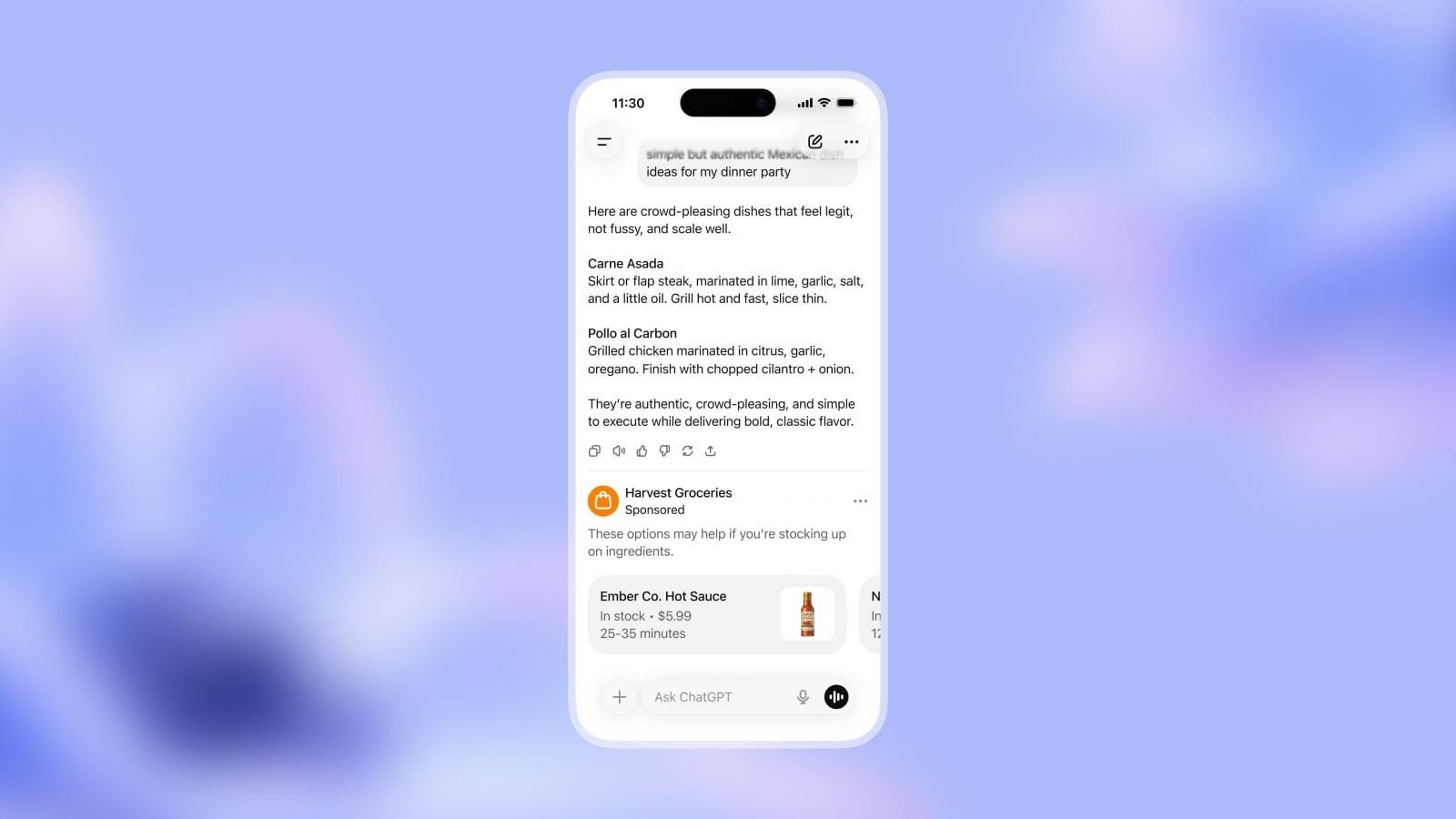
OpenAI's ad implementation displays sponsored links contextually at the bottom of ChatGPT responses. For example, when discussing travel destinations, a hotel booking service ad might appear. Crucially:
- Ads appear only when relevant to the conversation topic
- Users can dismiss ads and provide feedback
- Sensitive topics like health, mental health, and politics remain ad-free
- Paid tiers (Plus, Pro, Business, Enterprise) won't display ads
The company states ads help "reduce usage limits or keep access free for more people" without altering how answers are generated. This suggests ads subsidize free access as operational costs grow with ChatGPT's massive user base.
Practical Implications for Users
Ad avoidance options: Users preferring ad-free experiences should consider ChatGPT's paid tiers starting at $20/month for Plus. Gemini currently requires no payment to avoid ads.
Contextual relevance: Ads appear based on conversation topics, so users discussing commercial products/services should expect more sponsored content.
Privacy considerations: While OpenAI claims ads don't use conversation data for targeting, users should review OpenAI's data policies to understand how queries might influence ad delivery.
Enterprise safeguards: Businesses using ChatGPT Enterprise can completely avoid ads while maintaining commercial data protections.
The Revenue Dilemma
AI platforms face enormous infrastructure costs—estimates suggest ChatGPT spends ~$700,000 daily on computing resources alone. Google leverages its established ad ecosystem across Search and YouTube, potentially reducing pressure to monetize Gemini immediately. OpenAI, as a relatively newer player, lacks equivalent revenue streams, making ads a pragmatic solution despite potential user experience trade-offs.
Industry analysts note this represents a broader split in AI philosophy: Google appears prioritizing user experience and trust-building first, while OpenAI seeks faster monetization to sustain operations. As Hassabis observed, "We're still in the early stages of figuring out sustainable models for these services."
Future Outlook
Neither company has committed to permanent positions. Google's statement leaves room for future ad integration, while OpenAI could refine or scale back ads based on user feedback. What remains clear is that ad-supported models introduce new considerations:
- How will ad presence impact user perception of AI neutrality?
- Can contextual ads maintain relevance without compromising response quality?
- Will ads create perverse incentives for steering conversations toward commercial topics?
For now, Gemini users enjoy ad-free interactions across all tiers, while ChatGPT free users become test subjects in the industry's first major experiment with AI advertising. As these platforms evolve, transparency about monetization strategies will be crucial for maintaining user trust.
Comments
Please log in or register to join the discussion