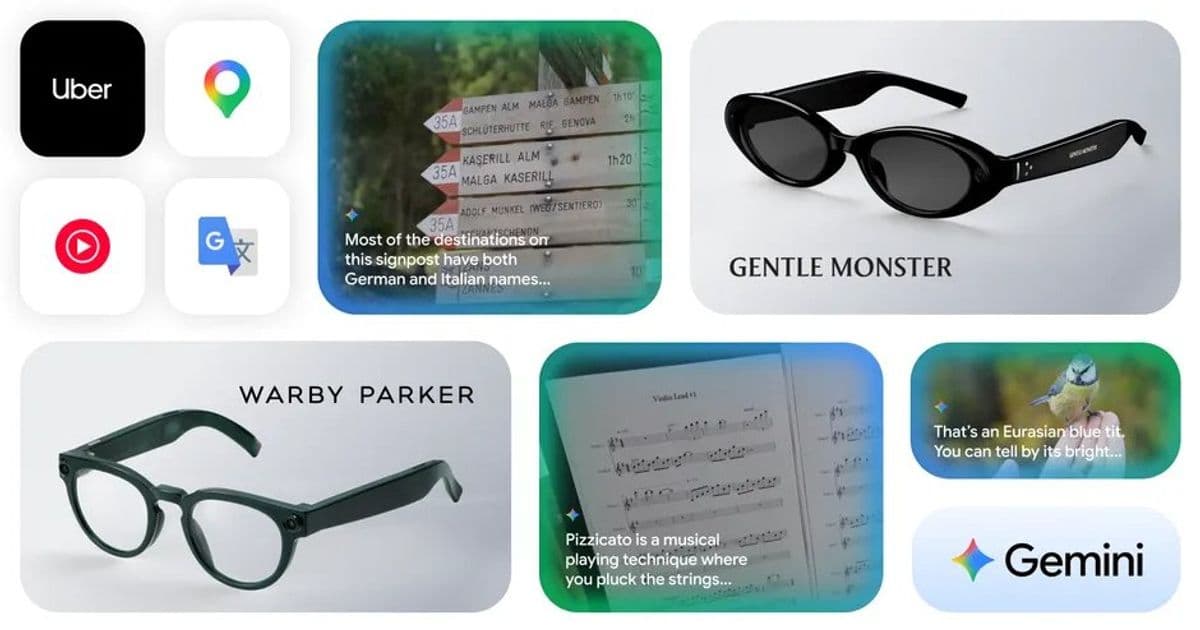
Google is set to revolutionize wearable tech with its Android XR smart glasses launching this fall, developed in partnership with tech giants and fashion brands, featuring deep integration with the Gemini AI assistant.
What's New
Google has officially confirmed its entry into the smart glasses market with the upcoming Android XR platform, scheduled to launch this fall after initial development announcements in December 2025. The company's vision appears to be creating a wearable device that provides contextual assistance without pulling users away from their physical environment—a significant departure from the smartphone-centric approach that currently dominates digital interaction.
The Android XR ecosystem represents Google's most ambitious foray into augmented reality wearables to date. Unlike previous attempts like Google Glass, which faced privacy concerns and limited functionality, this new platform has been developed in collaboration with Samsung and Qualcomm, ensuring robust hardware support. The partnership extends to the fashion realm as well, with Google working closely with Gentle Monster and Warby Parker to create frames that blend technology with everyday eyewear.
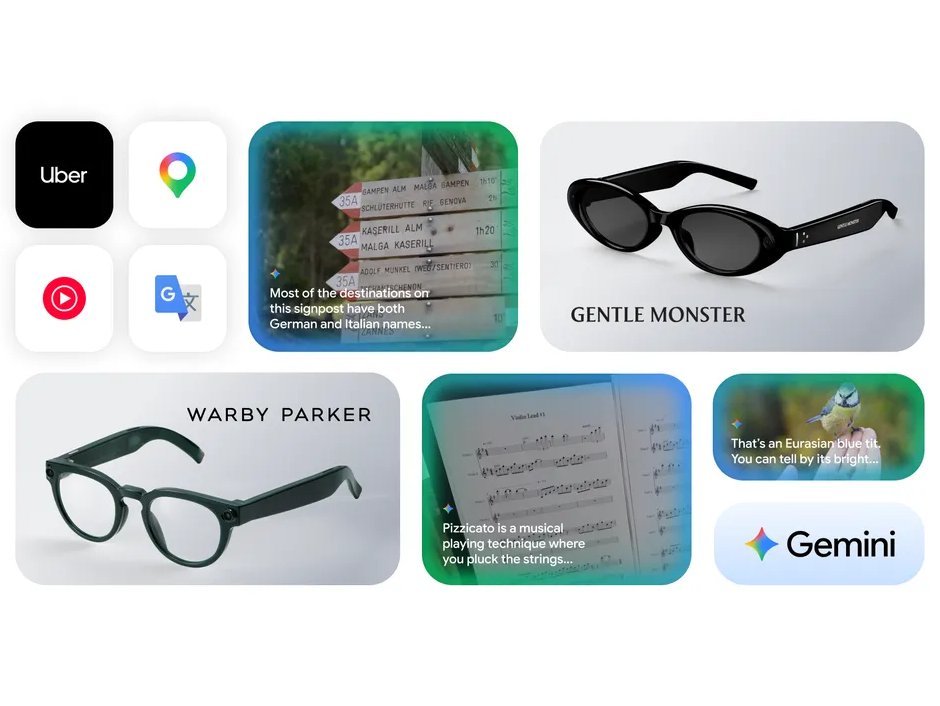
The platform will launch in two distinct configurations. The first model focuses on audio-only functionality, featuring built-in speakers and voice assistance capabilities. This approach appears designed for users who want hands-free assistance without visual overlays. The second category integrates micro-displays directly into the user's field of view, allowing for contextual information to appear seamlessly in the user's line of sight.
Gemini AI integration stands as the centerpiece of the Android XR experience. Users can activate the assistant through voice commands ("Hey Google") or by tapping the side of the frame. Once activated, Gemini can interact with users in several ways:
- Visual recognition: The AI can answer questions about what users are seeing in real-time
- App interaction: Control and interact with smartphone applications through voice commands
- Navigation: Provide turn-by-turn directions based on the user's gaze, suggesting nearby places and adding stops to routes
- Content creation: Capture photos and videos through voice commands, with AI editing tools like Nano Banana for object removal or image enhancement
- Translation: Offer real-time translation while preserving the speaker's tone and voice characteristics
Perhaps most impressive is Gemini's ability to handle multi-step tasks in the background. For example, the system can place a coffee order through DoorDash while the user's phone remains in their pocket, only requiring final confirmation for the transaction.
How It Compares
The smart glasses market has seen numerous attempts over the past decade, with varying degrees of success. Apple's Vision Pro represents the current high-end benchmark in spatial computing, but at a significantly higher price point and with a focus on immersive experiences rather than subtle augmentation. Google's approach appears more practical for everyday use, prioritizing lightweight functionality over full-fledged mixed reality.
Compared to Meta's Ray-Ban smart glasses, which focus primarily on audio and basic camera functions, Google's Android XR platform offers significantly more AI integration and contextual awareness. The inclusion of displays in one model also positions it as a more direct competitor to devices like the Ray-Ban Meta smart glasses with displays.
Google's previous attempt at smart glasses, Google Glass, struggled with privacy concerns, social acceptance, and limited functionality. The Android XR glasses appear to address these shortcomings by focusing on subtle assistance rather than constant recording, partnering with established eyewear brands for better aesthetic integration, and leveraging the more mature Gemini AI for genuinely useful features.
The battery capacity of at least 0.37 Wh suggests these glasses will prioritize lightweight design over extended battery life. This aligns with Google's apparent focus on short-duration, high-utility interactions rather than all-day wear. The mention of "light liquid and dust protection" indicates the devices are designed for incidental protection rather than rugged use, further supporting the everyday wearability focus.
Who It's For
The Android XR smart glasses appear ideally suited for several user demographics:
Tech enthusiasts who want to be early adopters of AI-augmented reality will appreciate the integration of Google's advanced Gemini AI. The glasses offer a glimpse into the future of human-computer interaction without requiring the learning curve of more complex AR systems.
Professionals in fields requiring hands-free assistance could benefit significantly. The navigation features would be particularly valuable for delivery personnel, warehouse workers, or field technicians who need directions while keeping their hands free for tasks.
Fashion-conscious consumers who want technology without the "geek factor" will appreciate the collaboration with Gentle Monster and Warby Parker. These partnerships suggest Google understands that wearable tech must blend seamlessly with personal style to achieve widespread adoption.
Language learners and international travelers will find the real-time translation features particularly valuable, especially with the preservation of vocal characteristics that could make conversations feel more natural.
The two-model approach allows Google to cater to different preferences. Those who want minimal distraction might opt for the audio-only version, while users who benefit from visual overlays would choose the display-equipped model. This flexibility could broaden the appeal beyond traditional tech adopters.
Pricing remains a significant unknown, but given Google's history and the partnerships involved, we can expect the audio-only model to be positioned in the $200-300 range, while the display-equipped variant could command $400-600, depending on the display technology and additional features.
Potential concerns include battery life expectations, given the modest capacity mentioned, and the practicality of voice commands in noisy environments. Additionally, the glasses' functionality will likely depend heavily on smartphone connectivity, raising questions about standalone usability.
As we approach the fall launch, Google will need to demonstrate clear use cases that justify another device in users' lives. The promise of contextual assistance without distraction is compelling, but execution will determine whether these glasses become the next must-have wearable or another interesting but ultimately unnecessary tech gadget.
The Android XR platform represents Google's most thoughtful approach to wearable computing yet, combining hardware partnerships, fashion integration, and advanced AI in a way that previous attempts have failed to achieve. Whether it will finally bring smart glasses into the mainstream remains to be seen, but the fall 2026 launch will undoubtedly be a significant moment in the evolution of augmented reality.
Comments
Please log in or register to join the discussion