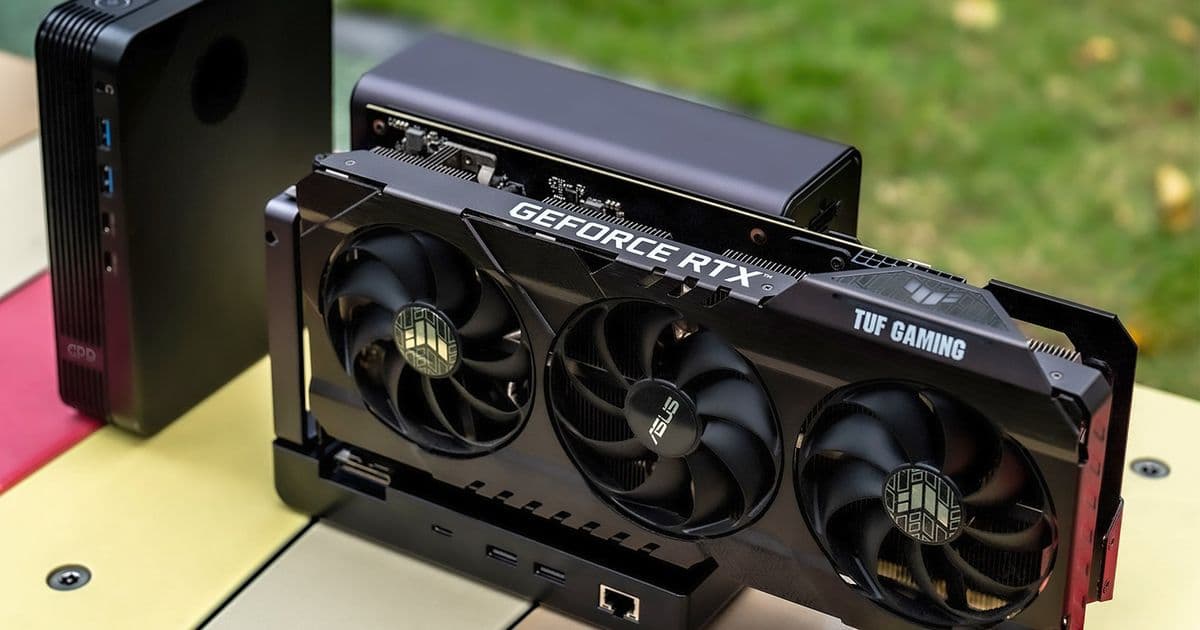
GPD introduces its GPD BOX mini PC and GPD G2 graphics dock, featuring cutting-edge MCIO 8i connectors with PCIe 5.0 x8 capabilities, enabling unprecedented external graphics performance for compact computing systems.
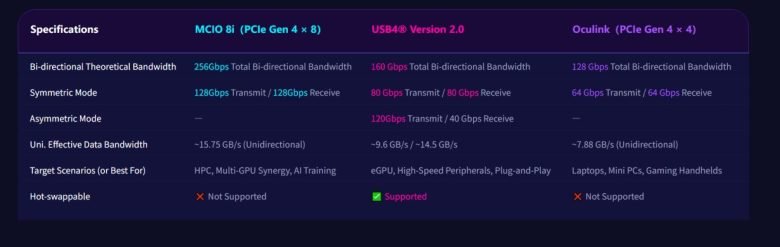
Handheld gaming PC specialist GPD is expanding its product portfolio beyond portable devices with two new innovations: the GPD BOX mini PC and the GPD G2 graphics dock. What makes these products particularly noteworthy is their implementation of MCIO 8i (Mini Cool Edge IO) connectors with support for PCIe 5.0 x8 connections, offering data transfer speeds up to 256 Gbps—potentially quadrupling the bandwidth of traditional 4-lane OCuLink solutions.
Understanding MCIO 8i Technology
The MCIO 8i connector represents a significant step forward in external connectivity for consumer devices. While this standard has been commonplace in server environments for years, its adoption in consumer-grade hardware remains relatively novel. This mirrors the trajectory of OCuLink, which transitioned from enterprise to consumer markets several years ago, primarily through Chinese mini PC and handheld gaming PC manufacturers.
The MCIO 8i implementation in GPD's new products enables a theoretical maximum bandwidth of 256 Gbps, which could theoretically support data transfer rates up to four times faster than solutions using 4-lane OCuLink adapters. However, as with any connection technology, real-world performance may vary based on numerous factors including the specific components involved and the nature of the workload.
The GPD BOX Mini PC: Performance in a Compact Form
The GPD BOX represents GPD's entry into the mini PC market, featuring a sleek design packed with impressive specifications. The device will be available in two distinct configurations, each targeting different user needs:
Model 1: MCIO-Enabled Variant
This version includes an Intel Core Ultra 7 356H processor with 4-core Intel integrated graphics and, most importantly, the MCIO 8i port that enables high-speed connection to the GPD G2 graphics dock. This model is clearly aimed at users who want the flexibility of a mini PC with the option to expand graphics capabilities externally.
Model 2: Integrated Graphics Powerhouse
The second variant features an Intel Core Ultra X7 358H processor with higher-performance 12-core Intel Arc B390 integrated graphics. Interestingly, this model does not include the MCIO connector, suggesting GPD is targeting two distinct market segments: those who need expandable graphics capabilities and those who prioritize all-in-one performance without external dependencies.
Both models share several impressive specifications:
- Intel Panther Lake processor architecture
- Support for up to 64GB of LPDDR5x-8533 memory
- Dual M.2 slots (one PCIe 5.0 x4 and one PCIe 4.0 x2)
- Dual 2.5 GbE LAN ports for high-speed networking
- Two USB4 v2 ports supporting speeds up to 80 Gbps each
GPD markets the USB4 v2 ports as offering 160 Gbps bidirectional bandwidth, which is technically accurate if combining uplink and downlink speeds, though users won't achieve 160 Gbps in a single direction.
The GPD G2 Graphics Dock: Desktop Graphics Performance on the Go
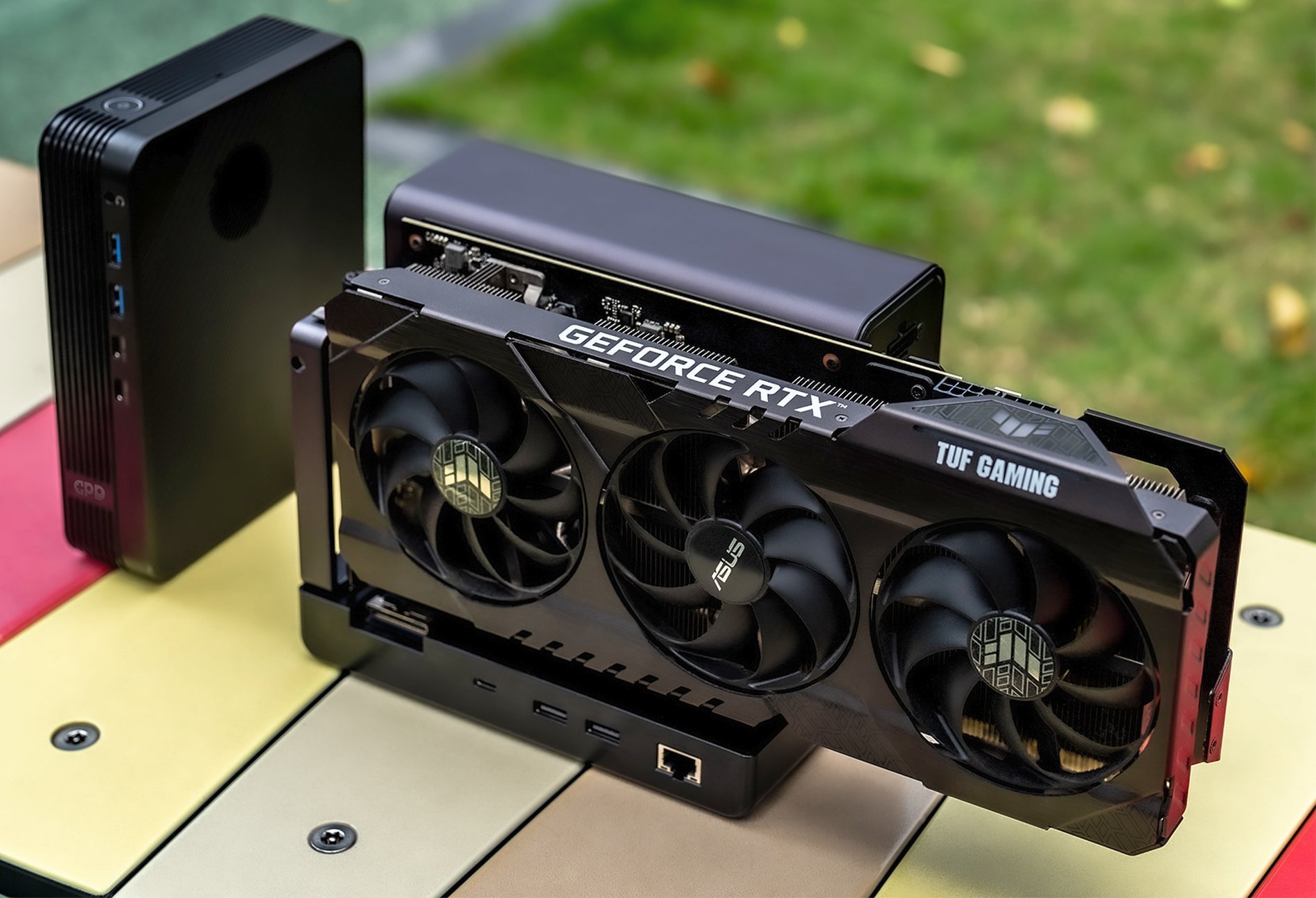
Complementing the GPD BOX is the GPD G2 graphics dock, a substantial peripheral designed to bridge the gap between mini PCs and desktop graphics performance. Key specifications include:
- Physical PCIe x16 connector (limited to 8 lanes) for accommodating full-size graphics cards
- M.2 2280 slot for an optional PCIe 3.0 x2 SSD, providing additional storage capabilities
- Integrated fan cooling system and 800W power supply to handle demanding graphics cards
- MCIO 8i and USB4 v2 connection options for flexible compatibility
- Gigabit Ethernet port and multiple USB 3.2 Gen 2 ports for peripheral connectivity
- Aluminum-magnesium alloy construction for durability and heat dissipation
- Compact dimensions of 157.3 x 119.8 x 182mm (6.2" x 4.7" x 7.2")
Performance Implications and Real-World Expectations
GPD claims that when using an NVIDIA RTX 4090 graphics card with the GPD G2 dock connected via MCIO 8i, performance should be only about 2% slower than the same card inserted directly into a PCIe x8 slot in a desktop computer. This represents a significant improvement over traditional external graphics solutions, which typically suffer from substantial performance penalties due to bandwidth limitations.
The USB4 v2 connection in the GPD G2 offers up to 80 Gbps of bandwidth, but this is limited to PCIe 4.0 x4 speeds for GPU applications, meaning it won't fully utilize the dock's potential when connected via this interface rather than MCIO 8i.
Market Context and Future Outlook
While GPD isn't the first to implement PCIe 5.0 x8 connections in consumer devices, their approach differs from existing solutions. The Khadas Mind devices use a proprietary interface for similar functionality, but only with other devices featuring the Khadas Mind Link interface. Similarly, the Beelink GTi15 Ultra and Beelink EX Pro graphics dock support PCIe 5.0 connections but are only compatible with each other.
GPD's implementation of MCIO 8i stands out because it uses an established standard rather than a proprietary solution. This could potentially enable broader compatibility beyond GPD's own products, as MCIO 8i is already widely used in server environments. Theoretically, the GPD G2 graphics dock could work with other mini PCs featuring MCIO 8i ports, and vice versa.
Currently, the compatibility landscape is limited primarily to GPD's own products, as few consumer devices feature MCIO 8i connectors. However, given GPD's history of innovation in the handheld PC space, it wouldn't be surprising to see MCIO 8i ports appearing in future handhelds and other devices from the company.
Developer and User Considerations
For developers and power users, these devices offer several compelling advantages:
Development Flexibility: The ability to use a high-performance mini PC with expandable graphics capabilities is ideal for development work that benefits from both portability and substantial GPU resources.
Content Creation: The combination of powerful processors and optional desktop-grade graphics makes these systems suitable for light to moderate content creation workflows.
Gaming Performance: While not replacing high-end desktops, the GPD BOX with GPD G2 offers significantly improved gaming performance compared to traditional mini PCs or integrated graphics solutions.
Space Efficiency: For users who need substantial computing power but are constrained by space, this combination provides a compelling alternative to full desktop systems.
As GPD hasn't yet announced pricing or availability details, potential customers will need to wait for official information. However, based on the specifications and performance claims, these products appear positioned to make a significant impact in the compact computing and external graphics markets.
The adoption of MCIO 8i technology represents an important step in bridging the performance gap between integrated and discrete graphics in compact form factors. As this technology gains traction, we may see more manufacturers embracing similar standards, ultimately benefiting consumers with more options and potentially lower prices as competition increases.
Comments
Please log in or register to join the discussion