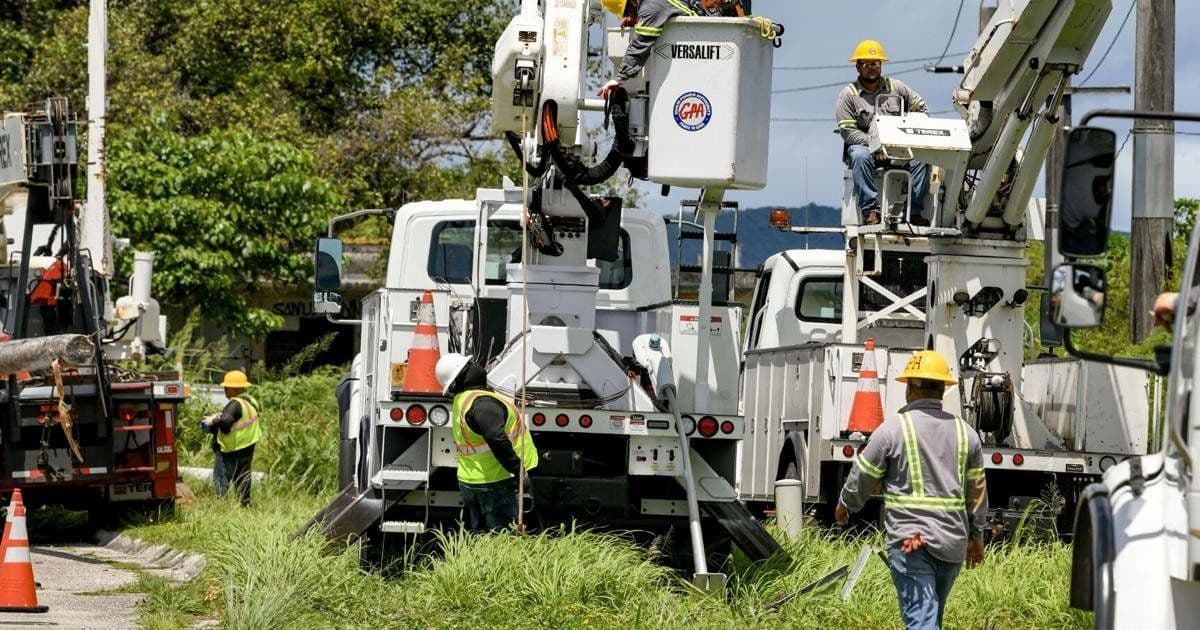
Guam Power Authority seeks $1.5B in federal funding to bury critical transmission lines, aiming to slash post-typhoon recovery from 50 days to under three weeks. The proposal highlights infrastructure vulnerability in climate hotspots and raises complex questions about military energy independence as nuclear reactors enter the equation.
In the wake of Typhoon Mawar's devastating 50-day power outage in 2023—which destroyed 36,000 poles and 1,000+ miles of lines—Guam Power Authority (GPA) is pursuing a radical infrastructure overhaul. General Manager John Benavente presented a $1.5 billion proposal to federal and military officials to underground critical transmission corridors, framing it as essential for both civilian resilience and Department of Defense (DoD) readiness.
Engineering Resilience Against Climate Threats
Burying the island's most vulnerable lines would create a hardened north-south transmission backbone connecting generation assets and critical facilities. This targeted approach contrasts with the prohibitive $8B cost of full undergrounding. Benavente emphasized the operational payoff: restoration times could plunge from Mawar's 50-day ordeal to "less than half" that duration.
"In Typhoon Pongsona in 2002, it took over three months to recover. In 2023 in Mawar, it took 50 days—still not fast enough," Benavente stated at the Guam Defense Forum.
The funding mechanism is non-negotiable. Passing costs to ratepayers would require a 55% power bill increase, an untenable burden. With DoD representing 20% of GPA's load—and projected to surge from 45MW to 100MW+ by 2028 due to military expansion—federal investment is positioned as strategic mutual interest.
Military Load Growth and the Nuclear Wildcard
GPA forecasts system load will hit 305MW by 2028, met by:
- 454MW conventional generation
- 235MW solar
- 170MW storage
Yet looming over this expansion is the specter of military energy independence. Consolidated Commission on Utilities Commissioner Simon Sanchez voiced concern about DoD potentially deploying Small Modular Reactors (SMRs) post-2032 when its current power agreement with GPA expires.
"They have an unlimited wallet, and they could say, ‘Hey, never mind. We’re leaving. We’re segregating,’" Sanchez cautioned, noting SMRs’ higher costs but the DoD's capacity to absorb them.
This tension underscores a critical infrastructure crossroads: Federal investment in hardened grid infrastructure now could bind military and civilian systems for decades—or accelerate divergence if nuclear options materialize. With House NDAA provisions already mandating reports on Guam nuclear deployments, GPA's undergrounding proposal becomes not just a resilience play, but a strategic bid for relevance in the island's energy future.
Source: Guam Pacific Daily News
Comments
Please log in or register to join the discussion