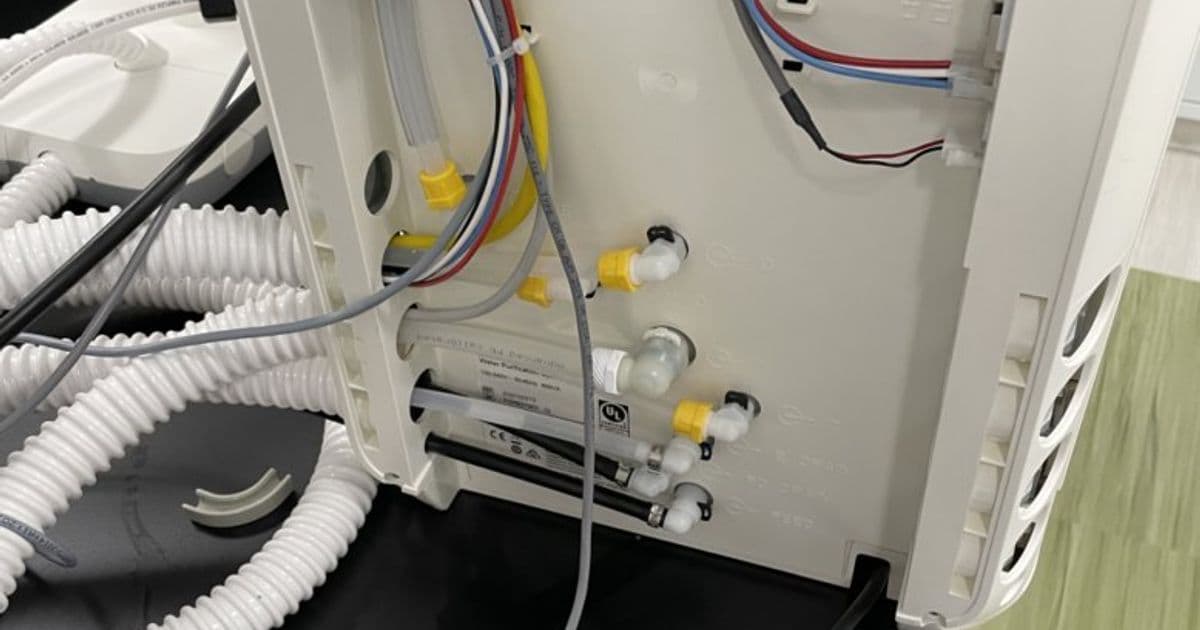
When a used Milli-Q ultrapure water purifier refused to function due to a missing $500 solenoid valve, an engineer bypassed the system with an 85Ω resistor costing just a few dollars. This clever hack, rooted in Ohm's law, not only saved hundreds but exposed how over-engineered devices can be tamed with basic physics.
In the world of high-end laboratory equipment, the Milli-Q 7005 ultrapure water purifier is a staple for precision applications, but its intelligence can become a liability. That's what one resourceful engineer discovered after acquiring a used unit at auction—only to find it paralyzed by the absence of an external feed solenoid valve. This $500 component, designed to halt water flow during leaks, was deemed unnecessary for their setup. Yet, the device's firmware stubbornly refused to dispense water without it, turning a bargain into a costly headache.
Faced with this proprietary roadblock, the engineer turned to fundamental electronics. Reasoning that the solenoid was essentially a resistor to the system's diagnostics, they calculated its required resistance using Ohm's law. With the solenoid rated at 24V and 6.9W, power (P = I * V) yielded a current (I) of 0.2875A. Then, voltage (V = I * R) revealed a resistance (R) of approximately 83.47Ω. "For our purposes, the solenoid is just a resistor," they noted, highlighting how overcomplication often masks simple solutions.
A practical fix emerged: sourcing an 85Ω, 50W wire-wound resistor from Mouser Electronics for under $5. The higher wattage ensured efficient heat dissipation, mimicking the solenoid's load. After wiring it to the existing connections, the purifier sprang to life, dispensing water without errors. 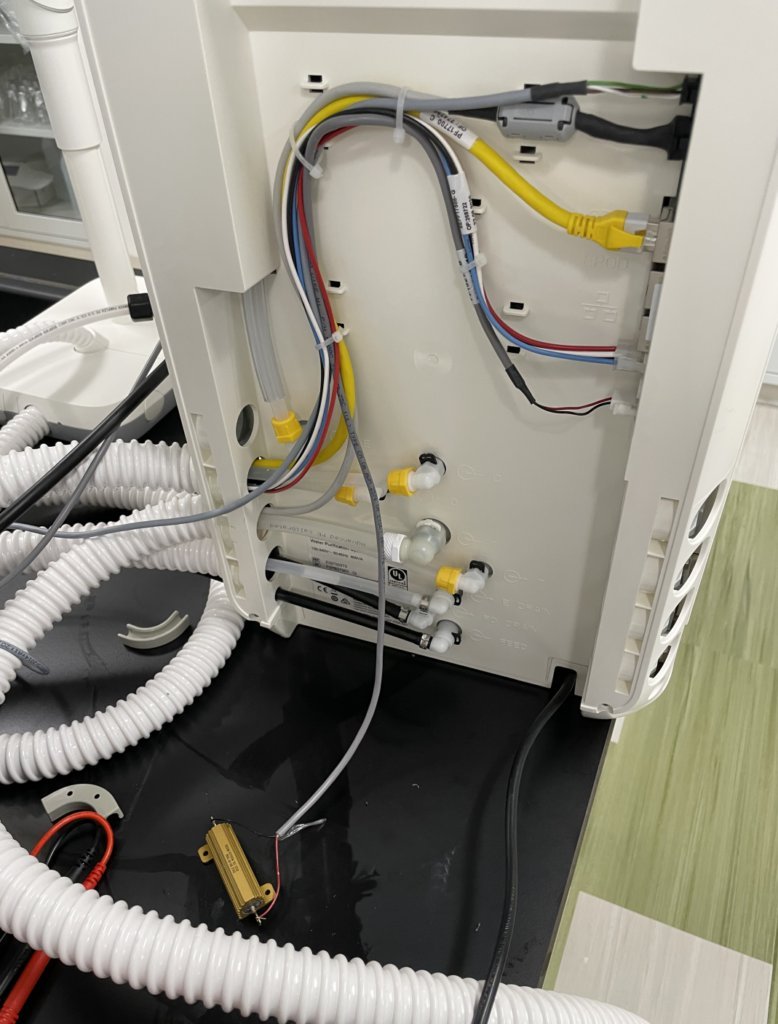
This hack underscores a broader trend in tech: as devices grow smarter, they often enforce costly dependencies. Here, a few dollars and high-school physics defeated a $500 part, emphasizing that understanding core principles—like resistance and power calculations—can empower developers to innovate beyond manufacturer constraints. In an era of tight budgets and e-waste concerns, such DIY ingenuity isn't just thrifty; it's a quiet rebellion against unnecessary complexity.
Source: Based on a blog post by B. Siranosian, available at bsiranosian.com.
Comments
Please log in or register to join the discussion