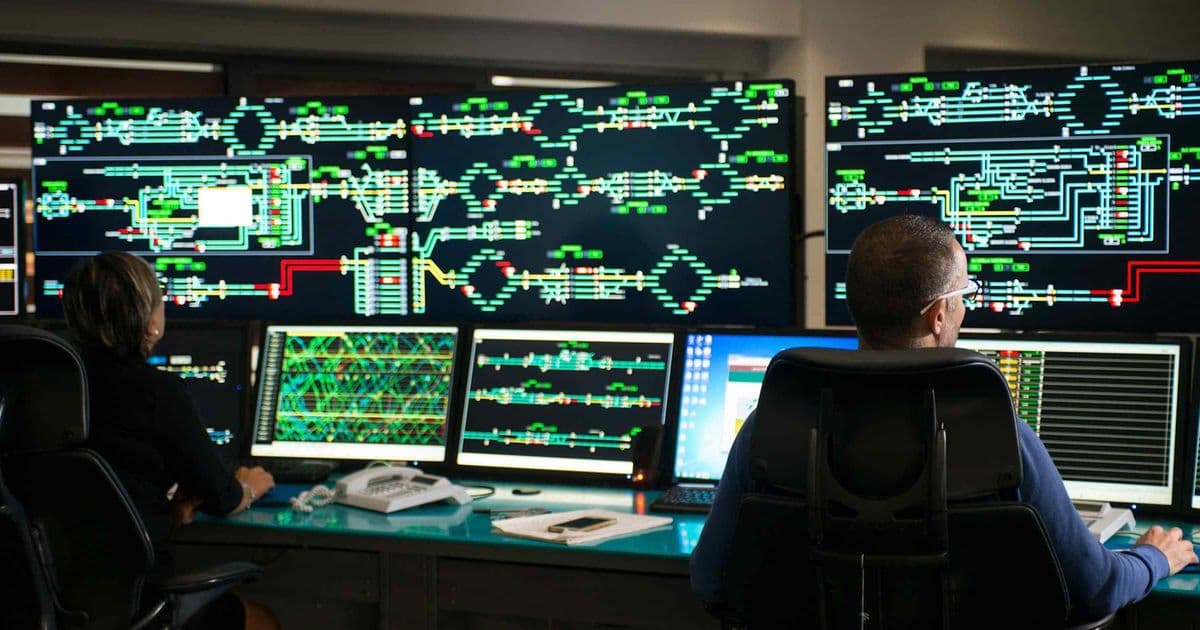
Hitachi Rail won a €168 million (US$195 million) order from Mexico’s federal government to supply signalling and telecom systems for a 396‑km passenger line in the northeast, marking a strategic push into rail‑operations technology beyond traditional rolling stock.
Hitachi lands a €168 million signalling contract in Mexico
Hitachi Rail announced that it has been awarded a €168 million (≈US$195 million) contract by the Mexican government to design, install and maintain a signalling and telecommunications system for a 396‑km passenger railway corridor in the country’s northeast. The deal covers the full suite of train‑control equipment, communication‑based train control (CBTC) technology, and the associated IT backbone needed for real‑time traffic management.
Market context
- Rail‑operations market growth – Global demand for signalling and train‑control solutions is projected to rise at a 6.5 % CAGR through 2032, driven by capacity upgrades in emerging markets and the shift to digital rail networks.
- Mexico’s rail revival – After a decade of stagnation, Mexico’s federal transport plan earmarks US$4.5 billion for new high‑speed and commuter lines between 2025‑2030. The 396‑km corridor is the first major passenger project under this plan, intended to connect Monterrey, Saltillo and Tampico.
- Hitachi’s diversification – Historically focused on rolling stock, Hitachi has been expanding its rail‑systems portfolio since 2020, including recent wins in the United Kingdom (HS2 signalling) and Australia (Sydney Metro). The Mexican contract pushes the company’s revenue mix toward operations‑technology services, which now represent roughly 30 % of Hitachi Rail’s total sales.
- Currency considerations – The contract is priced in euros, while the Mexican government will settle in pesos. At the current EUR/MXN rate (≈ 21.5), the deal translates to ≈ 3.6 billion pesos, providing a modest hedge against currency volatility.
What it means for Hitachi and the sector
- Revenue boost and margin upside – Signalling systems carry higher average gross margins (around 22 %) compared with rolling stock (≈ 15 %). Assuming Hitachi can deliver on schedule, the contract could lift Hitachi Rail’s FY‑2026 operating profit by ≈ 0.8 percentage points.
- Strategic foothold in Latin America – Success in Mexico positions Hitachi as a credible partner for other Latin‑American governments that are modernising legacy rail networks, such as Brazil’s São Paulo‑Rio corridor and Colombia’s Bogotá‑Medellín line.
- Technology diffusion – The deployment will use Hitachi’s Digital ATC platform, which integrates AI‑based predictive maintenance and cloud‑hosted traffic optimisation. Data generated from the Mexican line could feed back into Hitachi’s global product roadmap, accelerating AI adoption across its rail portfolio.
- Investor perception – While Hitachi’s share price slipped after the announcement—reflecting concerns over a modest return on equity (ROE) of 4.2 %—the contract underscores the company’s shift toward higher‑margin services, a narrative that may support future buy‑back programmes and dividend stability.
- Competitive pressure – Competitors such as Alstom and Siemens Mobility are also targeting the Latin‑American signalling market. Hitachi’s win suggests its pricing and technology bundle is resonating, but sustained success will require local after‑sales support and a clear path for system upgrades.
Outlook
If the project proceeds on schedule, the 396‑km line is expected to be operational by late 2029, delivering an estimated 12 million passenger‑kilometres per year. The contract not only adds a sizable revenue stream for Hitachi Rail but also serves as a testbed for its digital rail ecosystem, potentially unlocking further contracts worth US$500 million–$1 billion across the region.
Analysts will watch Hitachi’s execution over the next 12‑18 months for signs of margin expansion and the ability to scale its signalling platform beyond the initial Mexican deployment.
Comments
Please log in or register to join the discussion