Feeding America transformed its inefficient centralized food distribution system by implementing market design principles, including a novel auction mechanism with specialized currency. This algorithmic overhaul increased food distribution by 100 million pounds annually—a case study in applying economic theory to real-world humanitarian challenges.
For decades, Feeding America—the United States' largest hunger-relief organization—struggled with systemic inefficiencies in its food distribution network. The nonprofit's centralized allocation model, based on crude poverty metrics, flooded Alaskan warehouses with pickles while Idaho facilities drowned in surplus potatoes. This approach ignored nutritional value, local inventory levels, and transportation costs, resulting in massive waste and mismatched supply chains.
The Flaws of Centralized Allocation
The legacy system treated all food as fungible commodities. A pound of potato chips held equal weight to nutrient-dense peanut butter, despite vast differences in demand and spoilage risk. Worse, the model operated blindly:
- Food banks received 20% of supplies from Feeding America while sourcing 80% locally, creating duplication
- Storage constraints went unmonitored, leading to spoilage
- Food banks faced penalties for rejecting unsuitable shipments
- Time-sensitive donations couldn't be rapidly matched to need
"The system punished waste avoidance," noted economists studying the problem. Organizations accepted unwanted goods solely to maintain their place in the allocation queue.
Algorithmic Intervention
In 2004, economist Canice Prendergast spearheaded a task force to redesign the system using market design principles—the same concepts underpinning Google's ad auctions and FCC spectrum allocations. Their breakthrough was a specialized currency called "shares" distributed based on need metrics, enabling twice-daily online auctions:
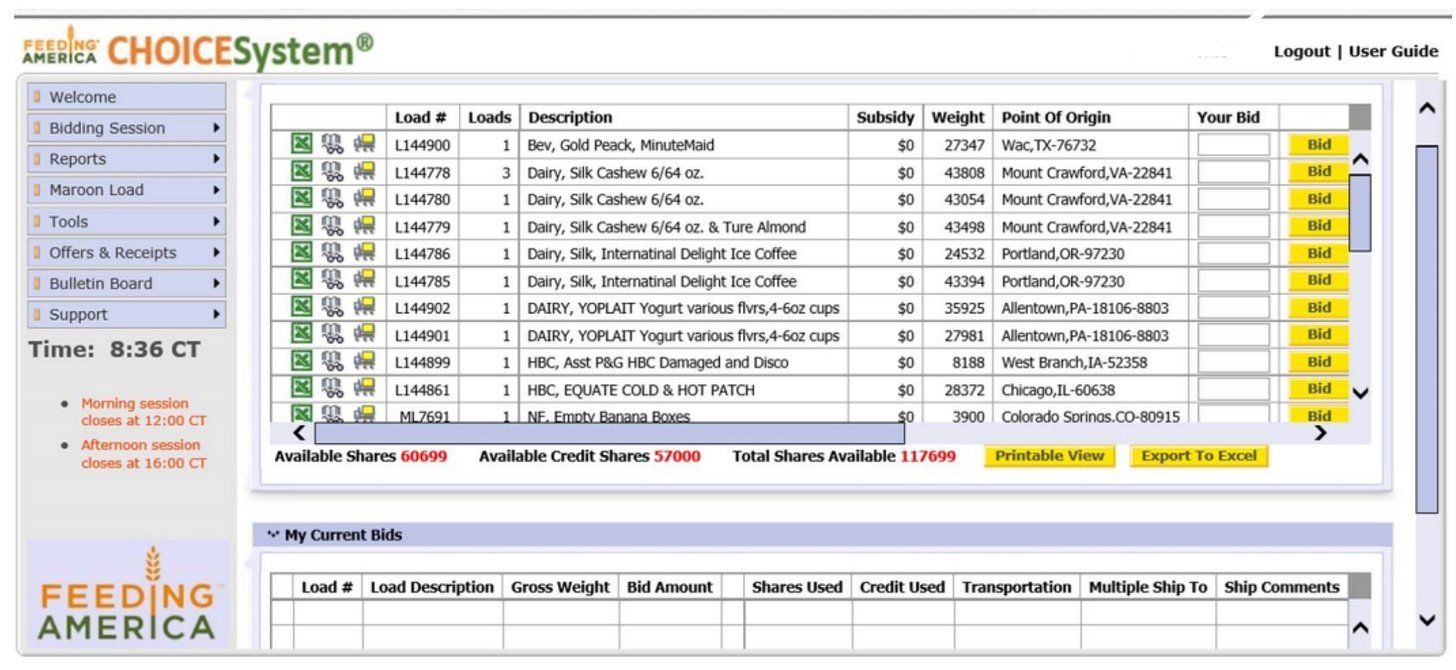
*The Feeding America dashboard interface for the Choice System auction platform (Prendergast, 2016)*
Key features included:
- Sealed first-price auctions: Simplified bidding while maintaining efficiency
- Share redistribution: All spent shares recycled nightly to maintain equity
- Interest-free credit lines: Enabled smaller banks to bid on premium items
- Negative bidding: Allowed acceptance of hard-to-move products
- Joint bidding: Coalitions could split large shipments
The design overcame initial skepticism, including objections from a self-described socialist director who later became its strongest advocate.
Quantifiable Impact
The Choice System delivered staggering results within months:
| Metric | Improvement |
|---|---|
| Annual food supply | ↑ 100M pounds (35%) |
| Equivalent meals | +60,000 people fed daily |
| Surplus trading | 12M pounds redistributed annually |
The auctions revealed hidden preferences: Food banks valued pasta 116 times more than produce. Cereals and grains commanded triple the average share price while fresh produce traded at just 4% of median value.
Engineering Real-World Solutions
This implementation stands as a rare successful "monopoly money" auction system at scale. Unlike traditional matching algorithms (like Gale-Shapley), it accommodated variable quantities and heterogeneous goods. The safeguards for smaller banks—fairness committees and delegated bidding—proved unnecessary as the system self-balanced.
"Market design is the economist as engineer," observed Nobel laureate Al Roth. Feeding America now distributes 5.2 billion meals annually—a testament to how algorithmic thinking can transform humanitarian logistics when technical rigor meets social mission.
Source: Works in Progress
Comments
Please log in or register to join the discussion