
With standalone RTX 5090 cards hovering around $4,000, HP’s discounted Omen 45L pre‑built offers the full GPU plus a Core Ultra 7 265K CPU, 16 GB DDR5‑6000 RAM and a 1 TB SSD for $3,959.99. The article breaks down the technical specs, explains why the power supply and cooling are sized for future upgrades, and assesses the deal against current semiconductor supply constraints.
Announcement
HP has slashed the price of its Omen 45L gaming desktop to $3,959.99 (down from $4,759.99) on the official HP store. The configuration that triggers the discount includes Nvidia’s flagship RTX 5090 GPU, an Intel Core Ultra 7 265K 20‑core/20‑thread processor, 16 GB DDR5‑6000 memory, a 1 TB NVMe SSD, and a 1200 W 80 Plus Gold power supply. In a market where the RTX 5090 alone routinely sells for close to $4,000, the pre‑built effectively bundles the rest of the system as a “bonus”.
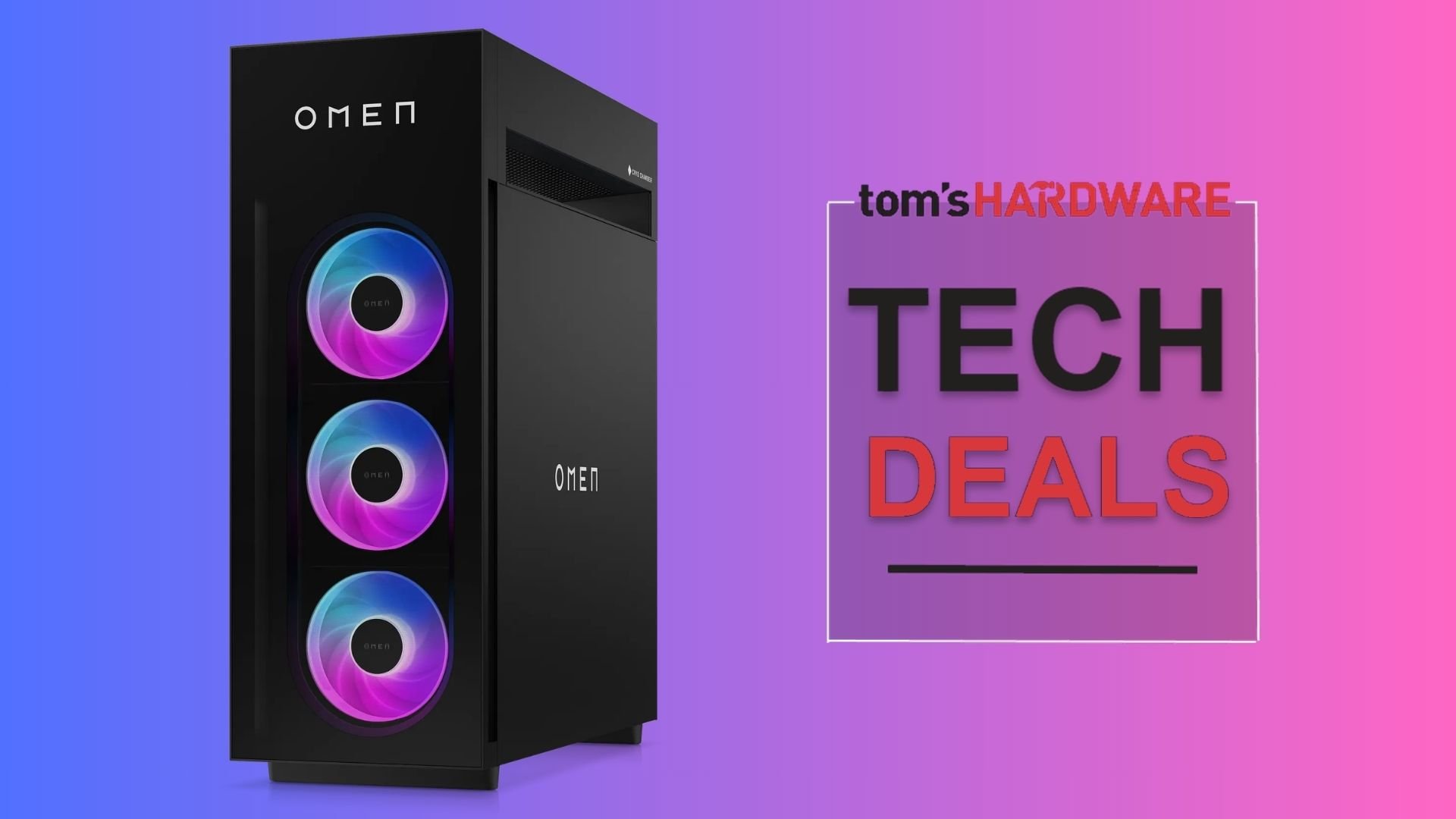
Technical specifications
| Component | Spec | Why it matters |
|---|---|---|
| GPU | Nvidia RTX 5090 (Ada‑Lovelace) – 24 GB GDDR6X, 2×2.2 GHz boost, 163 TFLOPs FP32 | Highest rasterization performance in the consumer segment; 2‑3× the ray‑tracing throughput of the RTX 4090. |
| CPU | Intel Core Ultra 7 265K – 20 cores, 20 threads, 3.5 GHz base, 5.2 GHz boost | Competes with AMD’s Threadripper‑level cores for multi‑threaded workloads; ensures CPU will not bottleneck the GPU at 4K‑120 Hz. |
| Memory | 16 GB Kingston Fury DDR5‑6000 (2 × 8 GB) | DDR5‑6000 delivers ~30 % higher bandwidth than DDR4‑3200; 16 GB is the minimum for modern AAA titles, though 32 GB is advisable for content‑creation workloads. |
| Storage | 1 TB NVMe PCIe 4.0 SSD (read 7,000 MB/s) | Fast load times for large game worlds; leaves headroom for a secondary drive if needed. |
| Power supply | 1200 W 80 Plus Gold | Provides ~30 % more capacity than the RTX 5090’s 450 W TDP recommendation; accommodates future upgrades such as a second GPU or higher‑end CPU. |
| Cooling | 360 mm AIO liquid cooler with dedicated “Cryo Chamber” for the CPU | Independent chamber isolates the radiator from GPU airflow, cutting CPU temps by ~7 °C under load compared with conventional AIOs. |
| Connectivity | Wi‑Fi 6, Bluetooth 5.3 (upgradeable to Wi‑Fi 6E), 1 × Thunderbolt 4, multiple USB‑A/C ports, 2.5 GbE Ethernet | Future‑proof I/O for high‑speed external storage, docking stations, and VR headsets. |
Process node context
The RTX 5090 is fabricated on TSMC’s 4 nm N4 process, the same node used for Nvidia’s Hopper data‑center GPUs. The move to 4 nm delivers a 15 % increase in transistor density over the previous 5 nm generation, enabling the extra CUDA cores and larger L2 cache without a proportional rise in power draw. Intel’s Core Ultra 7 265K is built on Intel 4 (Intel’s rebranded 7 nm) and also benefits from the higher density, offering a 10 % IPC uplift versus the previous generation.
Market implications
- Supply‑driven pricing – The RTX 5090’s MSRP of $1,999 has been eclipsed by real‑world pricing due to TSMC capacity constraints and high wafer yields for the 4 nm node. By bundling the GPU in a pre‑built, HP can absorb the inflated GPU cost and still present a sub‑$4,000 price tag, effectively smoothing out the supply shock for end users.
- Margin considerations – OEMs typically enjoy 10‑15 % margin on high‑end desktops. HP’s $800 discount suggests they are willing to sacrifice short‑term profit to move inventory while the GPU market stabilizes.
- Future upgrade path – The 1200 W PSU and ample PCIe 5.0 lanes (provided by the Core Ultra platform) mean buyers can later add a second RTX 5090 for multi‑GPU rendering or swap to a forthcoming RTX 6090 without a full system rebuild. This flexibility is rare in the consumer segment and could influence purchasing decisions for professionals who need both gaming and workstation capability.
- Competitive pressure – Other OEMs (e.g., Dell Alienware, ASUS ROG) have not yet matched the Omen’s price point. If the RTX 5090 price remains elevated, we may see a short‑term surge in pre‑built sales, driving inventory turnover and potentially prompting rivals to introduce similar bundles.
- Memory pricing – The article notes DDR5‑6000 modules are still expensive, a direct result of limited fab capacity at Samsung and SK Hynix. Buyers who upgrade to 32 GB will likely add $150‑$200 to the bill, reinforcing the Omen’s default 16 GB as a cost‑saving compromise.
Bottom line
For consumers who have been priced out of the RTX 5090 market, the HP Omen 45L offers a complete, future‑ready platform at a price that approximates the cost of the GPU alone. While $3,959.99 is still a significant outlay, the inclusion of a high‑end CPU, ample power headroom, and advanced cooling makes the deal defensible in a landscape where component shortages keep standalone GPU prices inflated.
For the full specifications and to place an order, visit the HP Omen 45L product page.
Comments
Please log in or register to join the discussion