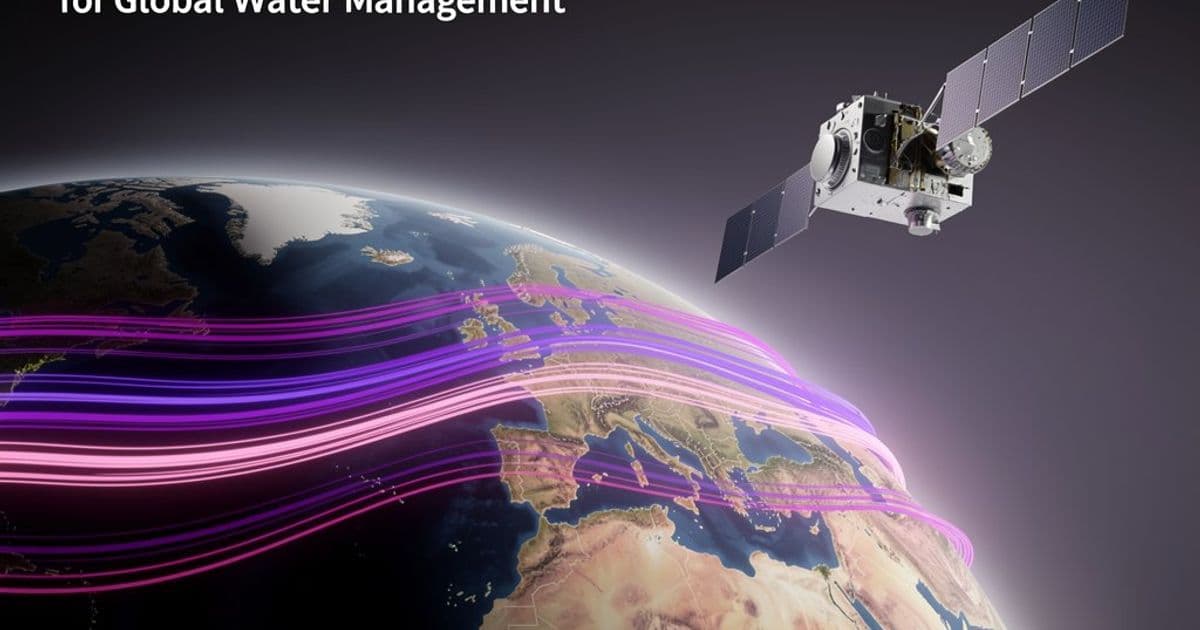
Luxembourg-based Hydrosat, which uses AI to analyze thermal infrared satellite data for water resource monitoring, has raised a $60M Series B round. The funding will support expansion of its constellation and data services for defense, government, and agricultural clients tracking water scarcity.
Hydrosat, a Luxembourg-based startup specializing in AI-driven thermal infrared satellite technology, has closed a $60 million Series B funding round. The company provides critical data for water resource management, leveraging its unique approach to monitoring evapotranspiration and soil moisture from space. The round was led by undisclosed investors, with participation from existing backers, bringing the company's total funding to over $80 million.
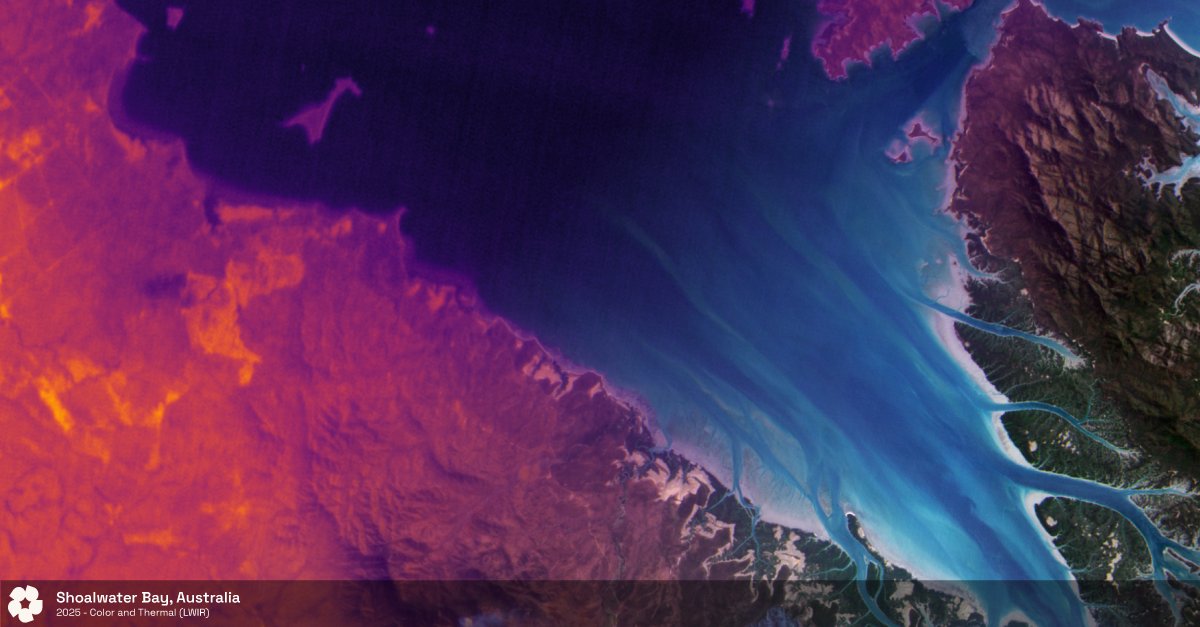
The Technology: Thermal Infrared Meets AI
Hydrosat's core innovation lies in its use of thermal infrared (TIR) satellite imagery, which measures surface temperature and heat flux. Unlike optical or radar satellites, TIR can detect subtle changes in land surface temperature that directly correlate with water availability and plant health. The company operates a constellation of small satellites, with plans to expand to 10+ satellites by 2027.
The AI layer is crucial for processing this data. Raw thermal imagery is complex and noisy; Hydrosat's machine learning models clean the data, correct for atmospheric interference, and generate actionable metrics like:
- Evapotranspiration (ET): The combined process of water evaporation from soil and transpiration from plants, a key indicator of agricultural water use.
- Soil Moisture Index: Derived from surface temperature variations, providing insights into ground-level water availability.
- Crop Health Monitoring: By detecting stress patterns before they become visible in optical imagery.
The company's platform, Hydrosat Analytics, allows users to access processed data via API or web interface, with historical archives dating back to 2020. This enables trend analysis for long-term water management planning.
Market Context: A Growing Demand for Water Data
The global water crisis is intensifying. According to the United Nations, by 2030, global water demand could exceed sustainable supply by 40%. This creates a pressing need for precise, real-time water data across multiple sectors:
- Agriculture: Consumes 70% of global freshwater. Precision irrigation can reduce water use by 20-30%, but requires accurate soil moisture data.
- Government & Defense: Water security is a national security issue. Governments use this data for drought monitoring, reservoir management, and disaster response.
- Energy & Industry: Thermal power plants and manufacturing facilities require reliable water supplies; data helps in risk assessment and planning.
The market for Earth observation data is projected to reach $18 billion by 2030, with water-related applications growing at a 12% CAGR. Hydrosat competes with players like Planet (optical), Capella Space (radar), and specialized firms like Satellogic, but its focus on thermal data for water gives it a distinct niche.
Strategic Implications of the Funding
The $60M Series B will be deployed across three key areas:
Constellation Expansion: Building and launching additional satellites to improve revisit rates (from days to hours) and coverage. This is critical for monitoring rapidly changing conditions like droughts or floods.
AI Model Development: Enhancing machine learning algorithms to improve data accuracy and generate new metrics. The company is investing in deep learning models that can predict water stress weeks in advance by correlating thermal data with weather forecasts.
Market Expansion: Hydrosat currently serves clients in North America, Europe, and the Middle East. The funding will support entry into new markets, particularly in Asia-Pacific, where water scarcity is acute in countries like India and Australia.
The round also signals investor confidence in the space tech sector, which has seen increased activity despite broader market volatility. Recent deals include Capella Space's $100M Series C (2024) and Planet's continued expansion of its fleet.
Client Applications and Use Cases
Hydrosat's clients span defense, government, and agribusiness:
- Defense Agencies: Use the data for monitoring water infrastructure in conflict zones and assessing resource availability for operations.
- Agricultural Corporates: Large-scale farms use Hydrosat's data to optimize irrigation schedules, reducing water costs and improving yields. For example, a California almond grower reported a 15% reduction in water use after integrating Hydrosat data into their management system.
- Government Water Authorities: In the EU, several member states use Hydrosat data to comply with the Water Framework Directive, which requires sustainable water use monitoring.
The company also offers a "Water Risk Index" for financial institutions, helping them assess water-related risks in their investment portfolios.
Challenges and Trade-offs
While promising, thermal infrared data has limitations:
- Cloud Cover: TIR can penetrate thin clouds but is blocked by thick cloud layers, limiting data availability in tropical regions.
- Spatial Resolution: Current satellites have a resolution of ~100m, which is sufficient for regional analysis but not for small-scale farm monitoring. Hydrosat plans to improve this with next-generation sensors.
- Data Latency: Processing raw data to actionable insights takes hours; real-time applications (e.g., flash flood warnings) remain challenging.
Hydrosat addresses these by combining its TIR data with other sources (e.g., weather data, optical imagery) and using AI to fill gaps. The company's platform allows users to blend multiple data streams for a more complete picture.
Broader Industry Trends
Hydrosat's funding reflects a larger trend: the convergence of space tech and AI for climate resilience. Startups like ClimateAI (predictive modeling) and Gro Intelligence (agricultural data) are also leveraging AI to address environmental challenges. Governments are increasingly investing in such technologies; the European Space Agency's (ESA) Φ-lab program has funded several AI-for-Earth-observation startups.
The water sector, in particular, is ripe for disruption. Traditional methods of water monitoring (e.g., ground sensors) are sparse and expensive to scale. Satellite data offers a global, continuous view, and AI makes it interpretable. Hydrosat's Series B positions it to capitalize on this shift, potentially becoming a key player in the water data ecosystem.
What's Next for Hydrosat
With fresh capital, Hydrosat's immediate focus is on scaling its operations. The company plans to hire 50+ new employees, focusing on AI engineering, satellite operations, and business development. It also aims to launch a public data portal for researchers and NGOs, democratizing access to water data.
Long-term, Hydrosat is exploring partnerships with climate tech firms and insurance companies to develop new products, such as water-based insurance policies for farmers. The company's CEO, Vanessa L., stated in a press release: "This funding allows us to move from a data provider to a decision-support platform, helping clients not just monitor water but manage it proactively."
As water scarcity becomes a defining challenge of the 21st century, companies like Hydrosat are proving that space technology, powered by AI, can deliver tangible solutions on the ground.
Comments
Please log in or register to join the discussion