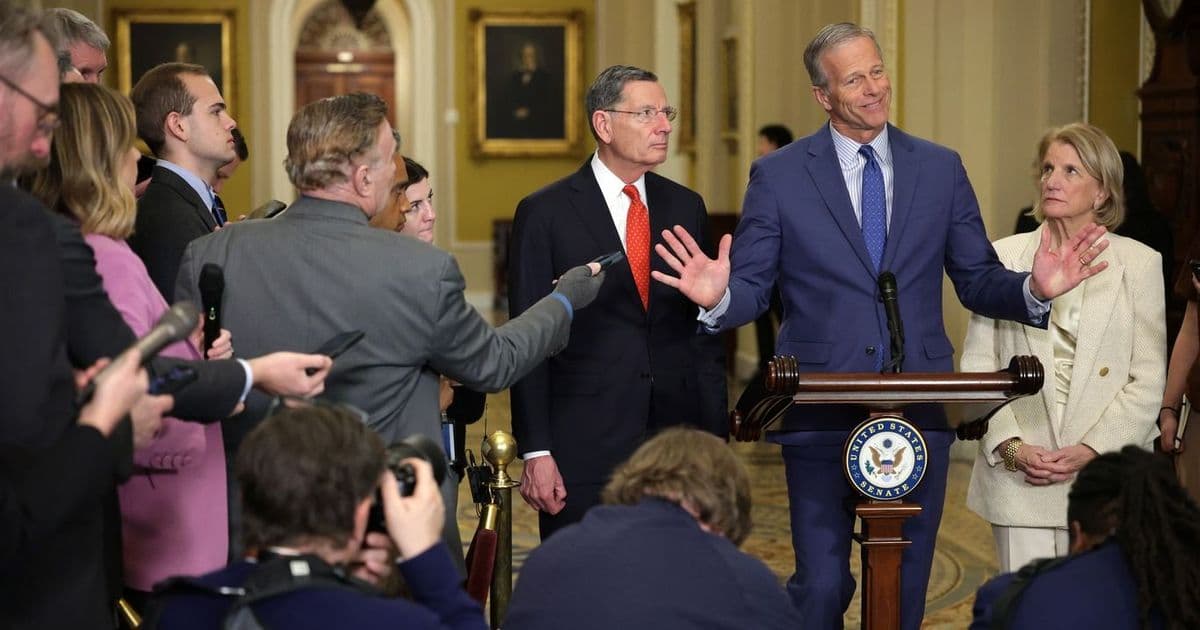
Immigration and Customs Enforcement's $8B budget has become the focal point of government funding negotiations, threatening payments to tech contractors and risking delays to critical border security systems.
Congressional negotiations to avert a government shutdown have zeroed in on Immigration and Customs Enforcement (ICE) funding, creating significant financial uncertainty for technology contractors supporting the agency's operations. With a March 22 deadline looming, ICE's $8 billion annual budget hangs in the balance, including $2.5 billion allocated to technology contracts covering surveillance systems, biometric identification platforms, and case management software.
Major contractors like Palantir Technologies ($300M in active contracts), General Dynamics ($190M), and Deloitte ($125M) face immediate payment disruptions should funding lapse. Federal procurement records show ICE awarded over 700 technology contracts in FY2023 alone, with approximately 35% supporting mission-critical systems including:
- Automated Biometric Identification System (IDENT): $137M annual maintenance
- Enforcement Integrated Database: $89M in cloud infrastructure costs
- Smart Border Initiative sensors: $75M in field deployment
Payment delays would trigger cascading effects through the government technology supply chain. During the 2018-2019 shutdown, federal contractors accrued over $200 million in daily delayed payments according to Professional Services Council data. Current contingency planning indicates:
| Impact Area | Estimated Cost | Affected Contracts |
|---|---|---|
| Payment Delays | $45M/day | 340 active awards |
| Project Delays | $12M/week | 22 major systems |
| Restart Costs | 15-20% premium | All frozen projects |
Strategic implications extend beyond immediate cash flow concerns. ICE's planned $700 million Case and Activity Management System (CAMS) modernization – intended to consolidate 18 legacy systems – faces postponement. Historical data shows such delays increase total project costs by 14-18% annually according to GAO analysis. Technology providers like Amazon Web Services (cloud infrastructure) and Leidos (biometric solutions) are reportedly accelerating contingency planning, with some redirecting engineering resources to commercial projects.
Market analysts note broader sector vulnerability: stocks of ICE-dependent contractors underperformed the S&P 500 by 3.2 percentage points during the 2019 shutdown. The current standoff reflects hardening positions on Capitol Hill, with Senate Republicans demanding full ICE funding while some Democrats seek restrictions on surveillance technology deployment. This deadlock creates unpredictable budgeting horizons for vendors, potentially chilling investment in border security innovation at a time when DHS plans to increase AI-driven border monitoring spending by 37% in FY2025.
Contractors face difficult triage decisions: firms with less than 30% non-government revenue face heightened liquidity risk, while diversified players like Microsoft (supplying collaboration tools under a $30M ICE contract) demonstrate greater resilience. The resolution timeline remains critical – each week of shutdown would cost the broader economy approximately $6 billion according to S&P Global projections, with technology service providers absorbing disproportionate impacts due to fixed R&D overhead.
Comments
Please log in or register to join the discussion