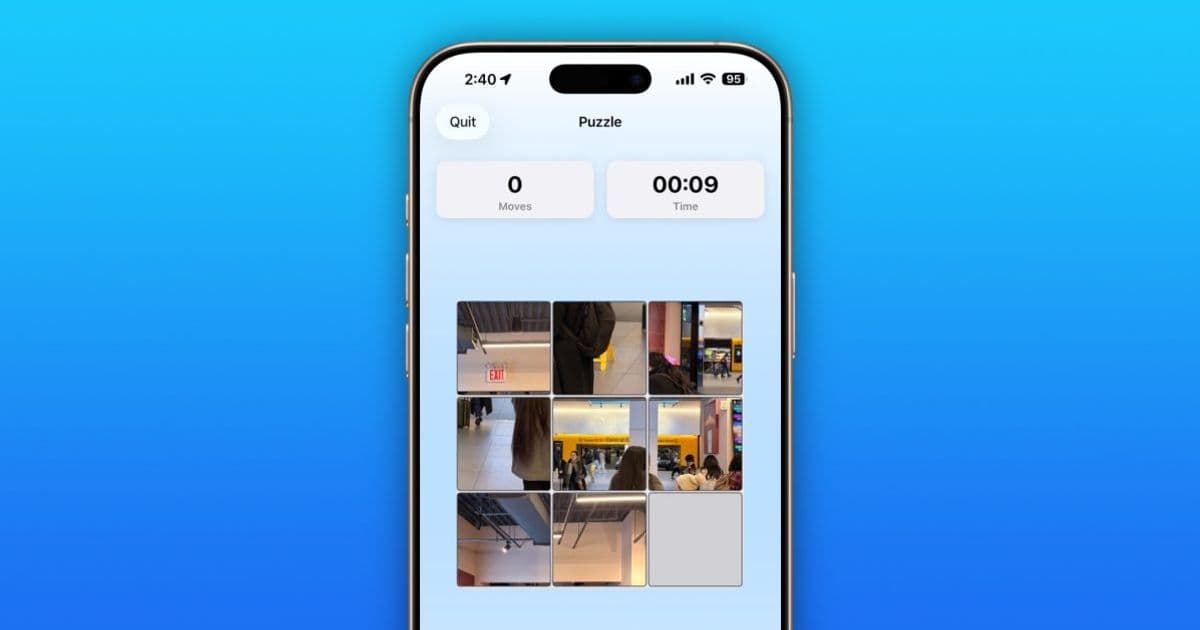
Phozzle transforms your iPhone's photo library into a daily puzzle challenge, using Game Center integration and algorithmic photo selection to create a unique rediscovery experience.
Welcome to Indie App Spotlight. This is a weekly 9to5Mac series where we showcase the latest apps in the indie app world. If you’re a developer and would like your app featured, get in contact.
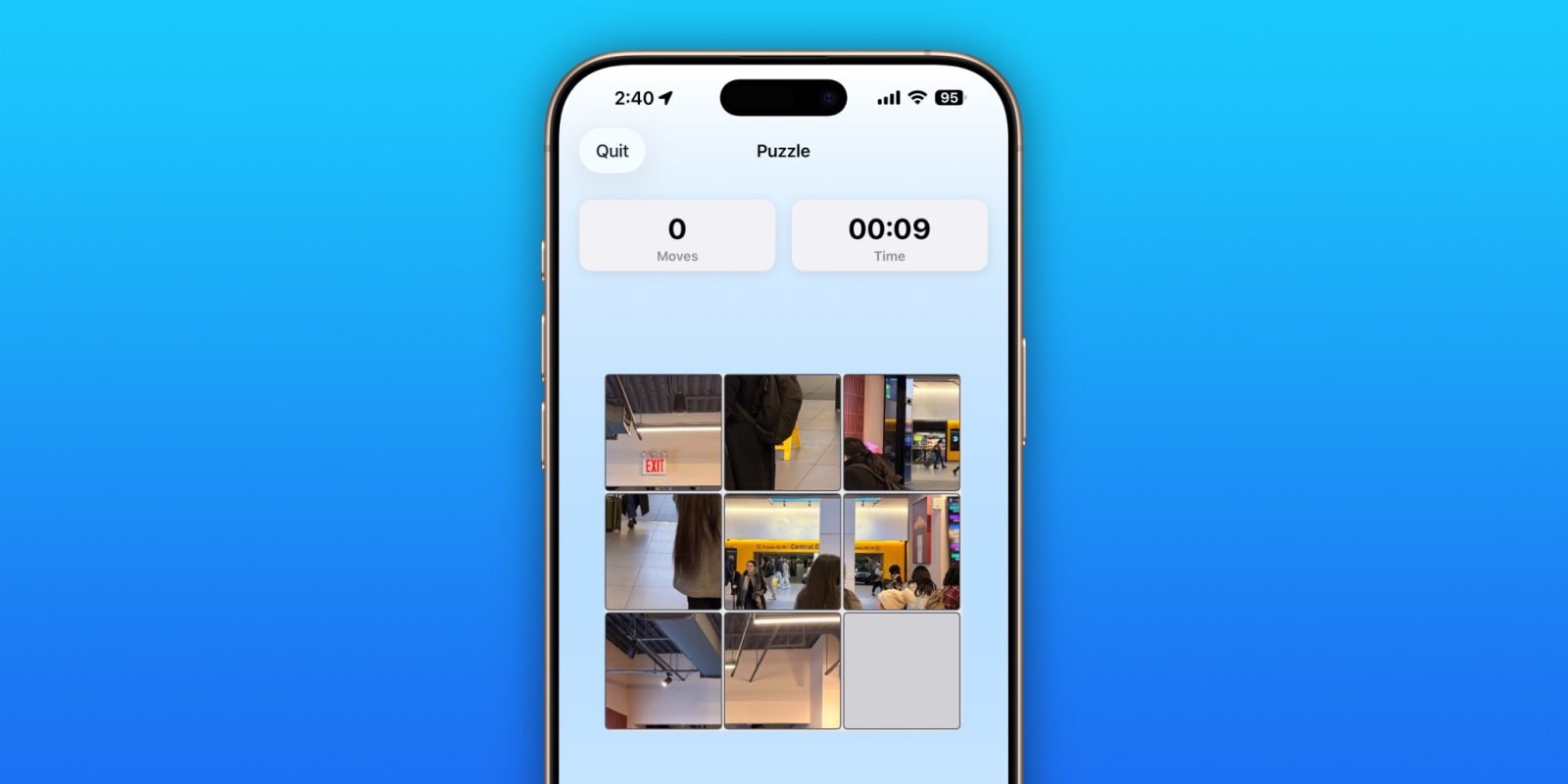
Everyone has thousands of photos in their iPhone’s photo library, but you might not necessarily go back and rediscover them often. In recent iOS versions, the Photos app has gotten better at surfacing old memories – but Phozzle has a unique approach to photo rediscovery.
About the App
Phozzle gamifies looking at your old photos. It creates unique new puzzles based on your photos, has Game Center integration, and daily challenges for you to complete. With the standard gameplay mode, you can select an album, then select easy, medium, or hard. Easy creates a 3×3 grid, medium 4×4, and hard 5×5. Then, it’ll just fetch a random photo from the album you choose – and you’re off to the races.
Daily challenges don’t let you select a photo, its completely random. With daily challenges, you can build up your streak and see how fast you can complete the puzzle. There’s also achievements and leaderboards, powered by Game Center. You can compare yourself against your friends and globally. You’ll also earn achievements for generally playing the game, or hitting a long daily challenge streak.
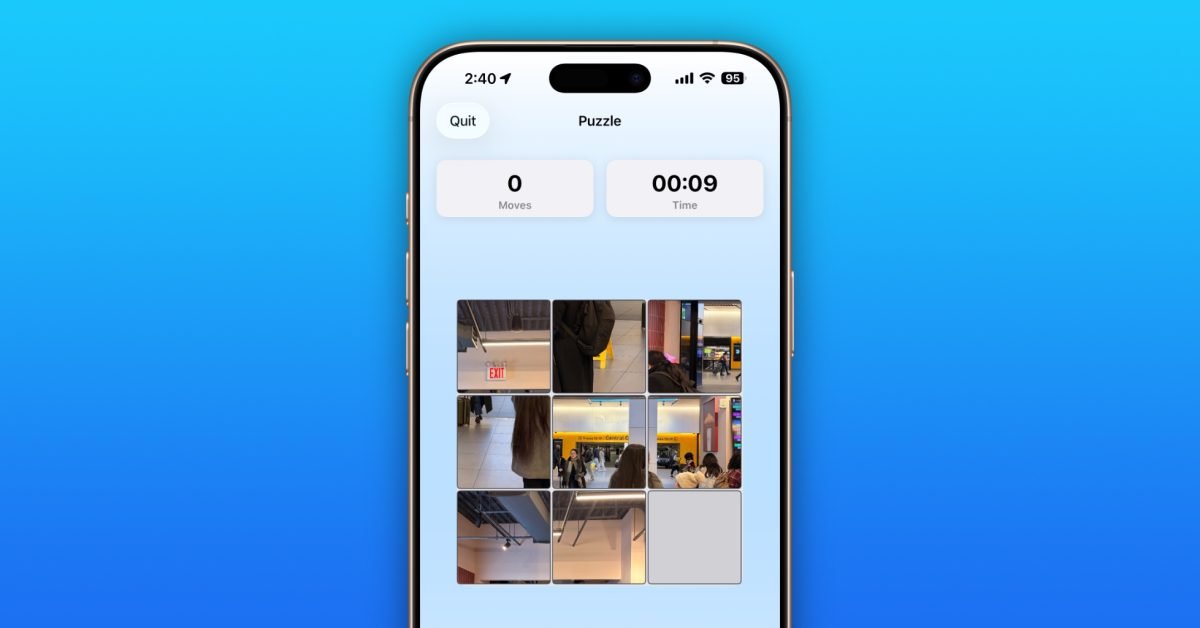
All in all, Phozzle is actually a rather fun puzzle game. It’s certainly fun to see random photos get highlighted and remember said memory, and the puzzles really do tap into the strategic side of your brain. It’s really a two birds one stone experience.
Technical Implementation
From a development perspective, Phozzle demonstrates several interesting iOS-specific patterns. The app uses the Photos framework to access the user's photo library, which requires proper privacy permissions. The random photo selection algorithm likely uses a combination of album filtering and random index generation, ensuring that the same photo doesn't appear too frequently in a single session.
The puzzle generation is particularly clever. By using a photo as the source material for a sliding puzzle or jigsaw-style challenge, the app creates a personal connection to the gameplay. The difficulty scaling (3×3 to 5×5 grids) follows standard puzzle game conventions but applies them to personal content, which increases engagement.
Game Center integration provides social features without requiring custom server infrastructure. Leaderboards, achievements, and friend comparisons are handled by Apple's gaming services, which reduces development complexity while providing robust social features. This is a smart approach for indie developers who want to add social elements without building and maintaining their own backend.
Platform Considerations
Phozzle requires iOS 17.6 or later, which is a relatively recent requirement. This suggests the developer is using modern APIs and possibly taking advantage of features introduced in iOS 17. The app is free to download with a one-time $1.99 purchase for unlimited puzzles, which is a common and user-friendly monetization strategy for indie games.
The photo library access is a key technical consideration. Apps that request photo access need to handle both the permission request flow and the potential case where users deny access. Phozzle likely has fallback behavior or clear messaging about why photo access is needed, since the entire game depends on this functionality.
User Experience Design
The app's design philosophy centers on serendipity and rediscovery. Unlike traditional puzzle games that use static, pre-defined images, Phozzle creates a constantly changing experience based on the user's personal content. This creates a unique value proposition: every user gets a different experience based on their photo library.
The daily challenge system encourages regular engagement. By limiting daily challenges to random selections, the app creates a reason to return each day. The streak mechanic taps into the same psychological principles that make games like Duolingo or fitness apps successful.
Development Insights for Indie Developers
For developers considering similar projects, Phozzle offers several lessons:
Leverage system frameworks: Using Game Center for social features and Photos for content reduces development time and maintenance overhead.
Simple monetization: A one-time purchase for unlimited content is often more appealing to users than subscriptions, especially for utility-style apps.
Personalization through user content: By using the user's own photos, the app creates a unique experience without requiring complex AI or cloud services.
Progressive difficulty: Offering multiple difficulty levels makes the app accessible to casual players while providing challenge for experienced puzzle solvers.
Availability and Requirements
Phozzle is available for free on the App Store for devices running iOS 17.6 and later. You’ll only get 10 puzzles for free, but if you want the full unlimited experience, you can pay just $1.99 for a one time in-app purchase.

For developers interested in building similar apps, the Photos framework documentation provides comprehensive guidance on accessing and working with the user's photo library. Game Center integration is well-documented in Apple's developer resources, with clear examples of implementing leaderboards and achievements.
The indie app development community continues to produce innovative applications that solve everyday problems in creative ways. Phozzle represents a clever intersection of gaming and personal content, demonstrating how developers can create engaging experiences using the data and capabilities already present on users' devices.
Comments
Please log in or register to join the discussion