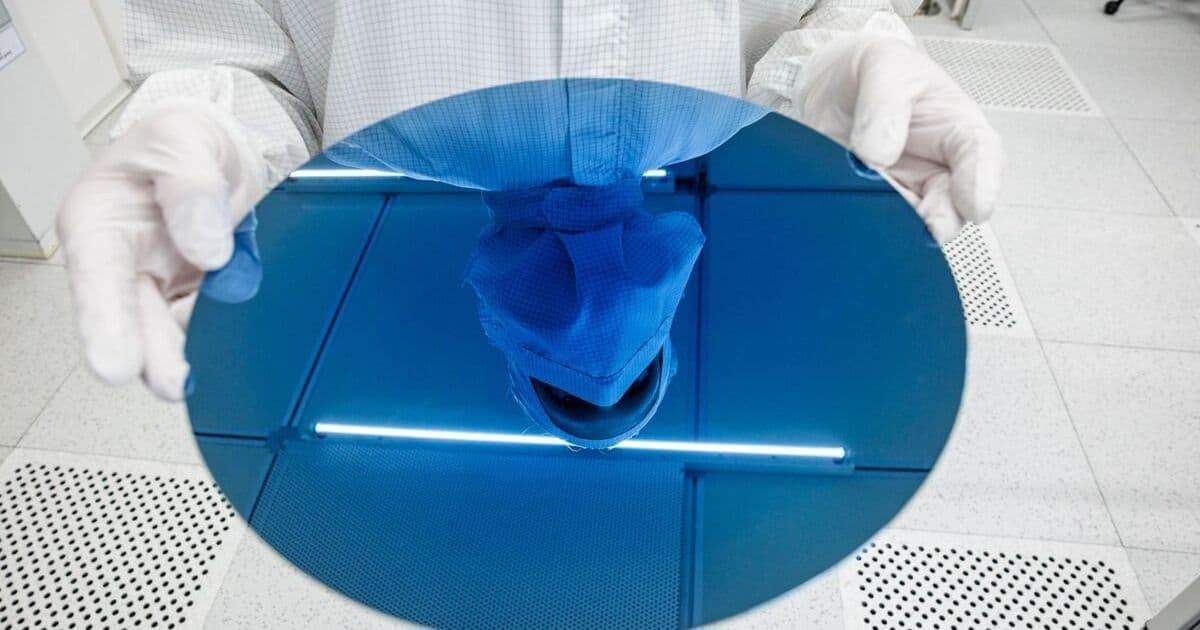
Infineon reports 7% YoY revenue growth to €3.66B, exceeding estimates, while announcing €2.7B investment plans for 2026 to capitalize on surging AI demand.
German semiconductor manufacturer Infineon Technologies AG has reported first-quarter revenue of €3.66 billion, marking a 7% year-over-year increase that exceeded analyst expectations of €3.62 billion. The Munich-based chipmaker's strong performance comes as it positions itself to capitalize on growing demand for artificial intelligence infrastructure, announcing plans to significantly increase its technology investments to €2.7 billion in 2026.
AI-Driven Growth Strategy
The company's Q1 results reflect broader trends in the semiconductor industry, where AI applications are driving demand for specialized chips and components. Infineon's focus on data center technologies positions it to benefit from the massive infrastructure buildouts required to support AI workloads.
"We are ramping up spending on our technology for data centers to meet growing demand for artificial intelligence solutions," Infineon stated in its earnings release. This investment strategy aligns with the company's long-term vision of becoming a key supplier to the AI ecosystem.
Investment Plans Signal Confidence
Infineon's decision to raise its investment budget to €2.7 billion for 2026 represents a significant commitment to expanding its manufacturing capabilities and research and development efforts. This level of investment suggests the company sees sustained demand growth in AI-related applications over the coming years.
The timing of this announcement is particularly noteworthy given recent volatility in the semiconductor sector. While companies like AMD have faced stock price pressure despite strong revenue growth, Infineon appears to be taking a more aggressive stance on capacity expansion.
Industry Context and Competition
Infineon's AI-focused strategy comes amid intense competition in the semiconductor space. Nvidia continues to dominate the AI chip market, while AMD has been making significant inroads with its MI300 series AI accelerators. Intel, under new CEO Lip-Bu Tan, has announced plans to develop its own GPU offerings to compete more directly in the AI hardware market.
Meanwhile, the broader tech sector has experienced turbulence, with software and data stocks declining on fears that new AI developments could disrupt traditional software business models. Companies like Adobe, Salesforce, and Thomson Reuters saw significant share price drops as investors reassessed the impact of AI on established software categories.
Market Response and Outlook
While Infineon's stock performance following the earnings announcement wasn't detailed in the available information, the company's proactive investment strategy suggests management confidence in the AI growth trajectory. The semiconductor industry has historically been cyclical, but AI demand appears to be creating a new growth driver that could extend the current expansion phase.
Infineon's focus on data center technologies also positions it well for the ongoing transition to AI-powered cloud computing. As companies across industries invest in AI capabilities, the demand for specialized chips, power management solutions, and other semiconductor components continues to grow.
Technical Analysis and Implications
The €2.7 billion investment target for 2026 represents a substantial increase from previous years, indicating that Infineon expects AI demand to accelerate rather than plateau. This investment will likely fund new fabrication facilities, advanced packaging capabilities, and research into next-generation chip designs optimized for AI workloads.
For investors and industry observers, Infineon's announcement provides insight into how traditional semiconductor companies are adapting to the AI revolution. Rather than being disrupted by AI-focused startups, established players like Infineon are leveraging their manufacturing expertise and customer relationships to capture value in the AI supply chain.
The company's strong Q1 performance, combined with its aggressive investment plans, suggests that Infineon sees AI as a multi-year growth opportunity rather than a short-term trend. This long-term perspective could prove valuable as the AI industry continues to evolve and mature.
Infineon's strategic pivot toward AI infrastructure represents a broader industry trend where traditional semiconductor companies are repositioning themselves to capture value in the AI ecosystem. The €2.7 billion investment commitment signals confidence in sustained demand growth, even as the broader tech sector faces uncertainty about AI's impact on established business models.
Comments
Please log in or register to join the discussion