Iran's Intelligence Ministry and IRGC have summoned families of exiled journalists, threatening restrictions unless they halt relatives' activities, as tensions rise over nuclear negotiations and domestic unrest.
Iran's Intelligence Ministry and the Islamic Revolutionary Guard Corps (IRGC) intelligence arm have launched a campaign targeting the families of exiled journalists and activists, according to human rights group Dadban. In recent days, relatives have been summoned and threatened with serious restrictions unless they pressure their exiled family members to cease their activities.
The move appears designed to silence critical voices operating from abroad by leveraging the vulnerability of those still inside Iran. This tactic has been used repeatedly by Iranian authorities to extend their control beyond the country's borders and suppress dissent.
Nuclear Negotiations and Diplomatic Tensions
Amid these domestic crackdowns, Iran's foreign minister Abbas Araghchi addressed the ongoing nuclear negotiations with the United States. In a post on X (formerly Twitter), Araghchi stated that Iran and the US are "at a fateful point in time" and could achieve "a fair and equitable deal to ensure no nuclear weapons."
Araghchi suggested that a mutually beneficial outcome was possible "even in a short period of time." However, he also warned of potential miscalculation or aggression, noting that Iran was "equally prepared for that scenario."
These comments come as diplomatic efforts continue to prevent Iran from developing nuclear weapons capabilities while addressing the country's economic challenges under international sanctions.
State Media Controversy Sparks Outrage
A separate controversy erupted after a host on Ofogh TV, a channel operated by Iran's state broadcaster IRIB and affiliated with the Revolutionary Guards, made deeply offensive remarks about protesters killed during the January 8–9 crackdown.
The host sarcastically asked viewers what type of refrigerator the Islamic Republic used to store bodies of the thousands killed, offering mock multiple-choice answers including "side-by-side fridge," "ice cream machine," and "supermarket freezer." He concluded with "I'm an ice seller—don't ruin my business."
For many Iranians, the episode illustrated a state media apparatus increasingly detached from public sentiment. The remarks were widely condemned across Iran's political and social spectrum, with critics accusing the program of dehumanizing the dead and humiliating grieving families.
Government Response and Calls for Accountability
Following the backlash, Iran's state broadcaster announced the removal of Sadegh Yazdani, Ofogh TV's director, for "disrespect toward those killed in the January protests." The program was pulled from the air.
However, many observers argued that deeper accountability was needed. Mohammad Reza Javadi-Yeganeh, a sociology professor at the University of Tehran, wrote that dissatisfaction with IRIB was one of the rare issues uniting Iran's polarized society. "In this organization," he wrote, "neither human life nor blood has sanctity."
Journalist Sina Jahani went further, stating that not only the director but the head of IRIB himself should be immediately dismissed. IRIB, headed by Peyman Jebelli, is widely viewed as dominated by hardliners linked to the ultra-conservative Paydari Party and figures close to Saeed Jalili, the supreme leader's representative on the Supreme National Security Council.
Conservative Concerns About Public Anger
The mocking tone also angered conservative figures who warned that such rhetoric risks inflaming public rage and prolonging unrest. Conservative journalist Ali Gholhaki wrote that by mocking the martyrs, state TV was "setting fire to the hearts of their parents."
Strategic analyst Hossein Ghatib emphasized that such broadcasts are never accidental, passing through multiple editorial and supervisory filters. He compared the outrage to a pivotal media miscalculation before Iran's 1979 revolution, when an article attacking Ayatollah Ruhollah Khomeini helped ignite mass protests that accelerated the fall of the monarchy.
Crisis of Trust in State Media
The incident has reignited long-standing criticism of IRIB, whose head is appointed and overseen directly by the supreme leader. Despite receiving substantial public funding, official surveys show large segments of the population distrust its news coverage, relying instead on foreign-based Persian-language media.
Critics say IRIB routinely insults and discredits opponents, airs coerced confessions, and broadcasts allegations of foreign ties against dissenters. Recent attempts by the broadcaster to discredit a widely shared video showing a father searching for his son's body among hundreds of victims instead backfired, further eroding its credibility.
Human Rights Concerns Continue
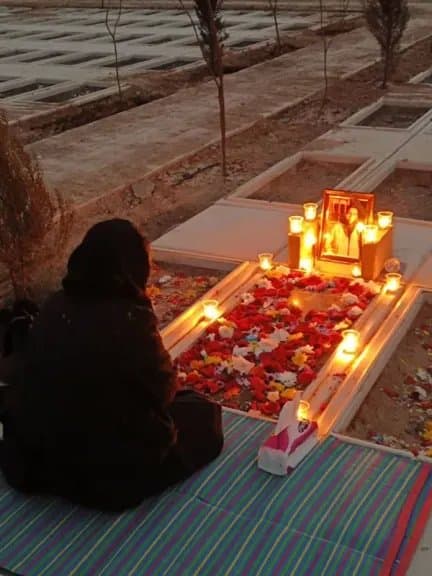
The crackdown on protesters has raised serious human rights concerns. According to accounts obtained by Iran International, authorities halted burials, closed morgues, and restricted funerals to a single family member, firing shots into the air to disperse mourners.
Witnesses report that wounded protesters were abducted from hospitals and executed, with some killed using suppressed weapons. One healthcare worker said more than 400 people killed during January 8-9 were brought to Karaj hospitals alone.
The practice of removing wounded protesters from hospitals or killing them outright appears designed to eliminate potential witnesses and testimony. In one documented case, a wounded protester remained motionless for three days inside a plastic body bag used for transporting corpses, terrified of being executed in hospital.
These accounts suggest not chaos but method—wounded protesters who survived initial gunfire were treated as liabilities, with their removal or execution ensuring that testimony would not survive.
The combination of targeting exiled journalists' families, controversial state media coverage, and ongoing human rights concerns highlights the complex challenges facing Iran as it navigates both domestic unrest and international diplomatic pressures.
Comments
Please log in or register to join the discussion