The controversial HS2 rail project has unearthed 450,000 historical objects, from Roman gladiator tags to 40,000-year-old hand axes, now stored in a secret Yorkshire warehouse. While critics question the project's value, archaeologists say the scale of discoveries is unprecedented.
The construction of Britain's controversial high-speed rail link has yielded an unprecedented archaeological treasure trove, with 450,000 objects spanning 10,000 years of history now stored in a secret warehouse in Yorkshire.
Since 2018, around 1,000 archaeologists have conducted 60 excavations along the 140-mile route between London and Birmingham. The discoveries range from a possible Roman gladiator's tag to 19th Century gold dentures, representing what experts call an "extraordinary" scale of finds.
Among the most significant discoveries is a hand axe believed to be more than 40,000 years old, potentially crafted by Neanderthals or an earlier human species. Found in Northamptonshire's Edgcote area, the tool's sharp edge suggests it was designed for butchering animals. "There is something tactile about it when you hold it," says Dr Sara Machin, finds lead for Access +, the archaeological consortium managing the project. "Even now it fits snugly in my hand."
Other notable finds include:
- A small carved bone tag bearing the inscription "DOMINE VICTOR VINCAS FELIX" (Lord Victor, may you win and be lucky), possibly belonging to a Roman gladiator or a spectator's souvenir
- A decorated Anglo-Saxon spindle whorl made from cattle femur, discovered near Bishopstone, Buckinghamshire
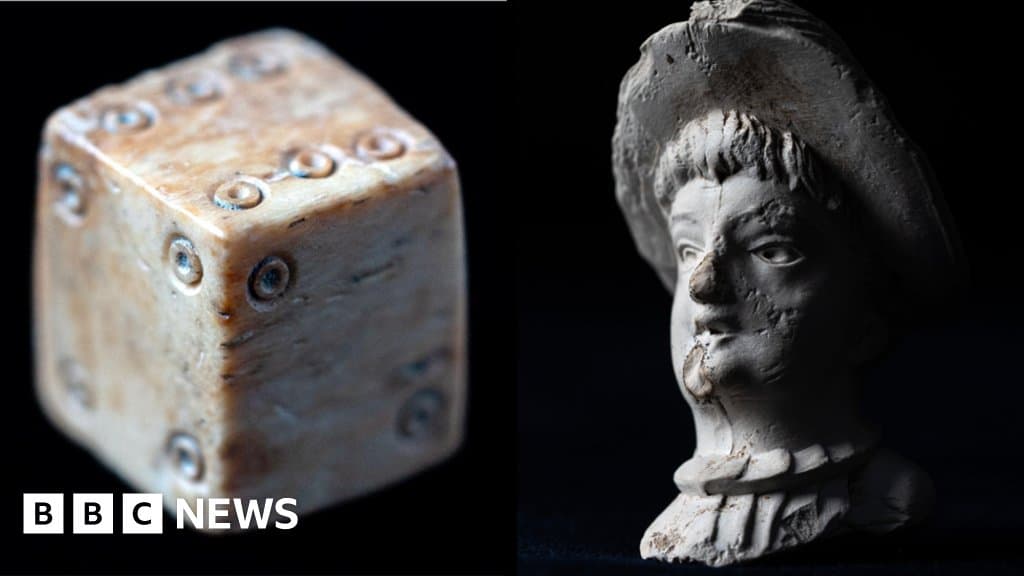
- A tiny medieval die from a deserted village in Warwickshire, with imperfections that distinguish it from modern mass-produced versions
- A complete porcelain pug figurine found in a grave at St James' Gardens in Euston, likely made by the Derby porcelain factory around 1770-1800
- A set of 19th Century gold dentures containing six teeth, discovered at St Mary's Old Church in Stoke Mandeville
The warehouse's location remains undisclosed for security reasons, but inside are 7,300 boxes of historic items awaiting further research. The collection includes showstoppers like Roman statue heads and a gold 'three lions' pendant from the 13th-14th Century.
While the archaeological work is largely complete, the future of many objects remains undecided. Under English property law, the items will either belong to the government or landowners. HS2's spokesperson notes that "occasionally landowners may wish to retain title to objects, in which case they will be returned to their care."
Charlotte Self, archive manager for the project, hopes most items will be donated to local museums near their discovery sites. "I would love to see the majority of these items deposited with the local museums from near where they were found," she says.
The discoveries have drawn praise from Historic England, which commended the team for revealing "new and exciting sites spanning over 10,000 years of our past." However, the HS2 project itself remains deeply controversial.
Critics like Greg Smith, MP for Mid Buckinghamshire, argue that the railway's soaring costs, delays, abandoned villages, and damage to the natural and historic environment make it not worth building. "It should not have cost the taxpayer tens of billions of pounds to build a railway that no-one wants and brings so much destruction," Smith says.
HS2's Chief Executive Mark Wild has acknowledged the project's problems, stating that "overall delivery of HS2 has been unacceptable" and committing to ending the project's cycle of cost increases and delays.
Despite the controversy, many archaeologists believe the discoveries justify the project's existence. Historian Graham Evans, who chairs the Northamptonshire Battlefields Society, argues that "whether HS2 is a good or bad thing is debatable, but I tell you what, if they built the railway and they didn't do the archaeology that would be more tragic."
The research potential from these finds is considered remarkable. Neil Redfern from the Council for British Archaeology notes that "the scale is what makes it so extraordinary," adding that "it is the length of the scheme and the landscapes and places that HS2 passed through that make the collection of sites and material so interesting."
Archaeologists are now entering the second phase of works, including further condition assessments, cleaning, and conservation checks. Some artefacts, like those from the Wendover Saxon cemetery where 122 graves were unearthed, will soon go on display at a Discover Bucks Museum exhibition.
As Dr Machin reflects while unwrapping the gold dentures, "These are objects, but they all relate to people. It's all about the people who lived in these areas going back thousands of years and we can start writing the stories about their lives and what they can tell us."
The HS2 archaeological project demonstrates how major infrastructure developments, despite their controversies, can provide unprecedented opportunities to understand Britain's deep history. Whether the railway itself proves worthwhile remains debated, but the archaeological legacy it has created offers a unique window into the lives of those who came before us.
Comments
Please log in or register to join the discussion