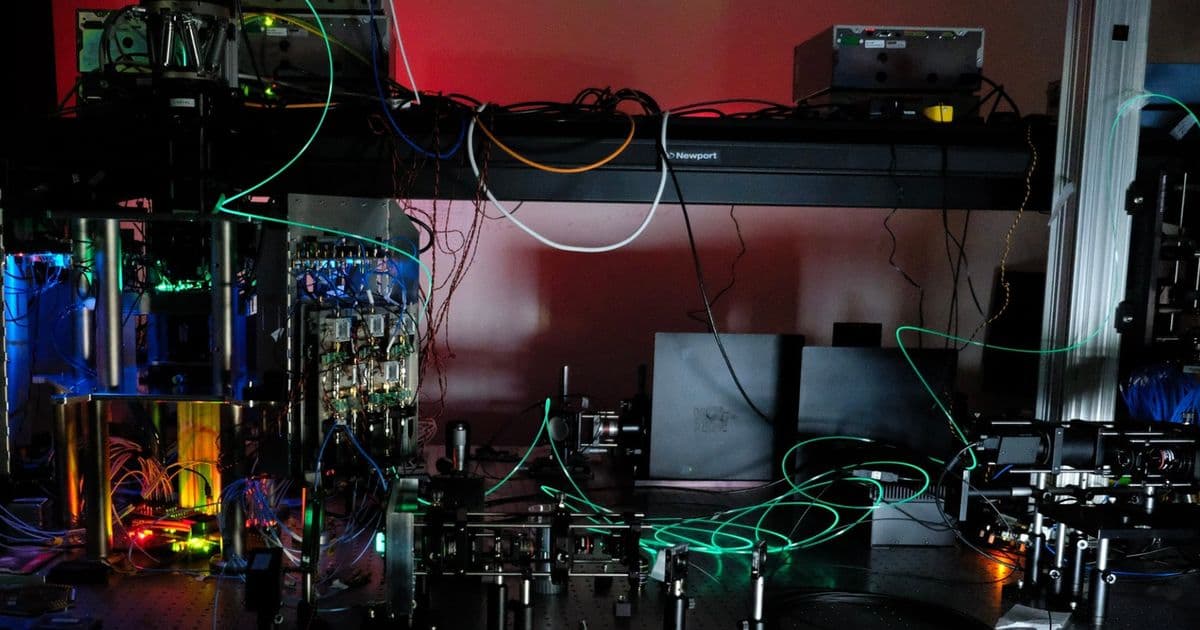
Microsoft's MOSAIC project replaces lasers with MicroLEDs in datacenter optical cables, promising 50% energy savings and 100x lower failure rates, with commercialization expected by late 2027. The company is also expanding Hollow Core Fiber deployment for 47% faster transmission and 33% lower latency.
Microsoft Research has announced significant progress in its MOSAIC (Modular Optical Switching and Interconnect Architecture using Cores) project, with commercialization of MicroLED-based optical cables expected by late 2027. The technology, developed at Microsoft's Cambridge, U.K. research facility in partnership with MediaTek and other suppliers, represents a fundamental shift in how data is transmitted within datacenters, potentially reducing energy consumption by approximately 50% compared to current laser-based solutions.
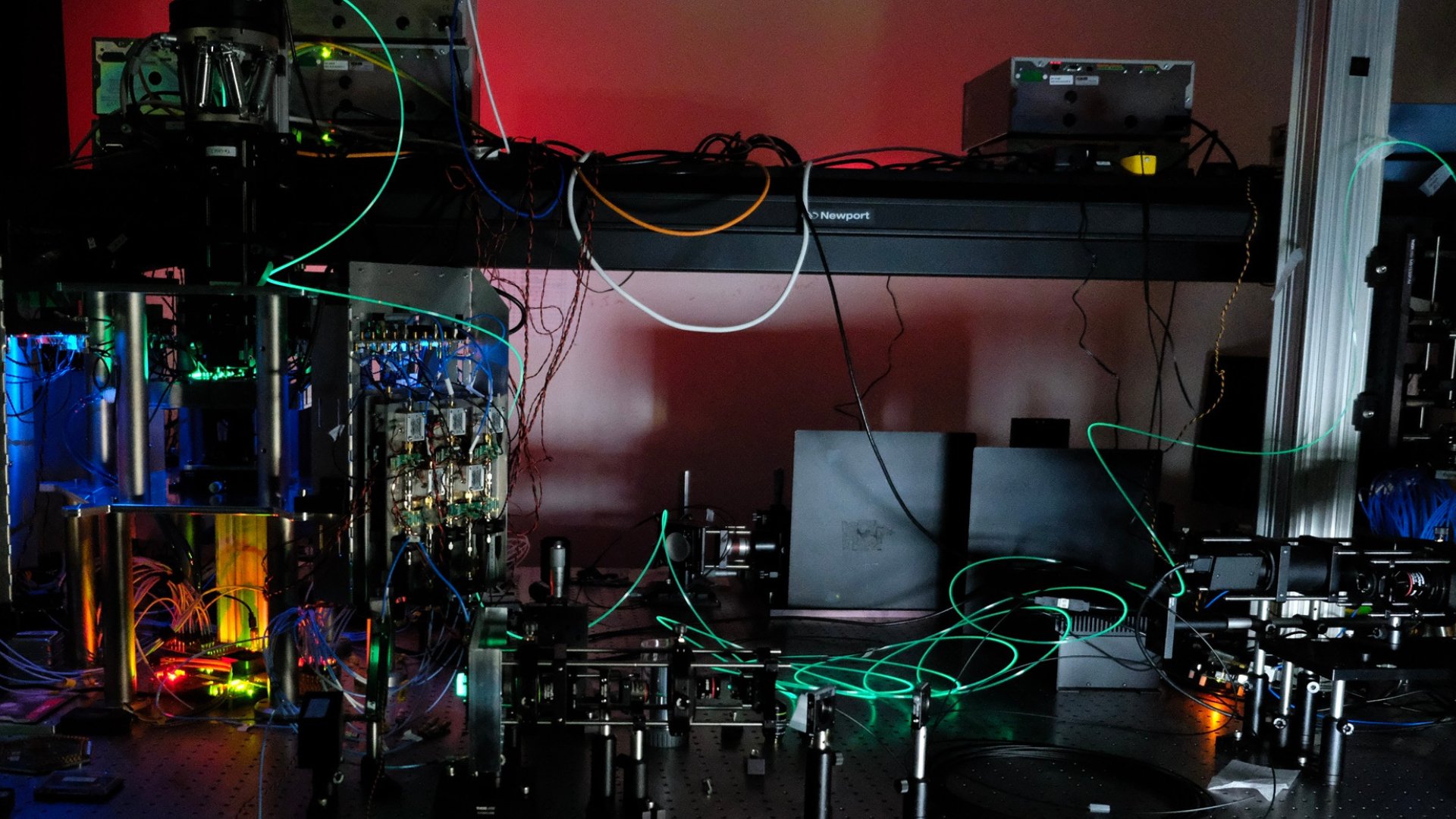
Technical Architecture: "Wide and Slow" vs. "Narrow and Fast"
The MOSAIC system inverts traditional optical cable design philosophy. While conventional datacenter optical cables use lasers to fire data through a small number of high-speed channels, MOSAIC transmits data across hundreds of parallel low-speed channels using directly modulated MicroLEDs. According to Paolo Costa, Microsoft partner research manager and project lead, this approach can be compared to QR codes versus traditional barcodes—both carry the same information volume but through different patterns.
"That was the missing piece," Costa explained. "We finally had a way to carry thousands of parallel channels in one cable." The system utilizes commercially available imaging fiber, which contains thousands of individual cores within a single strand—technology originally developed for medical endoscopy.
Performance Advantages and Specifications
The MOSAIC system demonstrates significant performance improvements over existing technologies:
- Energy consumption reduced by approximately 50% compared to mainstream laser-based optical cables
- Up to 68% power savings according to MOSAIC paper results
- Failure rates up to 100 times lower than conventional optical links
- Transmission distance up to 50 meters, significantly beyond the 2-meter limit of copper cabling used for high-bandwidth GPU connections
- Compatible with existing datacenter equipment without requiring server or switch modifications
MicroLEDs offer inherent advantages over traditional lasers in datacenter environments. They are smaller, cheaper to produce, and more temperature-stable than lasers, which are vulnerable to heat fluctuations and dust contamination. These characteristics contribute to the improved reliability and lower operational costs of the MOSAIC system.
Commercialization Timeline and Partnerships
Microsoft has successfully completed a proof of concept that miniaturized the lab prototype into a standard transceiver form factor, paving the way for commercial deployment. The company expects to bring this technology to market with industry partners by late 2027, as announced in their latest disclosure.
The project's findings were recognized with Best Paper honors at ACM SIGCOMM 2025, underscoring the technical significance of Microsoft's research in the optical networking field. The paper details the system's architecture, performance characteristics, and comparative advantages over existing solutions.
Complementary Hollow Core Fiber Technology
Parallel to MOSAIC development, Microsoft is expanding deployment of Hollow Core Fiber (HCF), which carries light through an air-filled core instead of solid glass. This complementary technology delivers up to 47% faster data transmission and approximately 33% lower latency than conventional single-mode fiber, according to Microsoft's published research.
HCF is already operational in some Azure regions, with Microsoft having acquired Lumenisity—the University of Southampton spinout that developed HCF technology—in 2022. The company has since established manufacturing partnerships with Corning and Heraeus to scale production capabilities.
Strategic Positioning in Datacenter Infrastructure
Frank Rey, Microsoft's general manager of Azure Hyperscale Networking, clarified how the two technologies fit into Microsoft's datacenter infrastructure strategy. "MOSAIC serves connections inside datacenters, while HCF covers longer distances between datacenters and Azure regions," Rey explained.
This dual-technology approach positions Microsoft to address both intra-datacenter and inter-datacenter communication challenges with purpose-built solutions. The MOSAIC system focuses on high-density, short-to-medium distance connections within datacenter racks and rows, while HCF optimizes longer-haul connections between geographically dispersed datacenter facilities.
Market Implications and Supply Chain Context
The commercialization of MOSAIC technology could significantly impact the optical components market, which has traditionally been dominated by laser-based solutions. By leveraging MicroLEDs—already experiencing growth in display applications—Microsoft's approach may accelerate economies of scale for this semiconductor technology.
The imaging fiber supply chain, currently specialized for medical applications, would need to scale production to meet datacenter demands. Microsoft's partnerships with established optical component manufacturers suggest a strategy to leverage existing manufacturing capabilities while adapting them to new requirements.
For hyperscale operators like Microsoft, the energy efficiency gains translate directly to reduced operational costs and improved sustainability metrics. The 50% energy reduction claim represents substantial savings in datacenter environments where power consumption for networking infrastructure represents a significant portion of total energy usage.
As edge computing and AI workloads continue to drive demand for higher bandwidth and lower latency, innovations like MOSAIC and HCF may become critical differentiators in cloud service provider offerings. Microsoft's timeline of late 2027 for commercialization suggests the company aims to bring these technologies to market as demand for next-generation datacenter infrastructure peaks.
The successful implementation of these technologies could position Microsoft as a leader in optical networking innovation, potentially influencing industry standards and creating barriers to entry for competitors unable to match the performance characteristics or cost efficiency of the new approach.
Comments
Please log in or register to join the discussion