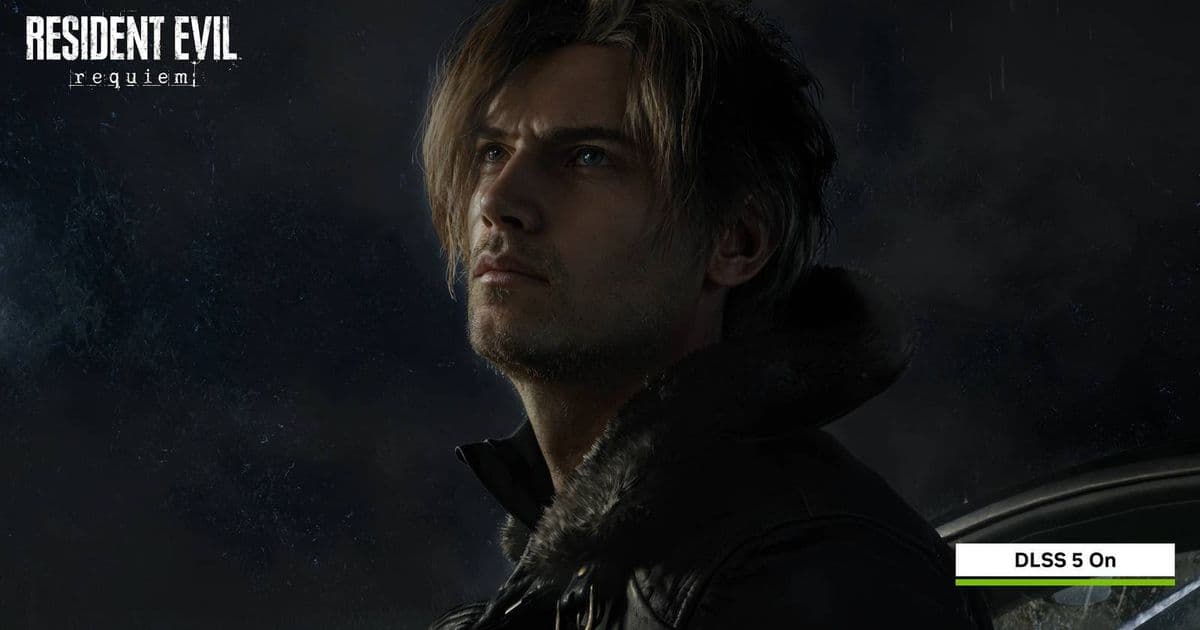
Jensen Huang defends AI-generated graphics technology as the future of gaming, despite gamer criticism of visual artifacts.
Nvidia CEO Jensen Huang has dismissed criticism of DLSS 5's AI-generated graphics as misguided, telling gamers they're "wrong" about the technology's visual artifacts. The comments come amid growing backlash from the gaming community over what many describe as "AI slop" in recent titles using the company's latest upscaling technology.
DLSS 5 represents Nvidia's most aggressive push into AI-generated content for gaming yet. Unlike previous versions that primarily focused on upscaling and frame generation, DLSS 5 introduces neural graphics that can create entire textures, lighting effects, and even character animations through machine learning models.
The Backlash Explained
The criticism centers on visual artifacts that appear in games using DLSS 5. Players report seeing:
- Blurry textures that resolve incorrectly
- Character models with distorted facial features
- Lighting effects that don't match scene geometry
- Animation glitches where AI fills in missing frames incorrectly
These issues have become particularly noticeable in Resident Evil Requiem, one of the first major titles to implement DLSS 5's full feature set. Players have shared comparison videos showing how AI-generated content sometimes produces results that look worse than native rendering.
Huang's Defense
Speaking at a recent investor conference, Huang argued that gamers are judging DLSS 5 by outdated standards. "They're looking at it through the lens of traditional rendering," he said. "This is a fundamental shift in how we create graphics. The AI is learning to generate content that looks correct to the human eye, even if it's not pixel-perfect by old metrics."
He compared the transition to the early days of 3D graphics, when players complained about the "plastic" look of early 3D models compared to 2D sprites. "Every generation of graphics technology faces resistance from purists," Huang noted.
The Technical Reality
DLSS 5's neural graphics system works by training on vast datasets of game content, learning patterns of how light, texture, and motion typically appear. The AI then generates these elements in real-time rather than calculating them through traditional rendering pipelines.
This approach offers massive performance gains - games can run at higher resolutions with less GPU load. However, it also means the AI occasionally makes mistakes that traditional rendering wouldn't, such as:
- Generating textures that look plausible but don't match exact scene details
- Creating lighting that's "close enough" but not physically accurate
- Filling in animation frames with AI predictions that can drift from intended motion
Industry Response
Other GPU manufacturers are watching the controversy closely. AMD's FidelityFX Super Resolution continues to focus on traditional upscaling without AI generation, while Intel's XeSS takes a hybrid approach.
Game developers are divided on DLSS 5 adoption. Some AAA studios praise the performance benefits, while indie developers worry about the loss of artistic control over every pixel.
The Future of Gaming Graphics
The debate over DLSS 5 reflects a broader tension in gaming between performance and visual fidelity. As games become more demanding, developers face pressure to find ways to deliver high-quality experiences on limited hardware.
Nvidia clearly sees AI-generated graphics as the solution, betting that players will prioritize smooth frame rates over pixel-perfect accuracy. Whether gamers agree remains to be seen, but Huang's comments suggest the company isn't backing down from its AI-first approach to graphics rendering.
For now, players can choose to disable DLSS 5 in most games, though this often means sacrificing the performance gains that make modern games playable on mid-range hardware. The choice between traditional rendering quality and AI-enhanced performance is becoming a defining question of this gaming generation.
Comments
Please log in or register to join the discussion