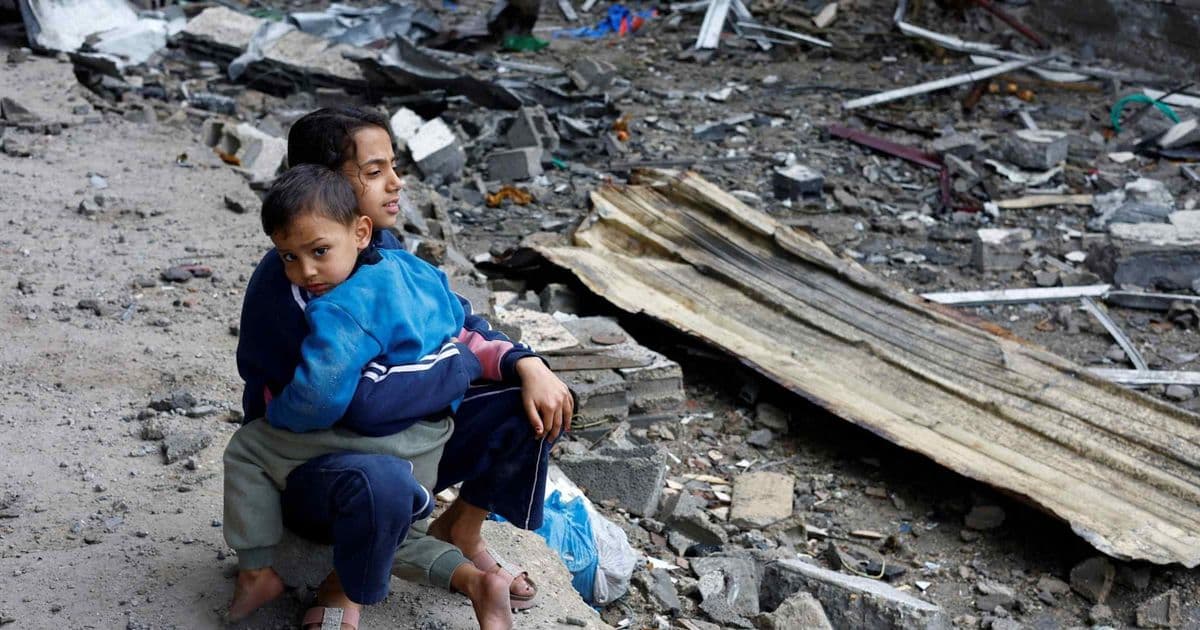
Japan is establishing a multilateral aid framework with Southeast Asian nations to provide Palestinian support in police training, debris clearance, and governance reform, responding to reduced Western aid and aiming to balance energy security interests.

The Japanese government has initiated a coordinated aid strategy for Palestinian territories through partnerships with Southeast Asian nations, responding to declining Western assistance programs. The framework, developed through the Conference on Cooperation among East Asian Countries for Palestinian Development (CEAPAD), focuses on three measurable areas: humanitarian assistance ($86 million allocated in 2025), recovery/reconstruction support, and institutional capacity-building.
Singapore will provide police training programs in Jordan, while Cambodia contributes debris removal expertise. This multilateral approach allows Japan to expand impact within constrained budgets by leveraging specialized capabilities across partner nations. Foreign Minister Toshimitsu Motegi emphasized the strategy's efficiency: "Expanding like-minded countries providing aid allows us to achieve 30% more infrastructure projects than bilateral efforts alone."
The initiative comes amid significant reductions in Western aid. The United States dissolved its Agency for International Development in 2025, while the UK cut official development assistance from 0.5% to 0.3% of GNI. France similarly reduced foreign aid allocations by 15% year-over-year. These cuts coincide with Israel's December 2025 suspension of 30 NGOs in Gaza, creating urgent gaps in medical services and humanitarian distribution.
Japan's strategy balances diplomatic priorities with economic necessities. As the world's third-largest oil importer, with 90% of crude oil sourced from Middle Eastern producers, Japan maintains delicate relations with both Israel and Muslim-majority nations. The CEAPAD framework strategically includes Indonesia and Malaysia—countries representing over 250 million Muslims—to strengthen regional legitimacy.
During recent meetings in Ramallah, Motegi pressed Palestinian Prime Minister Mohammad Mustafa on governance reforms while urging Israeli Prime Minister Benjamin Netanyahu to address settler violence and humanitarian access. Japan simultaneously committed $22 million for medical facilities near conflict zones, demonstrating its dual-track approach to regional engagement.
Analysts note the framework establishes Japan as a counterbalance to diminishing Western influence while protecting energy supply chains. The program's success metrics include debris removal from 50 high-priority sites and training for 500 police officers by Q3 2026—tangible benchmarks reflecting Japan's pragmatic approach to Middle East stability.
Comments
Please log in or register to join the discussion