
Google has merged JPEG-XL image decoding support back into the Chromium codebase, ending a controversial removal that began in 2022. The new implementation uses a pure Rust decoder and is enabled by default in Chrome 145.
After nearly two years of community backlash and developer frustration, JPEG-XL support has officially returned to Chromium. The code merge, completed yesterday, restores full image decoding capabilities for the next-generation format in Chrome and all Chromium-based browsers.
The Long Road Back
In August 2022, Google deprecated JPEG-XL support in Chrome 116, citing "lack of compelling adoption" and the format's experimental status. The decision removed both encoding and decoding capabilities from the browser, despite JPEG-XL offering significant advantages over existing formats. Users and developers immediately pushed back, arguing that removing support from the world's most popular browser would stifle adoption of a format designed to replace both JPEG and PNG.
The Chromium team eventually acknowledged the criticism, stating they "may end up reconsidering" the decision. That reconsideration began in earnest last November when new activity appeared in Chromium's bug tracker. The momentum continued through December with the merge of jxl-rs, a pure Rust implementation of the JPEG-XL decoder from the official libjxl organization. This replaced the previous C++ implementation and addresses concerns about memory safety and maintainability.
Technical Implementation Details
The restored support is built on several key components that have been progressively merged:
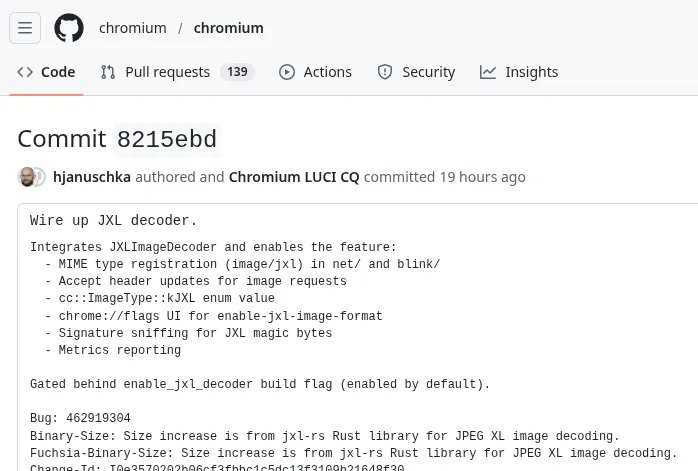
jxl-rs Decoder: The core decoding engine is now a pure Rust library, offering memory safety guarantees that the original C++ implementation lacked. This aligns with Chromium's broader push toward memory-safe languages for new components.
Build System Integration: Support is gated behind the enable_jxl_decoder build flag, which is enabled by default. This means future Chrome builds will include JPEG-XL decoding out of the box.
MIME Type Handling: Proper image/jxl MIME type registration ensures correct content type detection and handling throughout the browser's image pipeline.
User Interface: Chrome's flags page (chrome://flags) now includes an explicit option for enabling the JPEG-XL image format, giving users direct control over the feature.
Current Availability
The changes are present in Chrome/Chromium version 145.0.7632.0 and newer. However, there's an important caveat: while the code is merged and enabled by default, users may need to manually activate the feature through chrome://flags/#enable-jxl-image-format in the immediate term. This flag-based activation is typical for newly restored features, allowing for gradual rollout and bug fixing.
Why JPEG-XL Matters
JPEG-XL isn't just an incremental improvement. The format offers:
- Lossless JPEG transcoding: Existing JPEG images can be converted to JPEG-XL without any quality loss
- Superior compression: Typically 20-30% smaller files than equivalent JPEGs at the same quality
- Progressive decoding: Images load in progressively better quality, similar to progressive JPEGs
- Wide color gamut and HDR support: Built for modern displays and professional workflows
- Animation support: Can replace GIF with better compression
For homelab builders and self-hosters, JPEG-XL means smaller image libraries, reduced bandwidth costs, and faster page loads without sacrificing quality. The format's lossless JPEG transcoding is particularly valuable for migrating existing image collections.
What This Means for the Web
Chromium's reversal sends a clear signal: browser vendors need to support forward-looking standards rather than waiting for perfect adoption metrics. With Chrome back on board, JPEG-XL has a much stronger position for web adoption. Firefox already supports JPEG-XL behind a flag, and Safari remains the only major browser without any support.
The community-driven reversal also demonstrates the power of sustained technical advocacy. The JPEG-XL GitHub organization and its contributors provided the technical foundation that made reimplementation possible, proving that open standards need active, technical participation from developers.
For now, Chrome users can expect to see JPEG-XL images rendering natively in the coming weeks as the feature stabilizes and the flag requirement is potentially removed. The format's return to the world's most popular browser marks a significant win for image format diversity and web performance optimization.
Comments
Please log in or register to join the discussion