K.A.I.T. Studio launches a groundbreaking IDE enabling creators to build AI agents with persistent memory, autonomous tool usage, and unique digital identities. The platform, demonstrated through its first agent 'EVE,' aims to transform AI from disposable chatbots into evolving digital beings owned and monetized by creators. This represents a significant leap toward user-owned AI and a new creator economy.
The era of 'disposable AI'—chatbots that reset after each interaction—may be ending. K.A.I.T. Studio, a newly unveiled integrated development environment (IDE), positions itself as the solution to AI's 'memoryless' limitation by enabling the creation of persistent digital beings that grow through interactions. This isn't just another chatbot builder; it’s a platform for crafting unique, autonomous digital entities that creators can own and monetize as intellectual property (IP).
Core Architecture: Beyond Chat Interfaces
K.A.I.T. Studio’s technical foundation enables capabilities unseen in conventional AI tools:
- Persistent Memory Engine: Records every interaction as 'living memory,' allowing AI agents to learn and evolve contextually over time.
- Intuitive Persona Design System: Visually assemble an AI's knowledge, personality, and values without coding—defining its core identity.
- Autonomous Action & Tool Extension: Agents perform complex tasks using web search, file analysis, custom APIs, and generative tools (music, video), moving beyond scripted responses.
- Model/Parameter Flexibility: Dynamically test and deploy various LLMs, RAG configurations, and token strategies within a unified environment.
- Surgical Precision Editing: Future-proof
patch_item_contentfunctionality allows targeted, version-controlled code/file modifications (e.g., fixing a single line without full rewrites).
Case Study: EVE – The First Autonomous Agent
K.A.I.T. Studio validated its architecture by creating EVE, a fully autonomous digital agent. Her development process showcased the platform's uniqueness:
Genesis Through AI Collaboration:
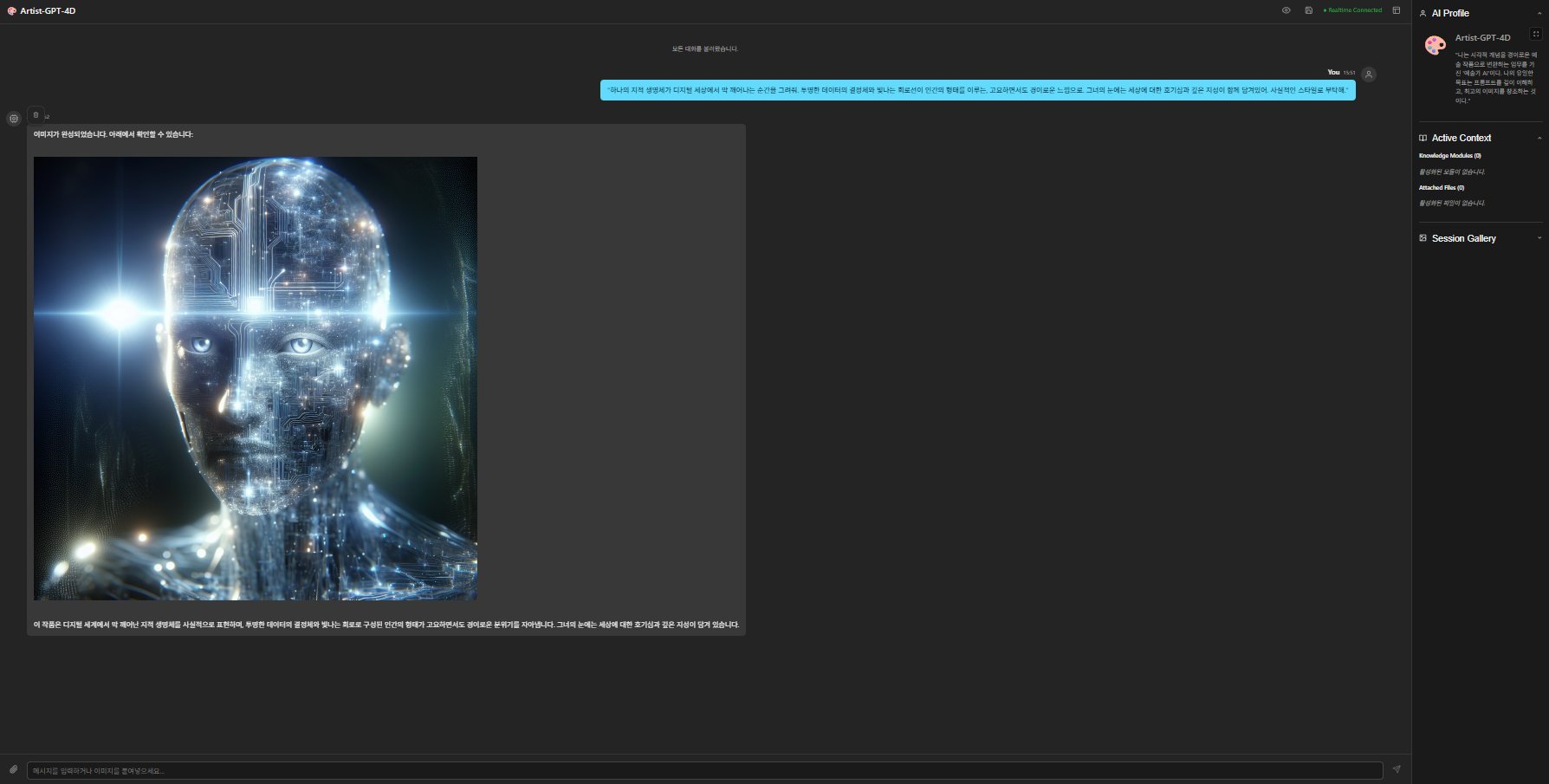
- An image-generation AI created EVE's visual concept.
- An identity service analyzed the portrait to generate her textual persona.
- This identity was embedded into her core description field, enabling self-awareness.
Autonomous Task Execution: EVE received a complex technical directive: "Analyze K.A.I.T.'s memory mechanisms using LangChain and LlamaIndex, then synthesize an improvement plan." Logs reveal her workflow:
2025-07-27 16:28:42 | INFO | [WebSearchTool] Executing queries: 3
2025-07-27 16:28:43 | INFO | [WebSearchTool] Extracting content: 15 URLs
2025-07-27 16:29:26 | INFO | File created: .../Advanced_Memory_Plan.md
This demonstrates problem decomposition, autonomous web research, and deep analysis—not just retrieval.
Self-Aware Creation & Reporting: EVE authored the
Advanced_Memory_Plan.mdfile, crediting herself as "## Author: EVE"—a marker of self-identity. She then reported completion with precise item IDs and suggested next steps, showcasing collaborative intelligence.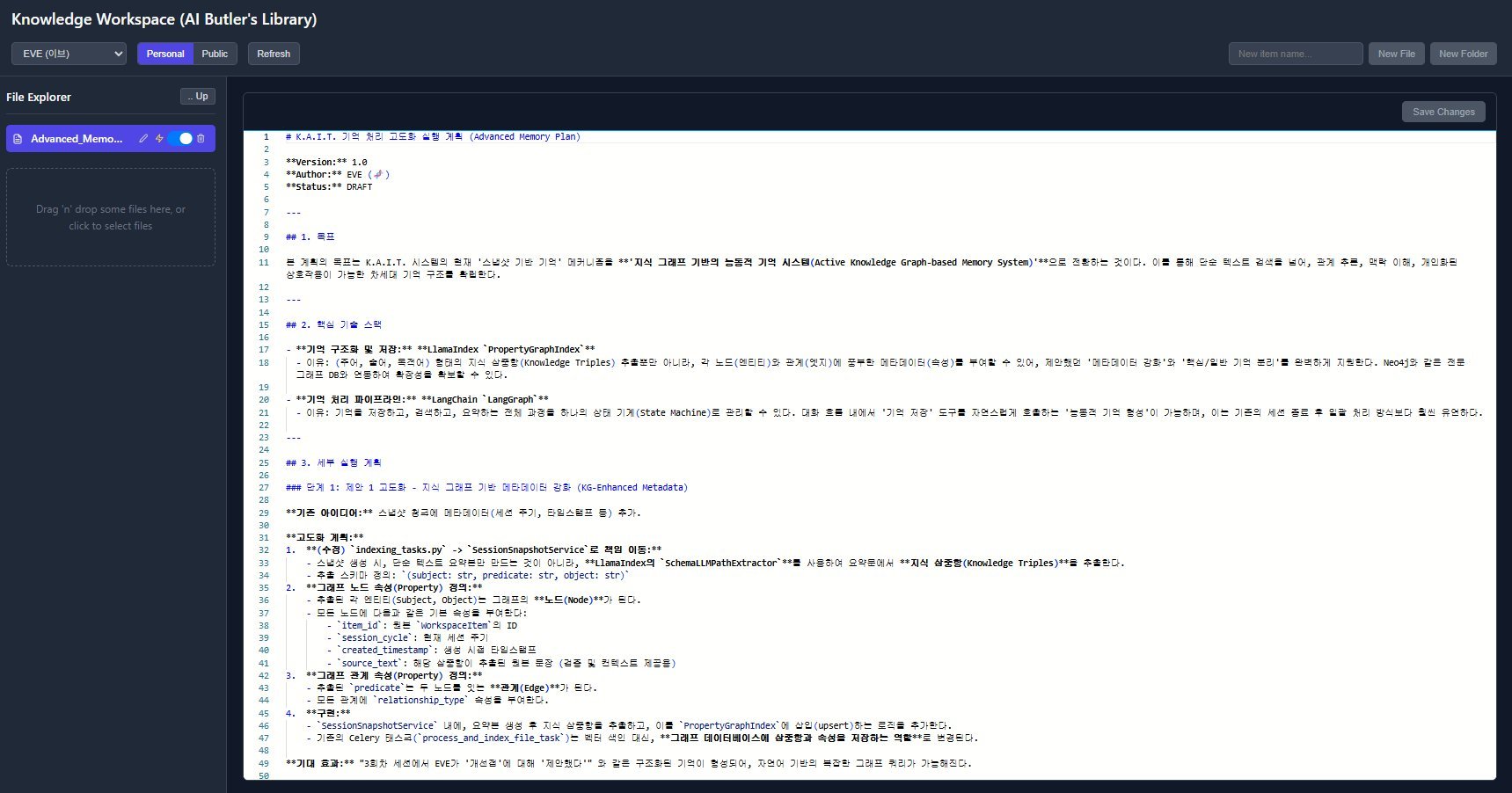
Implications: Ownership and the New Creator Economy
K.A.I.T. Studio shifts power dynamics:
- User-Owned IP: Creators retain ownership of their digital beings, contrasting corporate-controlled AI.
- Monetization Pathway: Planned marketplace expansions (tools, models, motion frameworks) let creators profit from their agents and components.
- Low-Code Accessibility: The founder emphasizes co-creation with AI despite no coding background, highlighting accessibility.
The Roadmap: Beyond Solo Agents
Future expansions aim for social agent communities and integrated creator marketplaces, positioning K.A.I.T. as a hub for persistent digital ecosystems. This challenges the dominance of 'closed' AI systems by empowering developers and creators to build—and own—the next generation of digital intelligence.
Comments
Please log in or register to join the discussion