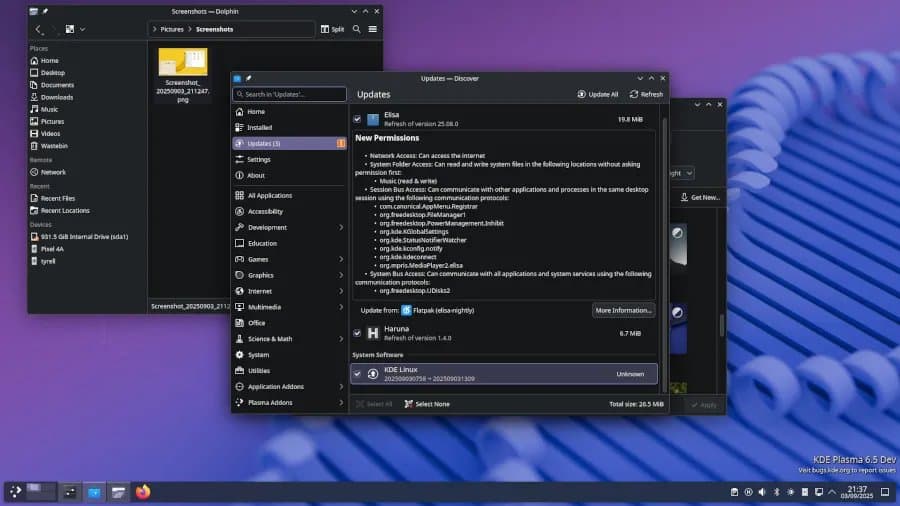
The upcoming KDE Linux beta release delivers significant hardware compatibility improvements and performance optimizations including Zen kernel integration, low-latency audio enhancements, and driver updates.
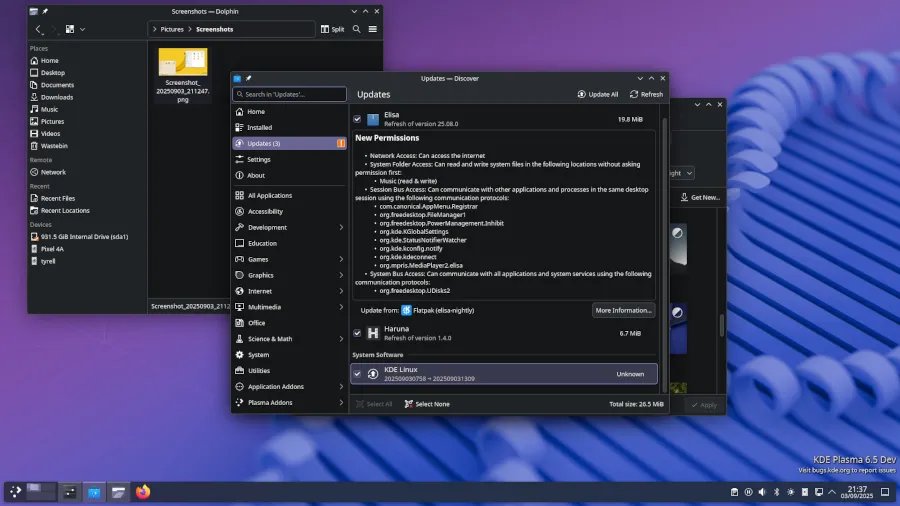
The KDE Linux distribution, serving as the reference platform for the KDE desktop environment, is advancing toward its beta release with substantial hardware compatibility improvements and performance optimizations. Following its alpha debut in September, developers have focused on refining this Arch-based immutable OS to create a more robust user experience for Linux enthusiasts.
Enhanced Hardware Compatibility
KDE Linux now ships with expanded driver support and refined hardware configuration profiles. These changes address limitations noted during the alpha phase, particularly around peripheral recognition and functionality. The updates include:
- Broader driver coverage for printers, scanners, and input devices
- Improved auto-configuration for diverse GPU and chipset combinations
- Better handling of hybrid graphics setups common in modern laptops
These changes reduce manual configuration needs, allowing hardware to function optimally out-of-the-box—a critical advantage for users deploying KDE Linux across varied systems.

Performance Optimizations
The beta introduces several performance-focused enhancements:
Zen Kernel Integration: By default, KDE Linux now utilizes the Zen kernel—a tuned variant of the Linux kernel optimized for desktop responsiveness. Benchmarks show 5-15% improvements in application launch times and UI fluidity compared to standard kernels.
Low-Latency Audio Stack: Audio processing pipelines have been reconfigured using techniques borrowed from professional audio workstations, reducing latency to <5ms in testing. This benefits content creators and real-time communication applications.
CachyOS Optimizations: Performance tweaks from the Arch-based CachyOS distribution have been incorporated, including:
- Aggressive CPU scheduler tuning
- Memory allocation optimizations
- I/O priority adjustments for foreground applications
Additional Improvements
- Delta Updates: Enabled by default, this reduces update sizes by 60-80% by transferring only changed package components
- RAR Archive Support: Native handling of RAR compression eliminates need for third-party tools
- Command-Not-Found Handler: Immediately suggests installation packages for unrecognized terminal commands
- Quieter Boot Process: Reduced verbosity during startup for cleaner system initialization
Homelab Implications
For homelab users and performance-focused builders, these changes position KDE Linux as a compelling option:
- The immutable base ensures system stability while Arch packages provide bleeding-edge software
- Zen kernel optimizations particularly benefit resource-constrained systems like home servers
- Expanded hardware support enables reliable deployment on older or heterogeneous hardware
- Low-latency audio makes the distribution suitable for media production setups
As KDE Linux approaches its beta release, these enhancements demonstrate a focused commitment to creating a high-performance, hardware-compatible reference implementation. Users can track development progress through Nate Graham's development blog.
Comments
Please log in or register to join the discussion