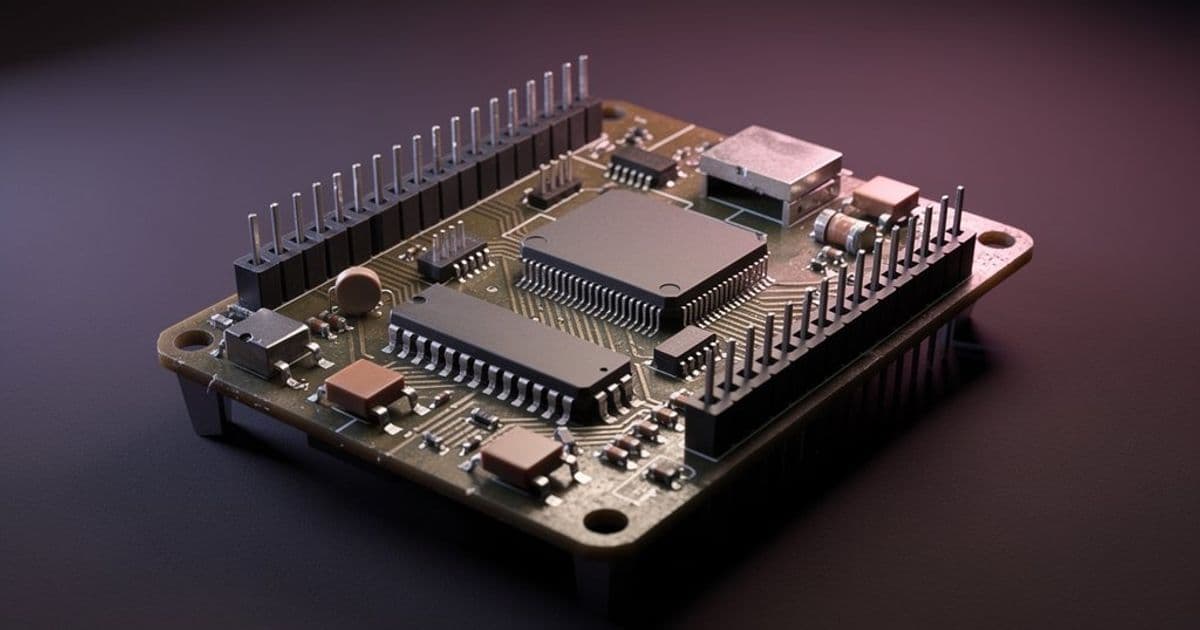
A new open-source demo project marks the 50th anniversary of MOS Technology's KIM-1 microcomputer, featuring practical assembly routines for modern terminal emulation while inviting community contributions to preserve computing history.
The MOS KIM-1 microcomputer, released in January 1976, predates both the Apple I and its sibling TIM system, establishing foundational concepts in personal computing. This month, developer netzherpes launched an open-source demo project commemorating the KIM-1's 50th anniversary, blending historical preservation with practical technical solutions for modern developers.
At its core, the project tackles a persistent challenge when bridging vintage systems with contemporary environments: converting hexadecimal memory values into usable terminal coordinates. The included assembly routines demonstrate how to position cursors on ANSI-compatible terminals—a non-trivial task given the KIM-1's original 6502 processor architecture. The GOTOXY subroutine constructs the ANSI escape sequence ESC[xx;yyH by first loading the row and column values from memory, then passing them to the PUTDEC converter.
PUTDEC solves the hexadecimal-to-ASCII-decimal translation through iterative subtraction. For values between 0-99, it isolates tens and units by repeatedly subtracting 10 (counting iterations in Y register) until the remainder falls below 10. The tens digit converts to ASCII only if non-zero, preventing leading zeroes, while the units digit always prints. This approach avoids complex division operations, crucial for the KIM-1's limited 1MHz processor.
Beyond technical execution, the project explicitly invites community participation. Contributors can expand functionality with new modules—potential implementations include geometric shape rendering, basic painting tools, or enhanced input handling. This collaborative model acknowledges that preservation extends beyond emulation; it requires active engagement with historical computing paradigms.
Some argue such projects prioritize nostalgia over practicality. Maintaining compatibility with 50-year-old hardware demands specialized knowledge of obsolete architectures, and the demo's reliance on terminal emulation abstracts away authentic hardware interactions. Yet these efforts provide tangible educational value: developers gain insight into early optimization constraints (like avoiding processor-intensive division) while recreating foundational human-computer interaction patterns.
The KIM-1's legacy lies in its accessibility—it shipped as a fully assembled board when competitors required self-assembly. Modern equivalents exist in Raspberry Pi and Arduino ecosystems, making this anniversary relevant to contemporary makers. As physical hardware deteriorates, software preservation through projects like this offers a sustainable path for studying computing evolution.
Netzherpes' call to 'keep the spirit of early computing alive' reflects broader momentum in retro-computing communities. Similar initiatives include the Mega65 project (reimagining the Commodore 65) and FPGA-based recreations of classic systems. The KIM-1 demo joins these efforts not as a museum piece, but as living code inviting new generations to modify, debug, and comprehend computing's foundational layers.
Comments
Please log in or register to join the discussion