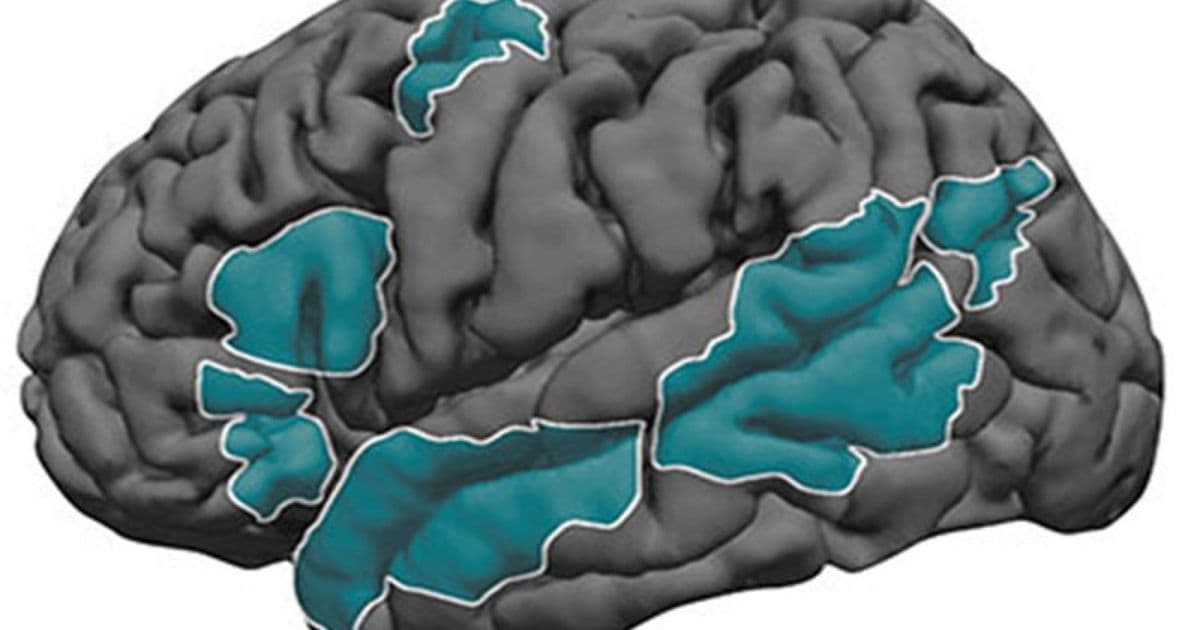
MIT researchers discovered that language processing is already localized in the left hemisphere of the brain by age 4, while the language network continues to mature and integrate until around age 16. This finding challenges previous theories about language lateralization development and has important implications for understanding developmental disorders.
The brain's remarkable capacity for language development follows a distinct trajectory, with new research from MIT revealing that while the language network continues to evolve through adolescence, its fundamental left-brain lateralization is established surprisingly early in life. This discovery, published in Nature Communications, provides critical insights into both typical brain development and conditions that affect language processing.
Research Methodology and Technical Approach
The research team, led by scientists from MIT's McGovern Institute for Brain Research, analyzed functional MRI data from hundreds of children, adolescents, and adults. The data came from three different labs led by Evelina Fedorenko, John Gabrieli, and Rebecca Saxe, who had all collected brain scans using a specialized "language localizer" task developed by the Fedorenko lab.
"The language localizer approach allows us to identify brain regions exclusively dedicated to language processing by comparing brain activity during language tasks versus non-linguistic tasks," explains Ola Ozernov-Palchik, a research scientist in Gabrieli's lab. "This method reveals the precise anatomic location of the language network, which varies across individuals."
Participants listened to age-appropriate content—ranging from "Alice in Wonderland" excerpts to podcasts and TED talks—while their brain activity was monitored. For the non-linguistic control task, children listened to nonsense words. This approach enabled researchers to map the developing language network with precision.
The technical significance of this research lies in its large-scale data aggregation across multiple research cohorts, allowing for robust developmental comparisons. The team's ability to standardize analysis across different datasets demonstrates methodological rigor that could benefit other developmental neuroscience studies.
Key Findings on Language Development
The research revealed two critical aspects of language network development:
Early Lateralization: By age 4, language processing is already strongly lateralized to the left hemisphere of the brain, showing a pattern nearly identical to adults.
Continued Maturation: While the left-lateralized foundation is established early, the language network continues to develop in complexity and integration until approximately age 16. Older children showed stronger correlations between different subregions of the language network and greater activation during language tasks, reflecting their growing linguistic capabilities.
"The integration of the system—how well different subregions work together during language processing—was stronger in older children compared to younger children," notes Ozernov-Palchik. "The system was also more strongly activated by language in older children, which may reflect their growing comprehension of what they hear."
These findings challenge previous theories suggesting that language lateralization might develop gradually. Instead, the research indicates that left-brain dominance for language appears to be an early developmental milestone.
Implications for Developmental Disorders
The research has significant implications for understanding developmental conditions that affect language, such as autism and dyslexia. These conditions often involve more bilateral language processing than typically developing individuals.
"Almost every single developmental disorder that's associated with language has a theory that's related to language lateralization," explains Ozernov-Palchik. "One idea was that people with these conditions might use both sides of their brain for language because their brains are less mature. But if most people use the left side of their brains for language even when they are young, this difference can't be attributed to developmental delay."
The findings suggest that other developmental differences—not delayed lateralization—may cause bilateral language processing in disorders like autism and dyslexia. This insight could lead to more targeted interventions and better understanding of these conditions.
The research also addresses a long-standing question about brain plasticity. When the left hemisphere is damaged in early childhood, language often develops normally in the right hemisphere. Scientists had thought this was because the right hemisphere was already participating in language processing in young children. However, the MIT findings suggest this plasticity occurs despite, rather than because of, early left-lateralization.
"Our data tell you that this early plasticity apparently happens in spite of the fact that by age 4, we see these very strongly lateralized responses already," says Fedorenko.
Limitations and Future Directions
The research has several important limitations. The study doesn't include children younger than 4, leaving a critical gap in understanding when language lateralization first emerges. Additionally, the researchers don't yet know what brain areas that become the language network are doing in the first months of life, before infants begin using language.
"We still need to know what parts of the brain process language in children younger than 4," notes Amanda O'Brien, a former graduate student in Gabrieli's lab. "Likewise, we would like to know what these brain areas are doing in the first months of life, when infants aren't using language yet. Understanding that normal trajectory is really critical for interpreting what a deviation from that trajectory is."
Future research directions include studying infants and toddlers to trace the earliest origins of language lateralization, investigating the specific neural mechanisms that drive the integration of the language network through adolescence, and exploring how environmental factors might influence language development.
Broader Applications and Connections
This research has potential applications beyond developmental disorders. Understanding the precise timing and mechanisms of language network development could inform educational approaches, particularly for language acquisition and literacy programs.
For fields like artificial intelligence and robotics, these findings offer valuable insights into how biological systems achieve the remarkable feat of language processing. The early establishment of lateralization suggests that certain organizational principles may be fundamental to language processing, which could inform the design of more efficient AI systems.
The research also contributes to our understanding of brain plasticity and recovery mechanisms. By understanding how the brain reorganizes after early injury, scientists may develop better rehabilitation strategies for individuals who experience language impairments due to brain damage.
The McGovern Institute for Brain Research continues to explore these questions, with ongoing studies examining the relationship between language development and other cognitive functions. As researchers fill in the gaps in our understanding of early brain development, this work may ultimately lead to earlier identification of language disorders and more effective interventions.
For more information about this research, you can access the original paper in Nature Communications and learn more about the McGovern Institute's work on language and the brain.
Comments
Please log in or register to join the discussion