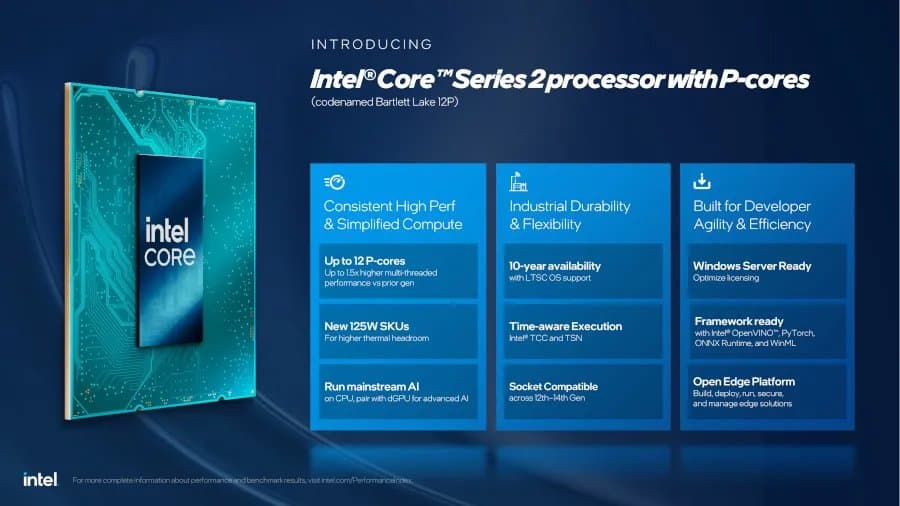
The upcoming Linux 7.1 kernel release incorporates significant power management improvements, addressing critical issues with AMD's Dynamic EPP feature and Intel's P-State driver scaling problems on Bartlett Lake and Raptor Lake processors.
Linux 7.1, scheduled for release in the coming months, has merged several important power management fixes addressing critical issues affecting both AMD and Intel processor platforms. These improvements come at a crucial time as power efficiency becomes increasingly important in computing, particularly for mobile devices and data center operations.
AMD Dynamic EPP Feature Refinements
The most significant change involves AMD's Dynamic Energy Performance Preference (EPP) functionality for the P-State driver. This feature, introduced during the Linux 7.1 merge window, allows Ryzen laptops to dynamically adjust their performance profiles based on whether they're running on AC or DC power. The EPP values automatically adjust based on power state transitions, plug/unplug events, and other factors like the ACPI Platform Profile.
However, initial implementations revealed several bugs that prompted kernel developers to restructure how this feature is enabled. In Linux 7.1, Dynamic EPP is no longer available as a Kconfig build-time option. Instead, users must now explicitly enable it via the amd_pstate=dynamic_epp=1 module parameter at boot time.
This change represents a significant shift in the implementation approach. The kernel now maintains full autonomous control over the EPP mode, blocking manual writes to the EPP interface for the AMD P-State driver. While this restriction may limit user customization, it ensures system stability and prevents potential conflicts that could arise from manual adjustments.
The development team has also incorporated several bug fixes specifically targeting the Dynamic EPP code. These fixes address issues related to EPP value transitions, power state handling, and ACPI integration. The goal is to refine this functionality to a point where it can eventually be enabled by default in future kernel releases.
Intel P-State Driver Scaling Corrections
On the Intel side, the Linux 7.1 merge includes critical fixes for the Intel P-State driver, addressing significant scaling issues affecting recently released processors.
One major fix corrects erroneous frequency reporting on new Bartlett Lake P-core only processors. These chips were incorrectly reporting frequencies up to 7GHz, a value significantly higher than their actual capabilities. This reporting error could cause various performance and power management issues, including incorrect thermal throttling decisions and power consumption miscalculations.
Notably, this fix was initially scheduled for Linux 7.2 but was expedited and incorporated into the current 7.1 cycle due to its critical nature. The Bartlett Lake hybrid scaling factor adjustment ensures more accurate frequency reporting and power management for these processors.
Additionally, the Linux 7.1 release includes a fix for the Intel P-State driver to use the correct scaling factor on Raptor Lake E CPUs. This adjustment ensures proper power management and performance scaling for these specific processor variants, which have unique power characteristics compared to other Raptor Lake models.
Market Implications and Industry Context
These power management improvements arrive at a critical juncture in the semiconductor industry. As process nodes shrink below 5nm and power density becomes increasingly challenging, efficient power management has moved from a nice-to-have feature to a fundamental requirement.
For AMD, the refinement of Dynamic EPP represents an important step in optimizing their Ryzen mobile platform for real-world usage scenarios. The ability to intelligently balance performance and power consumption based on power source directly impacts battery life and user experience—key differentiators in the competitive laptop market.
Intel's fixes address scaling issues that could have affected the adoption and performance perception of their latest Bartlett Lake and Raptor Lake processors. Accurate frequency and power reporting are essential for system manufacturers to properly configure their products and for users to understand their system's actual capabilities.
These kernel improvements also highlight the ongoing collaboration between hardware manufacturers and the open-source community. The Linux kernel's power management subsystem plays a crucial role in extracting maximum efficiency from modern processors, directly impacting energy consumption across data centers and personal computing devices.
The power management fixes merged for Linux 7.1 demonstrate the kernel development community's responsiveness to real-world issues and their commitment to optimizing performance across diverse hardware platforms. As these fixes make their way into production releases, users can expect more stable and efficient operation of both AMD and Intel systems, particularly in mobile and power-sensitive environments.
For more detailed information on these power management improvements, interested readers can refer to the official kernel documentation and the mainline kernel git repository.
Comments
Please log in or register to join the discussion