
Raspberry Pi engineers confirm Pi 6 development is underway but won't launch before early 2028 due to DRAM shortages. The flagship will emphasize faster CPU and IO rather than new features like M.2 slots, while microcontroller sales now outpace single-board computers.
Raspberry Pi 6 Timeline Revealed: Early 2028 Launch with Focus on Performance Over New Features
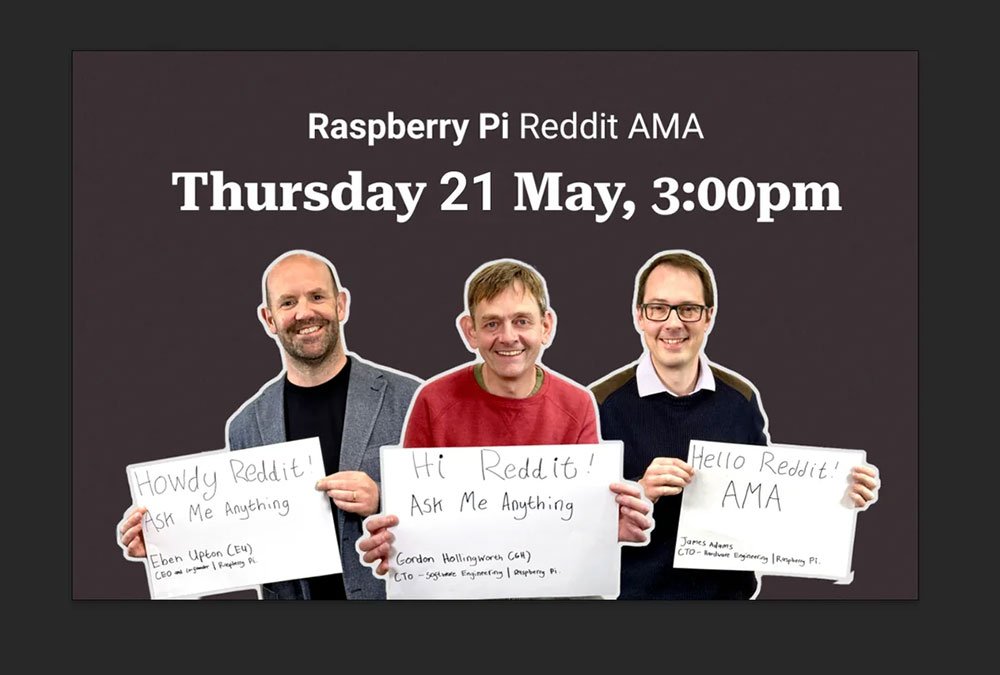
On Thursday, May 21, 2026, three of the lead Raspberry Pi engineers—Eben Upton, Gordon Hollingworth, and James Adams—hosted an AMA on the r/engineering subreddit, revealing insights about upcoming products, current challenges, and the company's direction. The discussion covered everything from the anticipated Pi 6 launch timeline to the surprising growth of their microcontroller business.
Raspberry Pi 6: Performance Focus Over New Features
Looking at Raspberry Pi's historical launch pattern:
- 2012: Raspberry Pi (original)
- 2015: Raspberry Pi 2 (+3 years)
- 2016: Raspberry Pi 3 (+1 year)
- 2019: Raspberry Pi 4 (+3 years)
- 2023: Raspberry Pi 5 (+4 years)
Following this cycle, many enthusiasts expected a Pi 6 launch in 2026 or 2027. However, Eben Upton stretched the timeline to 4-4.5 years, indicating a Pi 6 won't arrive before early 2028. This means the Pi 5 will remain Raspberry Pi's flagship product for at least another 1.5-2 years.
The primary reason for this extended timeline is the global DRAM shortage. "There's no sense in releasing an SBC that costs twice as much as the $50 Pi 5," Eben explained. The current market conditions make launching a new computer with significantly higher memory costs impractical.
When asked about expected features for the Pi 6, Eben tempered expectations for major new additions like built-in M.2 slots or additional ports. Instead, the key focus will be on "more"—specifically a faster CPU and faster IO capabilities. This performance-first approach aligns with Raspberry Pi's historical pattern of incremental improvements rather than revolutionary changes.
Interestingly, Eben indicated that Raspberry Pi sees the "CPU as a venue for AI compute" rather than dedicating silicon to a specialized NPU (Neural Processing Unit). This suggests the Pi 6 won't feature a dedicated AI chip, instead relying on the main processor for AI workloads—a pragmatic approach given the target price point.
Pi Zero 2W Shortage and Future Plans
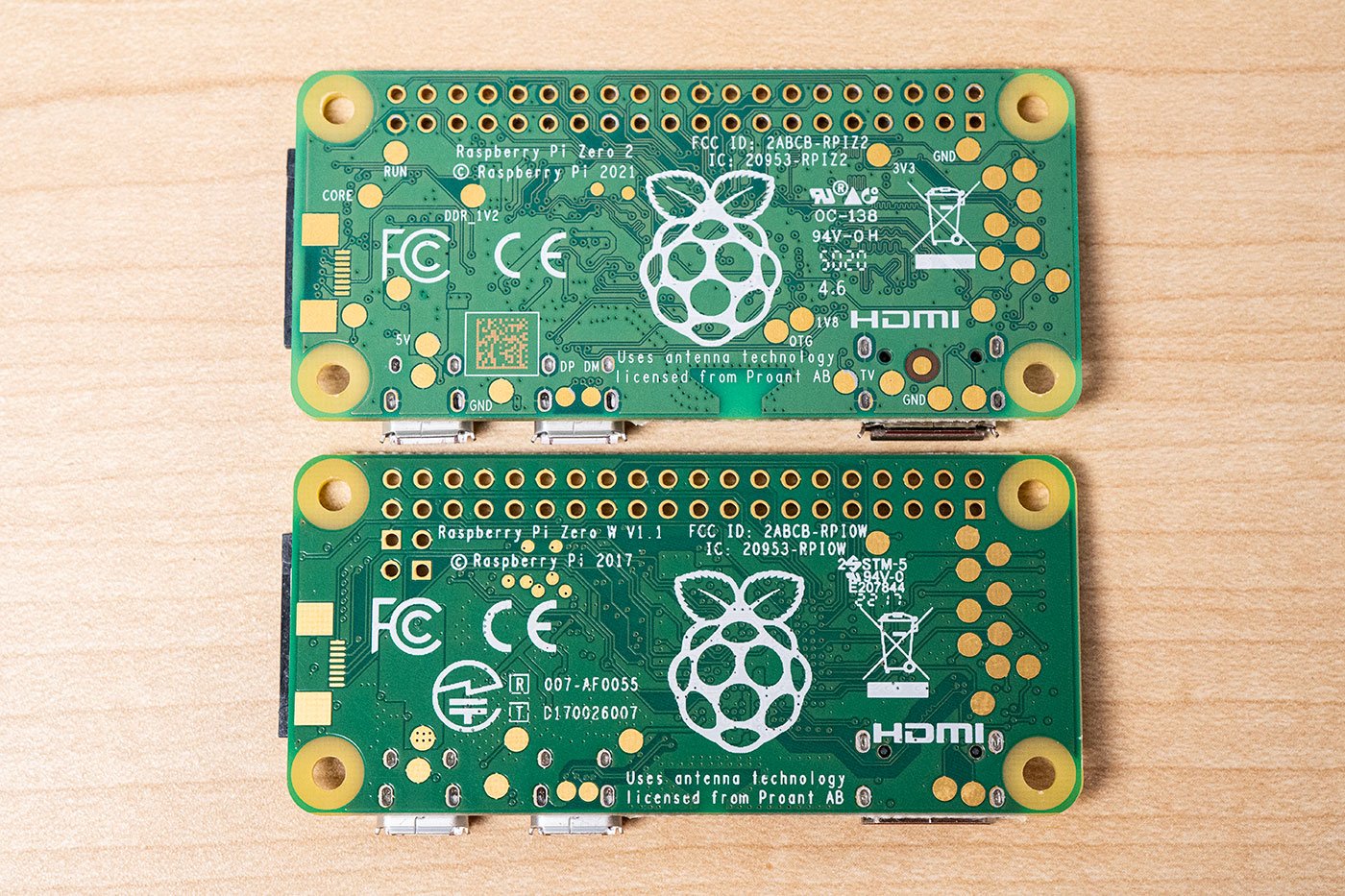
The Pi Zero 2 W has been plagued by availability issues, with Eben confirming that "substrate supply is constrained." The root cause is the intense competition for silicon wafers, as so many AI chips are being manufactured that even older chips using established process nodes must compete for resources.
Fortunately, Raspberry Pi is addressing this by bringing up a new vendor to help with capacity, suggesting the current Pi Zero 2 W shortage should be temporary. This is good news for hobbyists and embedded developers who rely on these ultra-compact boards for space-constrained projects.
When asked about a potential Pi Zero 3, Eben outlined two significant hurdles:
- The need to move away from single-sided PCBs, which adds to production costs
- Technical constraints with newer RAM that might not work with faster CPUs
Newer LPDDR RAM is also prohibitively expensive for the Pi Zero's $15 price point. The reason the Pi Zero 2 W can still hit its target price point—when in stock—is its use of older LPDDR2 RAM, of which Raspberry Pi apparently maintains a substantial stockpile.
Surprisingly, the decade-old Pi 3B remains a popular model, "selling nearly a million units a year" according to Eben. This enduring popularity highlights the value proposition of older, lower-cost models for many applications that don't require the latest performance.
Microcontroller Success Story
James Adams shared insights into the development of the RP2350 microcontroller, noting that "power and security were more challenging than expected." However, their efforts have paid off, particularly after introducing a new 'stepping' (silicon revision) that fixed a current leakage bug.
When asked why Picos continue to use micro USB instead of the more modern USB-C, Adams attributed it to cost and space constraints. "USB-C connectors are more expensive than micro USB, while also taking a tiny bit more board space," he explained. While USB-C adoption might happen someday, cost remains a primary consideration for these ultra-budget boards.
A significant milestone mentioned by Eben was that microcontroller shipments finally surpassed Pi SBC sales in 2025. "The gap is probably widening this year, as Pi prices continue going up," he added. This shift underscores the growing importance of microcontrollers in Raspberry Pi's product ecosystem and the increasing specialization of their product lines.
Software: The Raspberry Pi Advantage
Throughout the AMA, Raspberry Pi engineers emphasized that software is integral to providing a quality hardware experience. Gordon Hollingworth, Pi's CTO of Software Engineering, vowed to spend 95% of software engineering time supporting and developing libraries, drivers, kernels, and operating systems.
This commitment to software support represents a key competitive advantage for Raspberry Pi compared to other embedded companies. As one engineer noted, "If there's one thing where Raspberry Pi excels versus other embedded companies, it's software support. That's the reason people might still pay more for a Pi product, despite the lack of new hardware."
The comprehensive software ecosystem—spanning from the official Raspberry Pi OS to countless community-supported distributions and libraries—reduces development time and increases reliability for countless projects, from home automation to industrial applications.
Implications for Homelab and Embedded Projects
For homelab enthusiasts and embedded developers, these announcements have several practical implications:
Long-term Pi 5 viability: With no Pi 6 until early 2028, the Pi 5 will remain a relevant option for at least another 1.5-2 years, making it a safe investment for current projects.
Zero 2 W availability: While currently constrained, the shortage should ease as Raspberry Pi brings on a new vendor, though patience may still be required.
Cost considerations: As Pi prices continue to rise, the value proposition of older models like the Pi 3B becomes more compelling for basic projects, while microcontrollers offer increasingly attractive alternatives for specialized applications.
Software ecosystem: The continued emphasis on software support means existing Raspberry Pi projects will remain compatible and well-supported, reducing the risk of obsolescence.
As we move toward 2028, the Raspberry Pi ecosystem appears to be maturing, with clearer specialization between their single-board computers and microcontrollers. While hardware enthusiasts may crave faster and more feature-rich boards, the pragmatic approach of the Raspberry Pi team—balancing performance, cost, and availability—ensures their products remain accessible and relevant for the broad community of makers, educators, and industrial users.
Comments
Please log in or register to join the discussion