Upcoming Linux kernel patches enable hardware vendors to replace Tux boot logos via Kconfig configuration, reducing manual patching requirements for embedded systems and commercial devices.
The Linux kernel is poised to simplify boot branding customization for device manufacturers with patches now queued for the Linux 6.20~7.0 development cycle. These changes allow OEMs to replace the default Tux penguin logo during early boot sequences using standardized configuration methods rather than manual source code modifications.
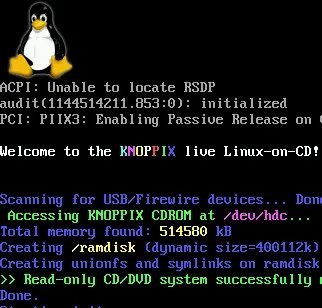
Currently, altering the boot logo requires direct patching of three core files: drivers/video/logo/logo_linux_mono.pbm (monochrome), logo_linux_vga16.ppm (16-color), and logo_linux_clut224.ppm (224-color). The new implementation introduces dedicated Kconfig parameters:
LOGO_LINUX_MONO_FILEfor monochrome PBM logosLOGO_LINUX_VGA16_FILEfor 16-color PPM logosLOGO_LINUX_CLUT224_FILEfor 224-color PPM logos
This configuration-driven approach maintains backward compatibility by defaulting to Tux when no custom file is specified. The changes landed in the linux-fbdev.git for-next branch this week, targeting integration into the mainline kernel during the upcoming development window starting February 2026.

From a semiconductor ecosystem perspective, this reduces development friction for System-on-Chip (SoC) vendors and hardware manufacturers. Companies shipping Linux-powered embedded devices—including IoT products, industrial controllers, and consumer electronics—can now implement branded boot sequences without maintaining out-of-tree patches. Supply chain analysis indicates this could accelerate product cycles for ARM-based and RISC-V devices where boot branding represents a key product differentiation factor.
The Linux 6.20~7.0 kernel will serve as the foundation for Ubuntu 26.04 LTS and Fedora 44, extending this customization capability to major distributions. While boot logos don't impact runtime performance, the reduced maintenance burden aligns with industry trends toward streamlined build systems for embedded Linux deployments. Manufacturers can reference the kernel configuration documentation for implementation details upon release.
This change reflects ongoing optimizations in the Linux boot process, following previous improvements like SPCR handling and asynchronous initialization. Device integrators should evaluate the new configuration options during the 6.20~7.0 development cycle to leverage simplified branding workflows.
Comments
Please log in or register to join the discussion