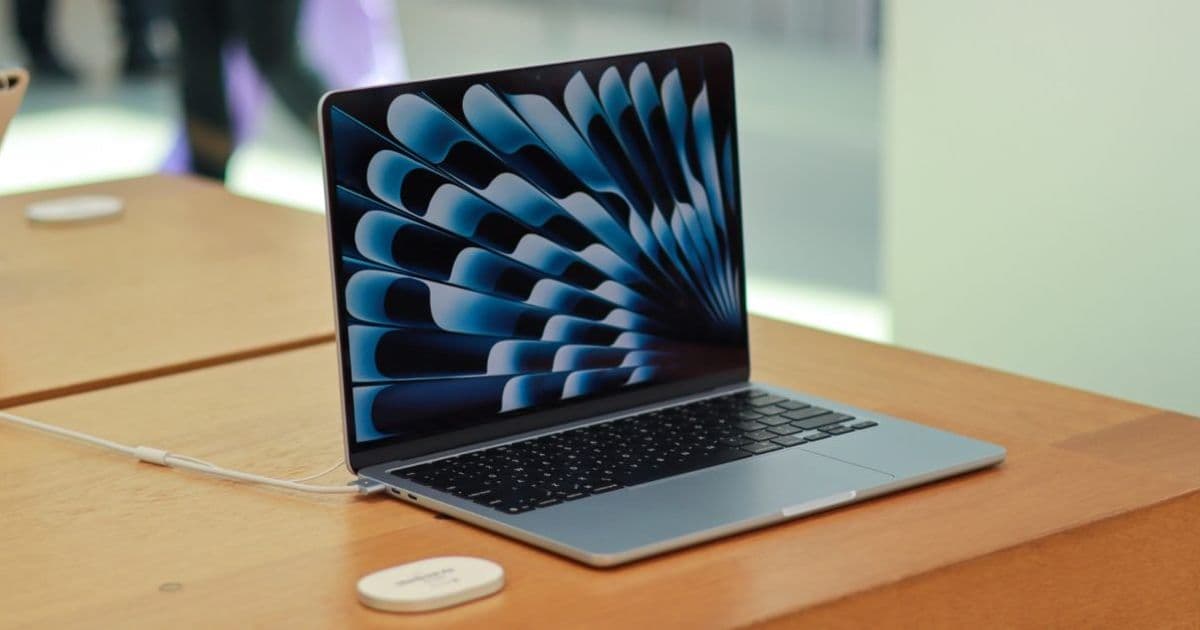
Apple's upcoming M5 MacBook Air is expected to be a modest spec bump, but thermal improvements could be the most important upgrade for sustained performance.
Apple's M5 MacBook Air is shaping up to be a modest spec bump rather than a revolutionary redesign, but there's one upgrade that could make a significant difference for users: thermal management.
The Thermal Gap in Apple's Product Line
While Apple has made impressive strides in cooling technology across its product lineup, the MacBook Air has been conspicuously left behind. The iPad Pro now features copper heat spreaders integrated into the Apple logo, delivering 20% better thermals, while the iPhone 17 Pro boasts a vapor chamber and aluminum unibody design.
These improvements came in response to real-world overheating complaints. The iPad Pro's graphite sheets and copper integration, along with the iPhone's internal redesigns, demonstrate Apple's commitment to thermal management where it matters most.
Why the MacBook Air Needs Better Cooling
The current MacBook Air design, introduced in 2022, replaced the traditional metal heatsink with a thin graphite sheet lacking a proper heat spreader. This change has resulted in faster thermal throttling under sustained workloads compared to previous generations.
With Apple Silicon chips becoming increasingly powerful, the MacBook Air's passive cooling system is struggling to keep up. The M4 chip already pushes the limits of what the current thermal design can handle, and the M5 will only exacerbate these issues.
The Performance Trade-off
Many argue that MacBook Air users don't require sustained peak performance, and there's merit to that perspective. However, the gap between the MacBook Air and iPad Pro's thermal capabilities raises questions about Apple's priorities.
If a tablet running iPadOS can accommodate sophisticated cooling systems, why shouldn't a laptop designed for productivity receive similar treatment? Better thermal management wouldn't just benefit power users—it would improve the overall user experience for everyone.
What Apple Could Do
The solution doesn't need to be complex. Apple could implement a vapor chamber system similar to the iPhone 17 Pro, which would provide significant thermal headroom without requiring a complete redesign. This approach would maintain the MacBook Air's thin profile while addressing its most pressing limitation.
Competitive Advantage
As Apple prepares to launch a new entry-level MacBook with an A18 Pro chip, the MacBook Air's thermal capabilities could become a key differentiator. For users who need more than basic computing but don't want to step up to the MacBook Pro, improved cooling could be the deciding factor.
Looking Ahead
The M5 MacBook Air represents Apple's next opportunity to address this long-standing issue. While spec bumps are expected, thermal improvements would deliver more tangible benefits to users than incremental performance gains that the current cooling system can't sustain.
As Apple Silicon continues to evolve, the thermal envelope of devices becomes increasingly critical. The MacBook Air's current design may have been adequate for earlier chips, but it's becoming a bottleneck that limits the potential of Apple's most advanced processors.
For a device positioned as Apple's mainstream laptop, ensuring it can handle sustained workloads without throttling should be a priority. The technology exists within Apple's ecosystem—it's time to bring it to the MacBook Air.
What do you think? Would better thermal management make you more likely to choose a MacBook Air over other options in Apple's lineup?
Comments
Please log in or register to join the discussion