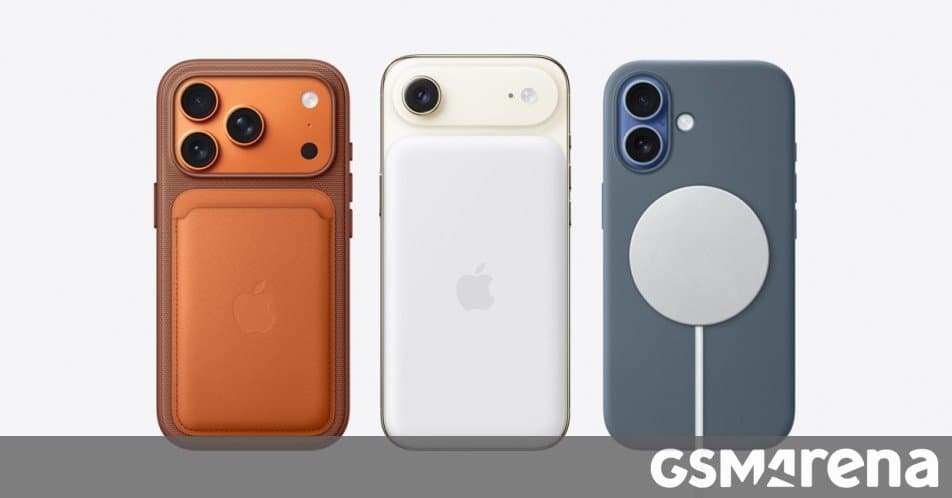
GSMArena's reader poll reveals magnetic charging remains a low-priority feature for most users, with wired charging maintaining dominance due to superior speed and efficiency.
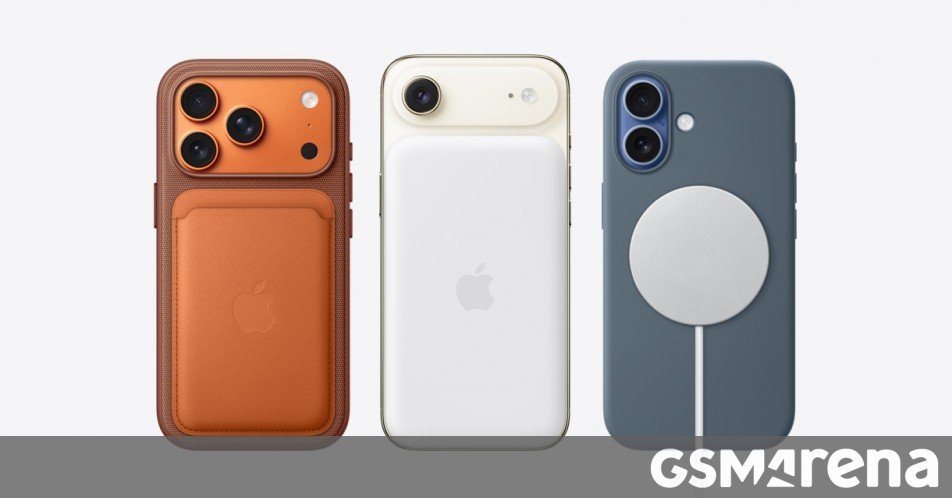
Our latest reader poll delivers a clear verdict: magnetic charging technology hasn't captured mainstream interest among mobile users. With over 60% of respondents describing it as merely "nice to have" or outright unimportant, the results highlight wired charging's persistent advantages in today's smartphone landscape.
The preference for cables isn't arbitrary. USB Power Delivery (USB-PD), the universal wired charging standard, consistently outperforms wireless alternatives in both speed and energy efficiency. While Qi2 wireless charging caps at 25W, USB-PD regularly achieves 45-100W speeds on modern Android flagships. This gap becomes critical with today's 5,000mAh+ batteries—larger capacities demand faster replenishment cycles that wired solutions deliver more effectively.
Interestingly, battery longevity plays a crucial role in this dynamic. Many poll participants who exclusively use wired charging reported rarely needing daytime top-ups. Modern smartphones easily achieve all-day endurance even under heavy use, reducing dependency on intermediate charging solutions.
Among the 33% favoring magnetic systems, distinct usage patterns emerged:
- Caseless enthusiasts demand built-in magnets (like Apple's MagSafe or Google's Pixelsnap), rejecting case-dependent implementations
- Case users accept magnetic accessories attached to their protective covers
- Non-charging adopters (10%) exclusively use magnets for car mounts, wallets, or stands while charging via cable
Concerns about magnetic strength surfaced too, with users questioning whether case-mounted magnets provide sufficient grip compared to phone-integrated solutions.
The ecosystem landscape reveals stark contrasts. While Apple's MagSafe spawned a thriving accessory market, Android adoption remains limited. Google stands alone in fully committing to magnetic integration with Pixel 8's Pixelsnap technology. Competing Android manufacturers show reluctance, likely deterred by patent complexities and accessory market fragmentation.
This hesitation creates potential lock-in scenarios. Proprietary magnetic systems exceeding Qi2's 25W limit—like Xiaomi's 50W wireless charging—only work with brand-specific chargers. Switching phone brands could require replacing your entire charging ecosystem.
As Qi2 certification gradually unifies magnetic charging standards, the technology may gain broader appeal. But for now, USB-C's universality, speed, and efficiency maintain wired charging's decisive edge for most users.
Comments
Please log in or register to join the discussion