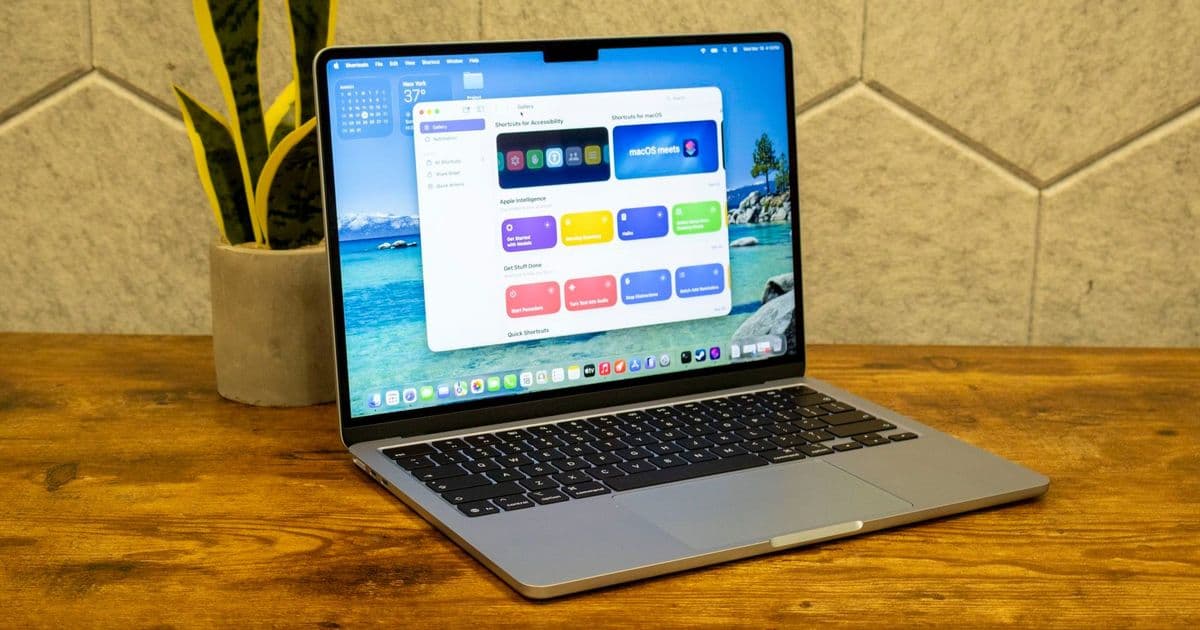
Portuguese consumers face higher tech costs due to a 1998 copyright levy that taxes storage capacity, adding significant premiums to devices like the MacBook Neo. Similar laws across Europe create a fragmented market landscape where identical hardware carries varying price tags based on local copyright legislation.
Portugal and its 11 million people represent a tiny market by global standards, yet the country recently made tech headlines when enthusiast @levelsio discovered a 2.05€ 'copyright fee' added to his MacBook Neo purchase. This additional charge exemplifies how regional copyright legislation creates significant price variations for identical hardware across international markets.

The Portuguese copyright levy, established by law 62/98 and revised by law 49/2015, represents one of the most aggressive implementations of a broader European approach to compensating rights holders for potential piracy. While not unique—similar systems exist in Germany, Belgium, Russia, Sweden, and the United States through the DMCA—Portugal's implementation stands out for its comprehensive scope and substantial rates.
Technical Implementation of Copyright Levies
The Portuguese tax system targets virtually all digital recording media, creating a complex matrix of rates based on device type and storage capacity. Computers and external drives incur a rate of 0.004€ per gigabyte of storage, while phones and tablets face a significantly higher rate of 0.12€ per gigabyte, capped at 7.5€ per device. Game consoles bear the highest burden at 0.20€ per gigabyte, with a maximum levy of 15€ per unit.
These rates translate into concrete price premiums that have grown exponentially as storage capacities have increased. A typical smartphone with 256GB of storage would incur a 30.72€ copyright fee, though the 7.5€ cap limits the actual charge. Similarly, a MacBook Neo with substantial internal storage could see its price increase by several euros depending on configuration.
The tax extends beyond computing devices to encompass virtually any equipment capable of digital reproduction, including cameras, printers, and scanners. Some devices face flat fees, with high-speed laser copiers potentially taxed up to 20€ regardless of storage capacity.
Market Implications and Economic Impact
The economic consequences of these levies become particularly pronounced when examined in context of Portugal's economic landscape. With a median monthly wage of approximately 1,000€—the 10th lowest in the European Union—these additional taxes represent a more significant burden than in wealthier nations.

The tax revenue trajectory reveals a dramatic increase, growing from 600,000€ in 2014 to 36 million euros in 2022—a 60x increase over eight years. This surge coincides with the decline of physical media and the rise of streaming services, which have reduced the percentage of users actually making personal copies of copyrighted material.
The market has adapted to these distortions in predictable ways. Tech-savvy Portuguese consumers routinely purchase storage components from neighboring countries like Spain, where identical products lack the copyright levy. This cross-border shopping behavior undermines the domestic market for storage devices while creating compliance challenges for retailers.
Historical Context and Legislative Evolution
The origins of these levies trace back to 1998, during the early internet boom when digital piracy dominated industry concerns. Entertainment industry lobbying efforts resulted in legislation designed to compensate rights holders for potential infringement, predating modern digital distribution models and streaming services.
Portuguese law explicitly targets 'private copies,' operating under the legal fiction that copying original media between persons constitutes acceptable behavior within narrow parameters. The implementation, however, casts an extraordinarily wide net, taxing virtually all digital reproduction equipment regardless of actual usage.
The SPA (Portuguese Authors' Society) manages royalty collection under this system, taking substantial administrative fees that reduce the actual compensation reaching artists. Independent musicians often face registration costs that exceed potential royalties, leading many to avoid the system altogether. Meanwhile, venues face mandatory licensing fees from the SPA, creating a double burden on the creative ecosystem.
International Comparison and Reform Efforts
Finland provides a compelling counterexample, having completely abolished its copyright tax in 2015 following similar criticisms. Across the European Union, growing calls for reform question the continued relevance of these levies in an era of ubiquitous streaming services and digital rights management technologies.
The implementation varies significantly across jurisdictions:
- Germany: Applies levies to blank media and devices
- Belgium: Focuses primarily on blank recording media
- Russia: Maintains a complex system with multiple device categories
- Sweden: Applies levies to digital storage devices
- USA: DMCA focuses on anti-circumvention measures rather than levies
These variations create a fragmented European market where identical hardware carries different effective prices based on local legislation. For manufacturers like Apple, this complicates pricing strategies and product positioning across the continent.
Future Prospects and Technological Disruption
The rise of artificial intelligence and cloud computing further challenges the relevance of storage-based copyright levies. As users increasingly rely on streaming services and cloud storage, the traditional model of taxing local storage capacity becomes increasingly anachronistic.
The European Commission has acknowledged these concerns, with ongoing discussions about potential harmonization or reform of copyright levies. However, the substantial revenue streams generated by these systems create powerful incentives for their preservation, particularly in countries where the fees contribute significantly to cultural funding.
For consumers in jurisdictions with these levies, the MacBook Neo example illustrates a broader pattern: the price of technology reflects not just manufacturing costs and supply chain logistics, but also decades of legislative responses to technological disruption. As storage capacities continue to increase and distribution models evolve, the tension between compensation for rights holders and consumer device pricing will likely intensify, potentially accelerating reform efforts in the coming years.
Comments
Please log in or register to join the discussion