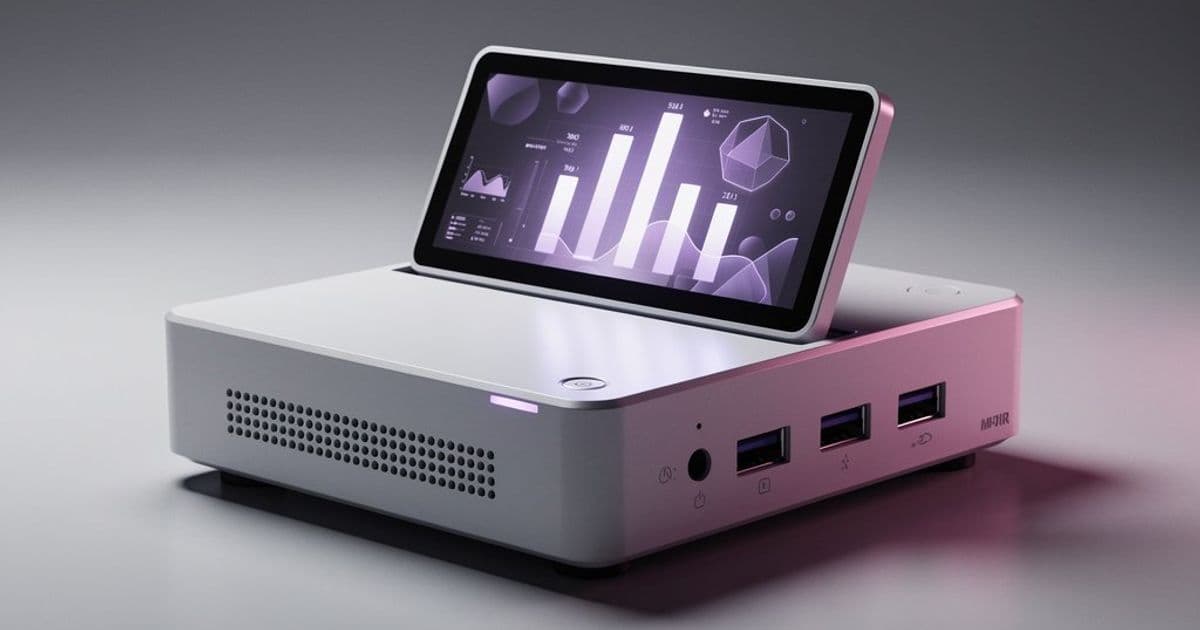
The Machenike GTS mini PC introduces a unique 2.33-inch flip-up LCD display for real-time system monitoring, powered by Intel's latest Arrow Lake-H processors. This design choice reflects a growing trend among Chinese PC makers to integrate status screens directly into compact form factors, offering a practical way to view hardware metrics without external monitors.
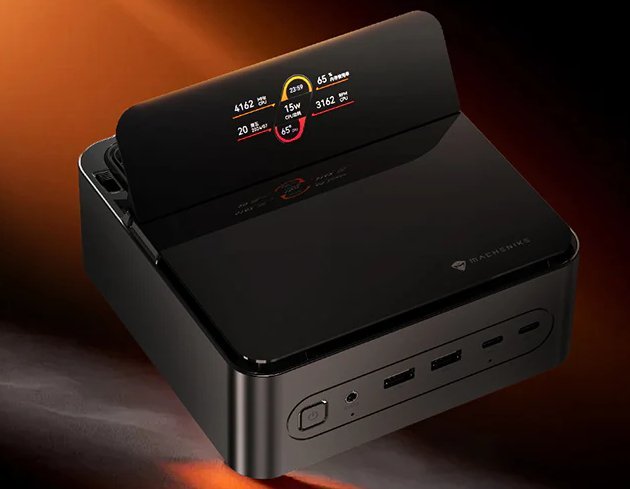
The Machenike GTS mini PC stands out in a crowded market of compact desktops with a distinctive feature: a small, hinged LCD display that flips up from the top of the chassis. This 2.33-inch screen isn't meant for general computing tasks, but rather serves as a dedicated status panel for system monitoring. When the computer is lying flat on a desk or mounted behind a monitor, flipping up the display provides an easy, glanceable view of critical hardware metrics.
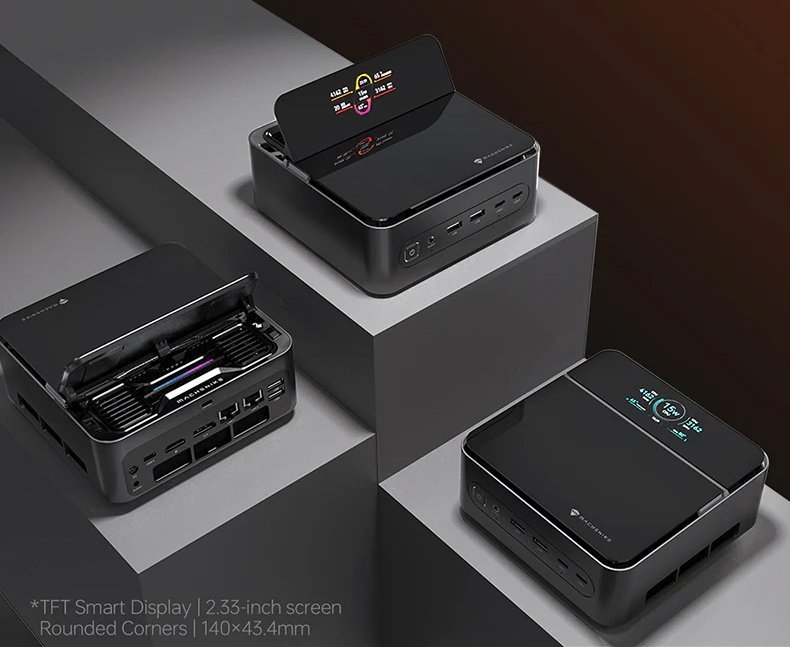
The screen is powered by Machenike's "smart screen" software, which allows users to configure what information is displayed. You can monitor power consumption, CPU and GPU utilization, memory usage, and temperature data in real-time. This approach addresses a common pain point for mini PC users: these compact systems often lack physical indicators for system health, and checking metrics typically requires opening a software dashboard or connecting an external display.
The hinge mechanism itself is a notable engineering choice. Unlike fixed status screens found on other mini PCs like the ACEMAGIC S1, the GTS display can be folded down when not in use, maintaining the system's clean profile. When flipped up, it also reveals an RGB light strip with support for multiple lighting effects, adding a touch of customization for users who appreciate visual flair in their desktop setups.
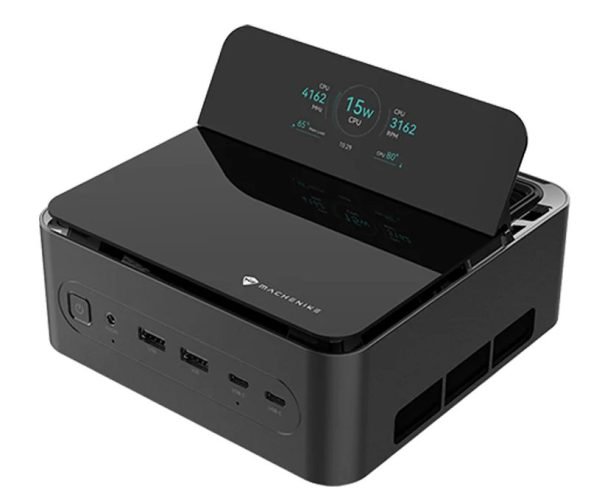
Beyond the display, the Machenike GTS follows a standard mini PC formula with premium specifications. The chassis measures 147 x 147 x 61mm (5.8" x 5.8" x 2.1"), constructed from metal for durability. At its core, it supports Intel's latest Arrow Lake-H processors, with configurations ranging from the Core Ultra 5 225H up to the flagship Core Ultra 9 285H—a 16-core chip designed for high-performance computing in a compact form factor.
Memory and storage are well-equipped for a mini PC. Two SODIMM slots support up to 128GB of DDR5-5600 RAM, while dual M.2 2280 slots with PCIe 4.0 NVMe support provide fast storage options. This level of expandability is notable for a system of this size, offering flexibility for different use cases from general productivity to more demanding workloads.
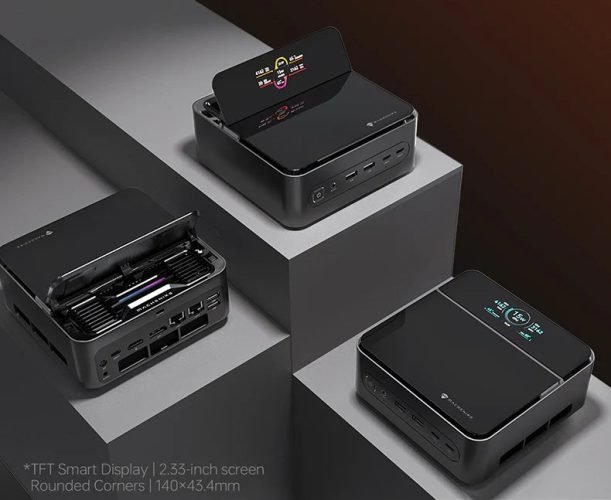
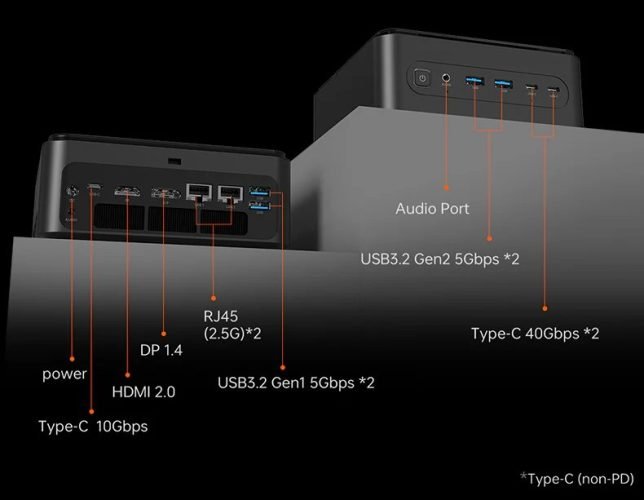
Port selection is comprehensive, addressing the connectivity needs of modern peripherals and displays:
- 2 x USB4 Type-C (40 Gbps)
- 1 x USB 3.2 Gen 2 Type-C (10 Gbps)
- 4 x USB 3.2 Gen 1 Type-A (5 Gbps)
- 2 x 2.5 GbE LAN ports
- 1 x HDMI 2.0
- 1 x DisplayPort 1.4
- 1 x 3.5mm audio jack
- 1 x DC power input
The dual USB4 ports are particularly valuable, offering high-speed data transfer and display output capabilities. The dual 2.5 GbE LAN ports provide network redundancy or the ability to aggregate connections for higher throughput, which could be useful for NAS setups or virtualization environments.
Wireless connectivity includes WiFi 6E and Bluetooth 5.3, ensuring compatibility with modern networks and peripherals. For cooling, the system employs a dual heat pipe design with four fans, allowing the processor to sustain up to 65 watts during extended workloads, with short bursts reaching 70 watts. This cooling solution is crucial for maintaining performance in a confined space without excessive thermal throttling.
Pricing follows the typical pattern for Chinese mini PC manufacturers. In China, the base configuration with a Core Ultra 5 225H processor and 32GB of RAM starts around $800. However, international availability is limited, and the few stores that ship globally charge significant premiums. MINIXPC, for example, lists a Core Ultra 9 285H model with 64GB of RAM for $1799—a substantial markup that reflects import costs and limited distribution channels.
The Machenike GTS isn't the first mini PC to experiment with integrated displays. AOOSTAR and AYANEO have released models with flip-up screens, though typically larger than the GTS's 2.33-inch panel. This trend among Chinese PC makers toward integrated status displays represents an interesting evolution in mini PC design philosophy.
Historically, mini PCs have prioritized minimalism and invisibility—many are designed to be mounted behind monitors or tucked away out of sight. The GTS takes the opposite approach, making system status visible at a glance without requiring additional peripherals. This could be particularly valuable for users running headless servers or media centers where connecting a monitor just to check system health is impractical.
The question remains whether this design approach will gain broader adoption. Chinese manufacturers like GPD and One Netbook pioneered handheld gaming PCs years before mainstream brands like Valve, Asus, and Lenovo entered the market. Similarly, the flip-up display concept could either remain a niche feature or evolve into a more common mini PC characteristic.
For developers and power users, the integrated display offers practical benefits. System administrators monitoring server loads, developers running compilation tasks, or enthusiasts overclocking their systems can all benefit from immediate hardware feedback. The ability to configure what metrics are displayed means the screen can be tailored to specific workflows—showing GPU utilization for video editors, memory usage for virtualization, or temperature data for thermal management.
The Machenike GTS represents a pragmatic experiment in mini PC design, balancing novelty with functionality. While the flip-up display might seem gimmicky at first glance, its utility for system monitoring in space-constrained environments gives it genuine purpose. As mini PCs continue to gain market share in both consumer and professional segments, innovations like integrated status displays could become standard features rather than curiosities.
For those interested in exploring this trend, the Machenike GTS is available through select international retailers, though potential buyers should be prepared for premium pricing and consider the import implications. The underlying technology—Intel's Arrow Lake-H processors, DDR5 memory, and PCIe 4.0 storage—ensures the system remains capable even if the display concept doesn't gain widespread adoption.
The broader implication for mobile and cross-platform development is worth considering. As mini PCs become more sophisticated with features like integrated displays, they offer compelling alternatives to traditional desktops for developers who need compact, powerful workstations. The ability to monitor system resources without external peripherals aligns well with minimalist workspace setups, which are increasingly common among remote developers and digital nomads.
While the Machenike GTS may not revolutionize the mini PC market, it demonstrates how Chinese manufacturers continue to experiment with form factors and features that larger, more conservative companies might overlook. Whether this specific implementation succeeds or fails, the underlying idea of making system status more accessible in compact computing devices has merit and could influence future designs across the industry.
Comments
Please log in or register to join the discussion