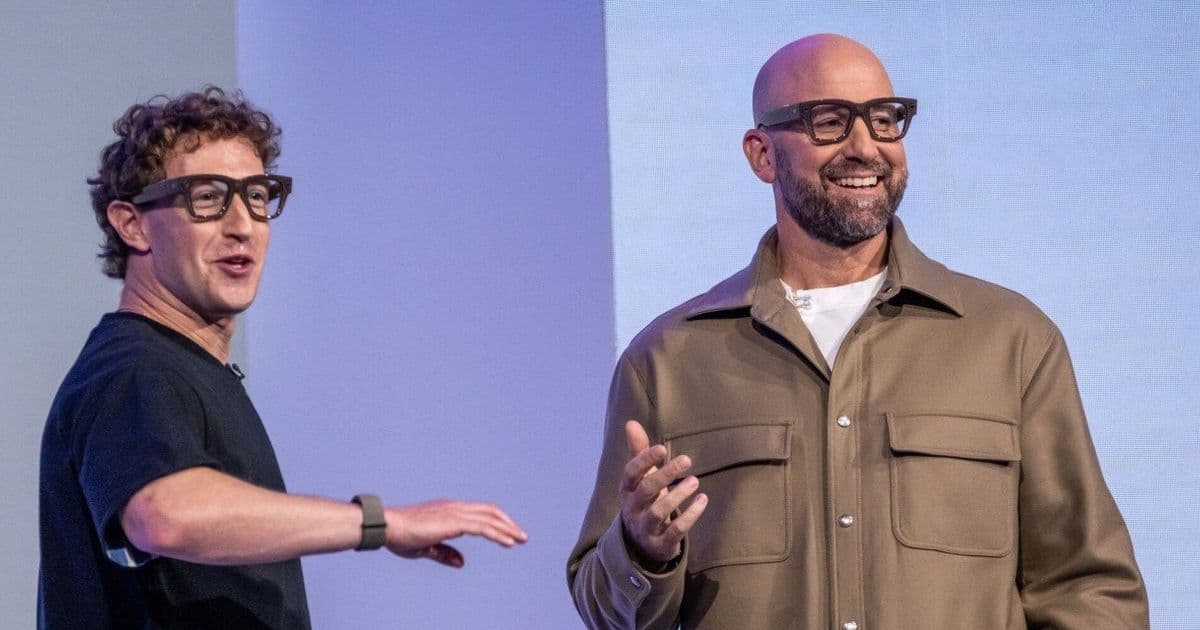
Meta develops internal AI tools including a CEO agent for Zuckerberg, while Musk announces Terafab chip manufacturing project, as tech giants race to integrate AI across operations.
Tech giants are accelerating their AI initiatives with Meta developing internal tools and Elon Musk launching a major chip manufacturing project.
Meta's Internal AI Revolution
Meta Platforms is building and deploying internal AI tools across its operations, with CEO Mark Zuckerberg personally using an AI agent designed to help him perform his job more efficiently. According to sources familiar with the matter, Zuckerberg uses this tool to access information faster as the company seeks to embrace artificial intelligence across all its operations.
The initiative reflects Meta's broader strategy to integrate AI throughout its business, from product development to executive decision-making. The CEO agent represents a significant step in using AI for high-level corporate functions, potentially setting a precedent for how other executives might leverage similar tools.
Musk's Terafab Chip Manufacturing Venture
Meanwhile, Elon Musk has announced Terafab, an ambitious Austin-based project run by Tesla and SpaceX to manufacture robotics, AI, and space data center chips. The project aims to produce custom chips for Tesla, xAI, and SpaceX, reducing dependence on external suppliers.
Musk's Terafab represents a vertical integration strategy that could give his companies greater control over their hardware infrastructure. The project aligns with Musk's pattern of bringing critical technologies in-house, similar to Tesla's battery and manufacturing innovations.
Industry-Wide AI Integration
The developments at Meta and Musk's ventures are part of a broader industry trend toward AI integration. Apple CEO Tim Cook recently praised Chinese developers and partners at a Beijing forum, signaling Apple's continued investment in AI capabilities globally. The company faces challenges including Chinese state media labeling its App Store "monopolistic."
Other tech companies are also racing to automate operations. AI tools like Claude Code have transformed coding workflows, and AI labs are now targeting non-technical users with personal concierge services. This includes everything from executive presentations to automated task completion.
The Competitive Landscape
These initiatives highlight the intensifying competition among tech giants to establish AI dominance. Meta's focus on internal tools suggests a strategy of optimizing existing operations, while Musk's Terafab represents a more fundamental bet on controlling the AI hardware stack.
The race extends beyond individual companies. Chinese tech giant Tencent has launched ClawBot, an OpenClaw-based agent integrated into WeChat, allowing its 1 billion+ monthly active users to interact with AI via chat. This demonstrates how AI integration is becoming a global phenomenon across different tech ecosystems.
Implications for the Future
These developments suggest AI is moving from experimental technology to core business infrastructure. The creation of CEO-level AI agents indicates that artificial intelligence is being trusted with increasingly complex decision-making tasks. Meanwhile, chip manufacturing initiatives like Terafab point to a future where companies control both the software and hardware layers of their AI systems.
The trend toward AI automation also raises questions about workforce transformation and the balance between human and machine capabilities in corporate environments. As these technologies mature, they could fundamentally reshape how companies operate and compete.
The next phase of the AI race appears to be less about creating standalone products and more about deeply integrating AI into every aspect of business operations, from executive decision-making to manufacturing processes.
Comments
Please log in or register to join the discussion