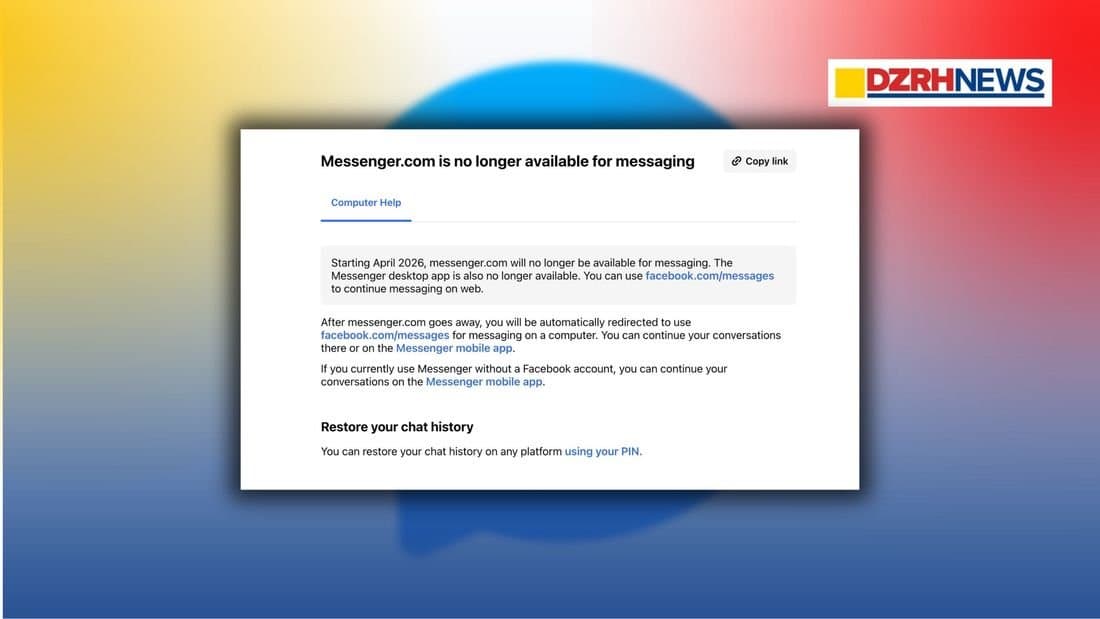
Meta announces shutdown of standalone Messenger desktop app and web interface, directing users to integrated Facebook and Instagram messaging experiences.
Meta has announced plans to retire its standalone Messenger desktop application and the dedicated Messenger.com website in April 2026, marking a significant shift in the company's messaging strategy. The move consolidates messaging functionality within Facebook and Instagram's main platforms, eliminating standalone access points that have existed since Messenger's separation from Facebook in 2014.
The End of Standalone Messenger Access
The decision affects millions of users who rely on Messenger.com for web-based messaging or the desktop application for quick access without opening Facebook. Both platforms will cease operations on April 15, 2026, with users redirected to Facebook.com or Instagram.com for their messaging needs.
"This consolidation allows us to focus resources on building better integrated experiences," a Meta spokesperson stated. "Users will find all their messaging capabilities within the platforms they already use daily."
What Changes for Users
Current Messenger.com users will be automatically redirected to Facebook.com's messaging interface when attempting to access the site after the shutdown date. The desktop application will display a notification prompting users to switch to web-based messaging through their browser.
Key changes include:
- Loss of Messenger-specific URL and login
- Integration of messaging into Facebook/Instagram interfaces
- Potential changes to notification settings
- Possible impact on third-party integrations
Historical Context
The standalone Messenger platforms emerged during Facebook's 2014 decision to separate messaging from its main app. Messenger.com launched as a dedicated web interface, while the desktop application provided quick access for Windows and Mac users.
This separation allowed Messenger to evolve independently, adding features like video calls, payments, and business messaging. However, the strategy shifted in recent years as Meta emphasized integration across its family of apps.
Industry Implications
The shutdown reflects broader industry trends toward integrated platforms rather than standalone applications. Similar moves have occurred with other tech giants consolidating services to streamline development and user experience.
For businesses relying on Messenger for customer communication, the change may require workflow adjustments. Companies using Messenger for customer service will need to adapt to the integrated Facebook interface.
User Migration Timeline
Meta has outlined a three-month transition period:
- February-March 2026: User notifications and guidance
- April 1-14, 2026: Grace period with redirects
- April 15, 2026: Complete shutdown of Messenger.com and desktop app
During this period, Meta will provide tools to export conversation histories and adjust notification preferences for the new integrated experience.
The consolidation represents Meta's continued push toward unified experiences across its platforms, even as it phases out standalone services that once represented strategic independence for the Messenger product.
Comments
Please log in or register to join the discussion