
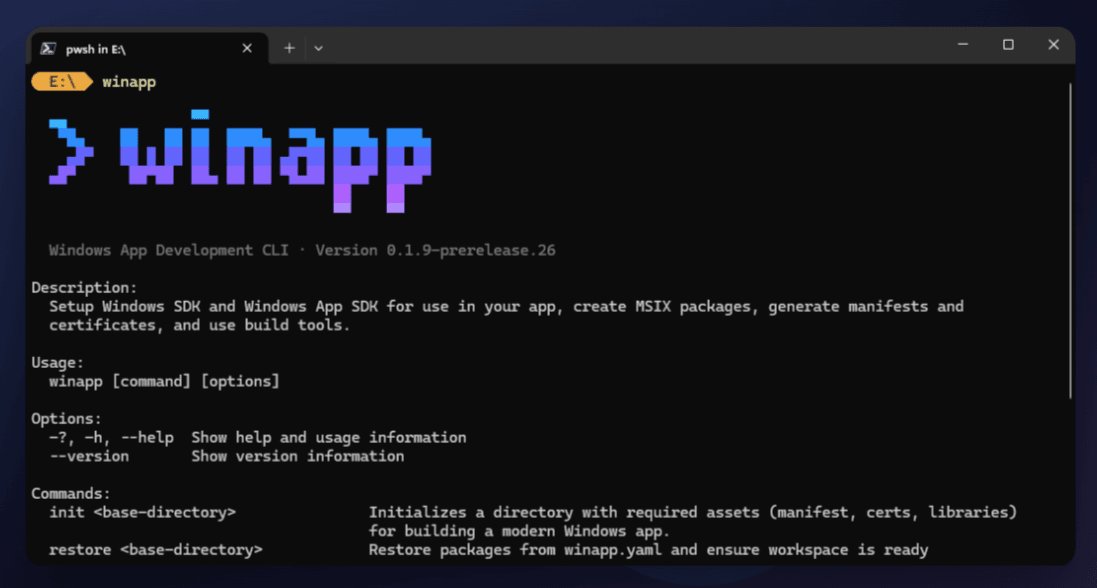
Microsoft launches WinApp CLI to simplify Windows development by consolidating SDK setup, manifest generation, and packaging into a single command-line tool.
Microsoft has introduced the WinApp CLI, a new command-line tool designed to streamline Windows application development by consolidating common tasks into a unified interface. Announced in January 2026 and now available in public preview, the tool targets developers working across frameworks such as .NET, C++, Electron, and Rust, aiming to reduce the complexity of building modern Windows applications.

The Problem: Fragmented Windows Development
Building Windows applications has traditionally required coordinating multiple SDKs, editing manifests, generating certificates, and handling packaging requirements. This fragmentation becomes particularly visible for developers working outside Visual Studio or MSBuild-based workflows, where integrating modern Windows APIs can require significant manual setup.
How WinApp CLI Works
The tool acts as a unified entry point for environment setup, configuration, and packaging. According to Microsoft, it bridges the gap between cross-platform tooling and Windows native capabilities by automating access to both the Windows SDK and the Windows App SDK.
One of the central features is the one-command environment initialization. The winapp init command downloads required SDKs, generates projections such as C++ WinRT bindings, and creates manifests, assets, and development certificates. This replaces what previously required multiple manual steps and toolchain-specific configuration.
Package Identity Without Full Packaging
A standout capability is the package identity workflow optimized for inner loop development. Many modern Windows APIs, including notifications, shell integration, and AI capabilities, require apps to have a package identity. Traditionally, this meant fully packaging the application.
With winapp create-debug-identity, developers can attach an identity to an executable without full MSIX packaging, enabling faster iteration and testing. This is particularly valuable for developers who want to test Windows-specific features without going through the full packaging process.
Automation for Modern Workflows
The CLI includes automation for manifests, certificates, and signing. Commands are available to generate and install development certificates, update manifest assets, and produce signed MSIX packages suitable for distribution. These capabilities are designed to integrate with CI/CD pipelines, with official GitHub Actions and Azure DevOps tasks supporting environment setup via winapp restore.
Cross-Platform and Node.js Support
Microsoft has also added targeted support for Electron and Node.js scenarios. Developers can inject package identity directly into a running Electron process using winapp node add-electron-debug-identity, enabling access to APIs that normally require packaged apps.
The company has started exposing experimental Node.js projections for Windows APIs, including AI-related capabilities, making Windows development more accessible to JavaScript developers.
Current Status and Availability
The tool is currently in public preview, and Microsoft notes that commands and features may change before general availability. Developers adopting the CLI should expect breaking changes and gaps in documentation or framework support.
After the initial January release, an updated version 0.2.0 was released in late February 2026, with bug fixes and additional improvements.
Getting Started
The WinApp CLI is available via WinGet, npm for Electron scenarios, and as a GitHub project where issues and contributions are encouraged. Microsoft is positioning the tool as a complement rather than a replacement for existing IDE-based workflows, particularly for teams using cross-platform stacks.
Further details, installation instructions, and samples are available in the official announcement blog and the GitHub repository.
For developers frustrated by the complexity of Windows development workflows, WinApp CLI represents a significant step toward simplification and unification, though its public preview status means it's best suited for early adopters willing to navigate potential changes.
Comments
Please log in or register to join the discussion