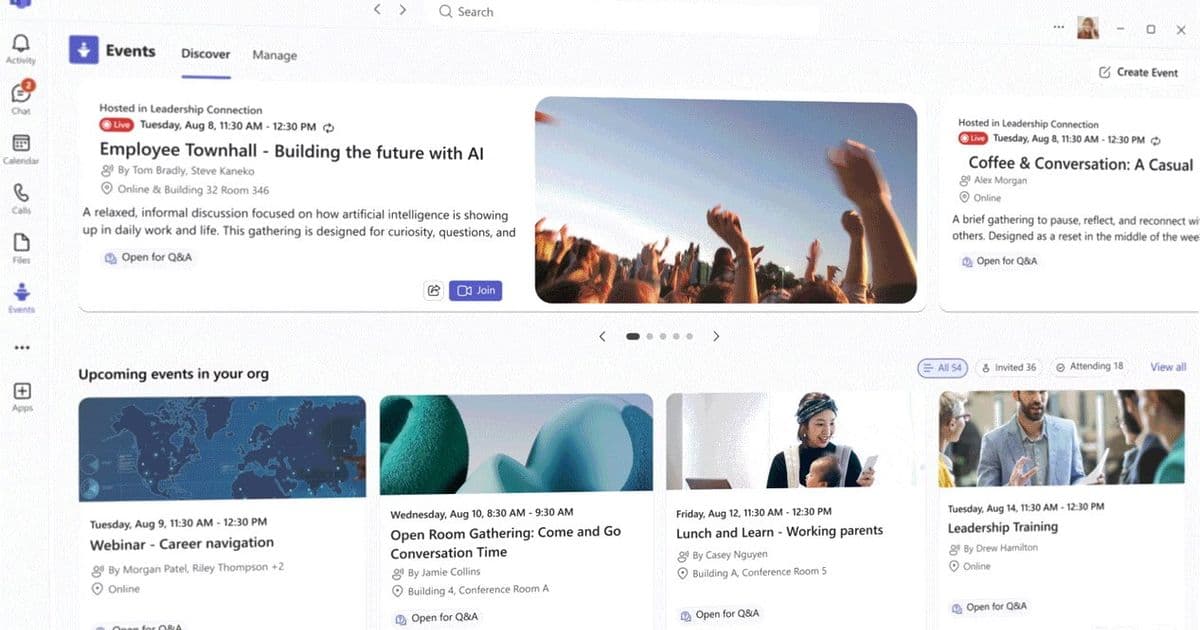
Microsoft is launching a redesigned Teams events experience with unified creation, discovery, and management capabilities, while expanding access to all Enterprise users and retiring Teams live events in 2026.
Microsoft has unveiled a comprehensive redesign of its Teams events platform, introducing a unified experience that simplifies how organizations create, discover, and manage digital and hybrid events. The new Teams events experience, now in public preview, represents a significant evolution in Microsoft's event management capabilities, offering greater flexibility, control, and accessibility for organizers while streamlining the attendee experience.
A New Era for Event Creation
At the core of this update is a reimagined event creation flow that eliminates the previous constraints of event types. The Meet app becomes the central hub for all event-related activities, featuring a dynamic scheduling interface that gives organizers unprecedented control over their events.
Unlike the previous model where features were tied to specific event types, the new system allows organizers to customize experiences based on their unique needs. Whether it's controlling audience interaction through attendee camera feeds and raise hands features, managing registration controls, or scaling events to different sizes, organizers now have a flexible toolkit at their disposal.
The new creation experience is particularly noteworthy because it removes the artificial boundaries that previously existed between different event formats. Organizers can now tailor the event experience to specific audiences and goals without being locked into predefined templates or feature sets.
Centralized Discovery and Tracking
One of the most significant pain points for event organizers has been ensuring their audiences can actually find and access events. Microsoft addresses this with the new Discover tab in the Meet app, which serves as a centralized location for event discovery and tracking.
This feature is particularly valuable in today's busy organizational environments where calendar overload makes it difficult for important events to stand out. The Discover tab allows users to view events they're registered for, find and register for new events, and catch up on recordings of past events—all without relying solely on calendar invitations.
For organizers, this means better promotion capabilities and improved audience engagement. The Discover tab essentially creates a dedicated events marketplace within Teams, making it easier for both organizers and attendees to stay connected to their events.
Streamlined Event Management
The new Manage tab represents a significant improvement in event administration. Gone are the days of searching through calendars or navigating hidden menus to update presenter bios, adjust sharing functions, or track registrations.
Teams events brings everything into one place for streamlined management. When an event is saved, an event page is automatically created, serving as the central location for settings, customization, and branding. This unified approach extends beyond the event itself—after an event concludes, organizers can easily send attendees follow-up emails and recording notifications from the same interface.
The Manage tab also provides a single place to access registration data and recap tools designed for insights and continued engagement. This comprehensive management approach ensures that organizers have all the tools they need throughout the entire event lifecycle in one convenient location.
Enhanced Capabilities for Organizers
Beyond the unified experience, Microsoft is introducing several new capabilities designed to streamline setup and drive attendance:
Delegate and Shared Mailbox Support: Authorized users can now schedule and manage events on behalf of the principal organizer. This feature is particularly valuable for teams coordinating large or recurring events, enabling more natural collaboration.
Dedicated Event Details Pages: These pages make it easy for organizers to view all elements related to an event, including built-in Q&A functionality. The ability to save customizations as templates for future use represents a significant time-saver for organizations that run regular events.
Custom Domain Support: Event emails can now use custom domains, improving deliverability and helping invitations and reminders avoid spam filters. This feature also offers additional event branding opportunities, ensuring a more professional appearance.
Enhanced Co-organizer Controls: Managing responsibilities throughout the event lifecycle becomes easier with improved co-organizer editing and management controls. This ensures a consistent management experience even as teams grow and roles evolve.
Expanded Access Through Licensing Changes
Perhaps the most significant business impact of this update is Microsoft's decision to expand access to Teams events capabilities. Starting April 1st, 2026, features such as town hall and webinar, including advanced features, will be available to all users licensed for Teams Enterprise without requiring Teams Premium.
This licensing change represents a democratization of event capabilities within the Microsoft ecosystem. Organizations that previously needed to purchase additional Teams Premium licenses to access advanced event features can now leverage these capabilities with their existing Enterprise licenses.
Additionally, Microsoft is introducing Attendee Capacity Pack licenses that enable organizations to scale digital and hybrid events up to 100,000 participants. This scalability option is crucial for large enterprises and organizations that regularly host massive events.
The End of an Era: Teams Live Events Retirement
With the launch of the new Teams events experience, Microsoft has announced the retirement of Teams live events, scheduled for June 30, 2026. This retirement marks the end of a product that has been a staple for large-scale organizational events for years.
Users with events already scheduled through February 28, 2027, will be able to carry out these instances as planned through that date to avoid disruption. This transition period provides organizations with ample time to migrate their existing live events to the new Teams events platform.
The retirement of Teams live events underscores Microsoft's commitment to the new Teams events experience as the future of large-scale event management within the Microsoft ecosystem. Organizations currently using Teams live events should begin planning their migration to the new platform to take advantage of the enhanced features and capabilities.
Business Impact and Strategic Implications
The redesign of Teams events has significant implications for organizations of all sizes. The unified experience addresses many of the pain points that have historically made event management complex and time-consuming.
For small to medium-sized businesses, the expanded licensing access means they can now leverage professional event capabilities without additional costs. This democratization of features could lead to increased adoption of Teams for event management across organizations that previously found the cost prohibitive.
Large enterprises will benefit from the scalability options and enhanced management capabilities. The ability to support up to 100,000 participants, combined with improved co-organizer controls and delegate support, makes Teams events a viable solution for even the largest organizational events.
The retirement of Teams live events, while requiring some migration effort, ultimately positions organizations to take advantage of a more modern, feature-rich platform. The transition period provides adequate time for organizations to adapt their workflows and processes to the new system.
Looking Ahead
The new Teams events experience represents Microsoft's vision for the future of organizational event management. By unifying creation, discovery, and management into a single platform, Microsoft is addressing the complexity that has historically made digital and hybrid events challenging to execute effectively.
The expanded licensing access and enhanced capabilities position Teams events as a competitive solution in the growing market for virtual and hybrid event platforms. As organizations continue to embrace digital transformation and hybrid work models, the ability to create engaging, professional events at scale becomes increasingly important.
With the public preview now available, organizations can begin exploring the new Teams events experience and planning their migration strategies. The combination of improved functionality, expanded access, and simplified management makes this update a significant step forward in Microsoft's event management capabilities.
The retirement of Teams live events in 2026 will mark a clear transition point, but the extended timeline provides organizations with the opportunity to adapt gradually. As the new Teams events experience continues to evolve, it will be interesting to see how organizations leverage these capabilities to create more engaging and effective digital and hybrid events.
Comments
Please log in or register to join the discussion