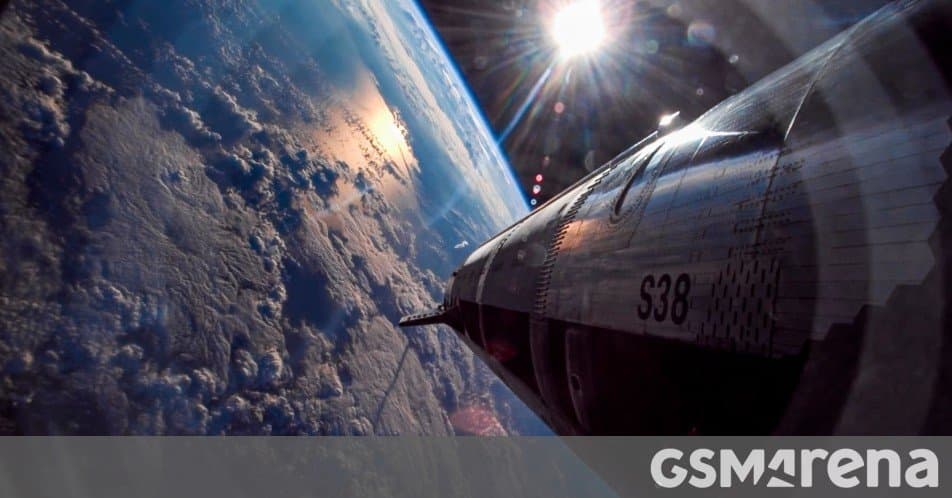
Elon Musk's SpaceX has acquired his AI company xAI in a stock-only deal, promising to create a vertically-integrated innovation engine combining space technology, AI, and global communications infrastructure.
Elon Musk has orchestrated another major reshuffling of his corporate empire, with SpaceX acquiring xAI in a stock-only transaction that brings together the rocket company, the AI startup, and the social network X (formerly Twitter) under one corporate umbrella.
The Deal Details
The acquisition represents a significant consolidation of Musk's non-Tesla ventures. xAI, which launched in 2023 with the ambitious goal of understanding the true nature of the universe, has been developing the Grok chatbot and owns the X social media platform. The deal was structured as a stock exchange, meaning no cash changed hands, but the exact terms remain undisclosed.
Musk's Vision for the Combined Entity
In announcing the acquisition, Musk outlined an expansive vision for what he calls "the most ambitious, vertically-integrated innovation engine on (and off) Earth." The combined company aims to integrate:
- Artificial intelligence capabilities from xAI
- Rocket technology and launch infrastructure from SpaceX
- Global satellite internet through Starlink
- Direct-to-mobile communications
- Real-time information platforms through X
Space-Based AI: The Next Frontier
Perhaps the most ambitious claim from Musk centers on space-based AI infrastructure. He envisions "a million satellites that operate as orbital data centers" that would enable humanity to become a "multi-planetary Kardashev II-level civilization" - one capable of harnessing the Sun's full power while supporting AI-driven applications.
Musk promises that SpaceX's Starship will eventually conduct launches every hour, carrying 200 tons of payload per flight. This would enable "millions of tons to orbit and beyond per year," creating the infrastructure needed for his space-based AI vision.
The Economics of Space Computing
One of Musk's bolder predictions is that "within 2 to 3 years, the lowest cost way to generate AI compute will be in space." This claim is particularly noteworthy given SpaceX's current dominance in commercial spaceflight and its rapidly expanding Starlink constellation.
However, this prediction comes with significant caveats. The technology to efficiently process AI workloads in orbit at competitive costs doesn't yet exist, and the timeline appears aggressive even by Musk's standards. Additionally, SpaceX would effectively hold a monopoly on this capability if it materializes.
Skepticism and Reality Checks
As with many Musk announcements, the claims should be viewed through a critical lens. Industry analysts note that Musk's statements often serve to boost investor confidence and company valuations rather than reflect concrete near-term plans.
The acquisition appears to be as much about corporate strategy as technological innovation. By bringing xAI and X under the SpaceX umbrella, Musk creates a more cohesive ecosystem of companies that can theoretically share resources, technology, and market opportunities.
Technical Challenges Ahead
The vision of space-based AI data centers faces numerous technical hurdles:
- Power generation and management in orbit
- Thermal regulation for high-density computing
- Data transmission back to Earth with minimal latency
- Radiation hardening of AI hardware
- Launch costs and frequency requirements
- Orbital debris management at scale
Market Implications
This consolidation could have significant implications for the tech industry. SpaceX already dominates commercial spaceflight, and adding AI capabilities could create a formidable competitor to traditional cloud computing providers like Amazon, Google, and Microsoft.
The integration of X's real-time information platform with xAI's AI capabilities could also create new opportunities for content moderation, trend analysis, and user engagement - though this raises questions about data privacy and platform governance.
Looking Forward
While Musk's timeline and specific claims may be optimistic, the underlying trend is clear: the convergence of space technology and artificial intelligence represents a significant frontier for innovation. Whether SpaceX can deliver on these ambitious promises remains to be seen, but the acquisition positions the company to be a major player in whatever form this convergence ultimately takes.
The next few years will reveal whether space-based AI computing becomes a reality or joins Musk's collection of visionary but unrealized promises. For now, the tech world watches with a mixture of excitement and skepticism as one of its most prominent innovators attempts to bridge the gap between Earth and orbit.
Comments
Please log in or register to join the discussion