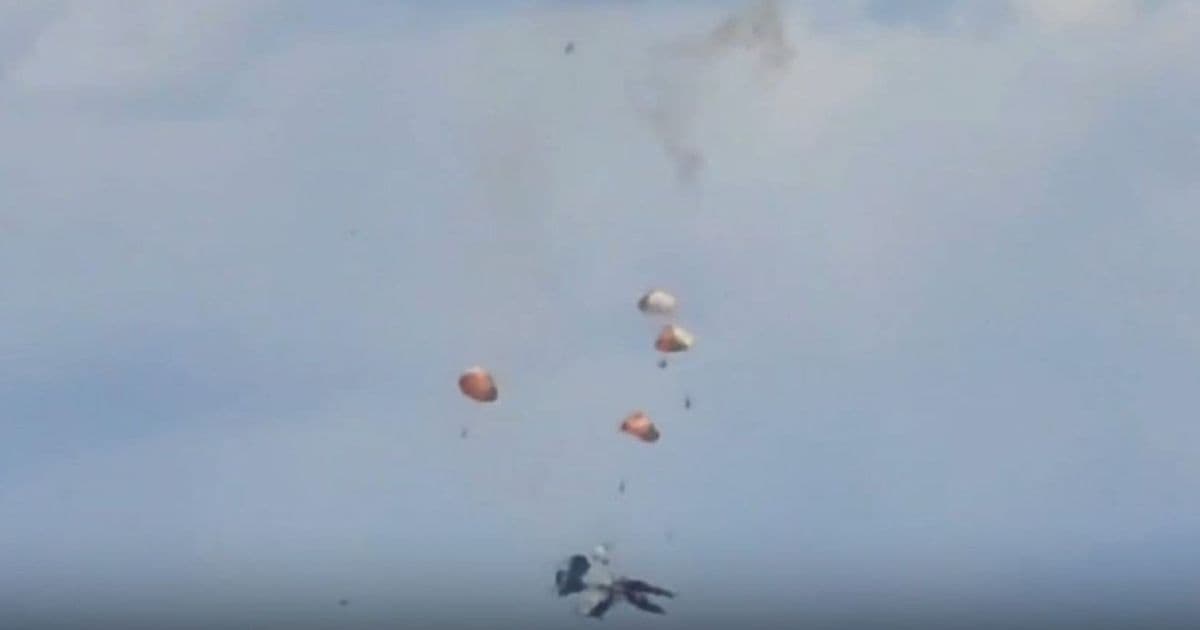
Two Navy EA‑18G Growlers collided during the Fighter Skies airshow at Mountain Home Air Force Base. All four crew members ejected safely, but the incident has reignited discussion about airshow risk management, the role of military demonstration teams, and how recent safety trends are being interpreted by organizers and enthusiasts.
What happened
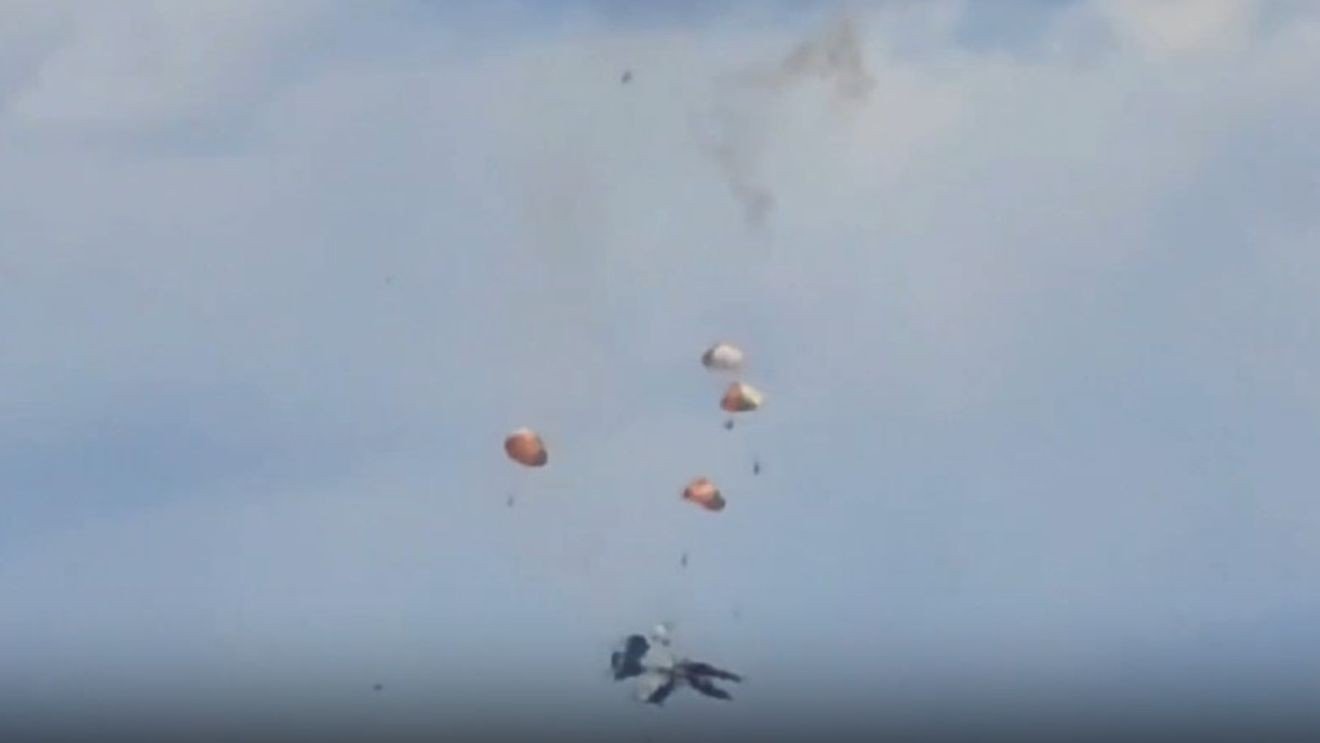
On Sunday afternoon, two U.S. Navy EA‑18G Growlers from Electronic Attack Squadron 129 collided while performing a routine aerial demonstration at the Fighter Skies airshow on Mountain Home Air Force Base, Idaho. Video captured by local photographer Shane Ogden shows the jets briefly touching, then entering a synchronized spin before both crews ejected and their parachutes deployed. The aircraft impacted the ground in a fireball, but all four airmen survived with injuries described as non‑life‑threatening.
The base went into lockdown, emergency crews secured the crash site, and the nearby State Highway 167 was closed for several days while investigators from the Naval Safety Center and the Federal Aviation Administration examine flight data recorders and witness statements.
Community reaction
The incident generated a mix of relief, concern, and criticism across social media and local news outlets. Residents of the Boise‑Mountain Home corridor expressed gratitude that no spectators were harmed, while also questioning whether the airshow’s proximity to civilian infrastructure was appropriate.
- Aviation enthusiasts posted supportive comments for the pilots, praising the quick ejection and the professionalism of the emergency response teams. A thread on the r/aviation subreddit noted, “The crews did exactly what they’re trained for – a textbook ejection under extreme duress.”
- Local officials emphasized that the event remains a valuable cultural and economic draw. Idaho Transportation Department spokesperson Megan Hsu said, “We will keep the highway closed only as long as necessary for the investigation; the community’s safety is our priority.”
- Safety watchdogs such as the International Council of Air Shows (ICAS) highlighted the incident as a reminder that even with decades of safety improvements, high‑performance military aircraft still carry inherent risk.
Adoption signals: how the industry is responding
Airshow organizers have been tracking safety metrics closely. According to ICAS data, the United States saw an average of one fatality per year at airshows over the past decade, down from roughly two per year in the early 2000s. The last spectator death occurred in 1952, and there were no fatalities in 2024 or 2025.
In response to the Mountain Home crash, several trends are becoming more visible:
- Increased telemetry sharing – Military demonstration teams are now providing live flight‑data streams to on‑site safety officers. The Navy’s public affairs office indicated that the Growlers’ flight‑data recorders will be uploaded to a secure cloud service for real‑time analysis by civilian safety consultants.
- Expanded buffer zones – The Federal Aviation Administration has issued a draft advisory recommending a minimum 2‑mile safety corridor around any performance involving aircraft capable of supersonic maneuvering. If adopted, this could shift staging areas farther from public roadways.
- Enhanced ejection‑system training – The Navy’s latest ejection‑seat upgrade, the Advanced Seat Replacement (ASR), includes automatic altitude‑aware sequencing. The Growlers involved were equipped with the ASR, which may have contributed to the crews’ successful egress.
For more technical detail on the ASR system, see the official Navy documentation.
Counter‑perspectives
Not everyone agrees that the incident warrants sweeping changes. A group of veteran pilots and airshow veterans, organized under the Airshow Pilots Association (APA), argues that the current safety record already reflects a mature risk‑management framework. In a statement posted to their forum, APA founder Lt. Cmdr. Jason Patel wrote:
“We have seen a steady decline in accidents thanks to rigorous pre‑show briefings, real‑time weather monitoring, and the professionalism of the crews. Over‑regulation could erode the very excitement that draws crowds and supports the aviation heritage community.”
The APA also points out that the FAA’s proposed 2‑mile buffer would increase logistical costs for smaller venues, potentially forcing the cancellation of regional shows that rely on limited airspace.
What this means for future shows
The Mountain Home incident sits at the intersection of two competing narratives:
- Safety‑first momentum – Data showing a decline in fatalities gives regulators and safety advocates leverage to push for stricter airspace controls, mandatory telemetry sharing, and larger exclusion zones.
- Preservation of accessibility – Pilots and smaller show promoters fear that incremental restrictions could diminish the viability of community‑scale events, which often serve as recruitment pipelines for the armed forces and as educational outreach.
Both sides agree on one point: transparent investigation results will shape policy. The Naval Safety Center has pledged to release a preliminary report within 30 days, and the FAA plans a public hearing later this summer.
Looking ahead
As the investigation unfolds, the aviation community will be watching for concrete recommendations that balance risk reduction with the cultural value of live flight demonstrations. Whether the outcome leads to new federal guidelines, voluntary industry standards, or simply a reaffirmation of existing practices, the Mountain Home crash underscores that even in an era of improved safety statistics, the margin for error remains razor‑thin.
Sources: Naval Air Forces Pacific Fleet press release, Idaho Transportation Department traffic advisory, International Council of Air Shows safety statistics, and eyewitness video posted by Shane Ogden on YouTube.
Comments
Please log in or register to join the discussion