
Minnesota Governor Tim Walz has activated National Guard cyber defense teams after a sophisticated attack crippled St. Paul's municipal systems, overwhelming commercial response capabilities. The ongoing incident highlights critical vulnerabilities in local government infrastructure and sets a new precedent for military cyber crisis intervention.
State of Emergency: When City Cyber Defenses Fail
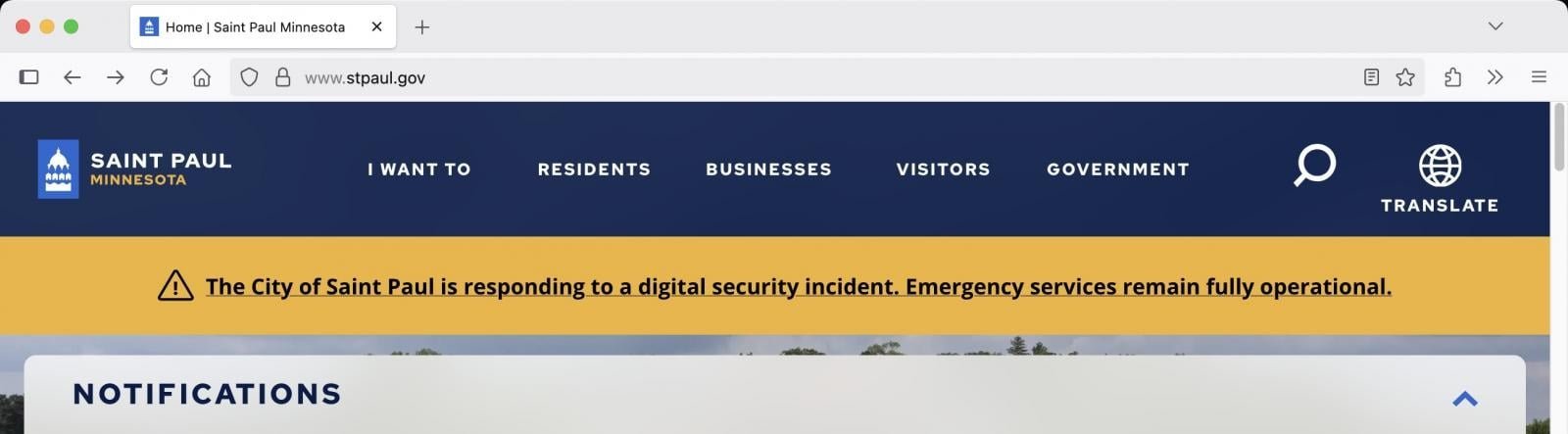
In a stark demonstration of escalating cyber threats to critical infrastructure, Minnesota Governor Tim Walz signed an emergency executive order on Tuesday activating the state's National Guard cyber units. This unprecedented military response comes after a relentless attack—suspected to be ransomware—crippled digital services across Minnesota's capital city of St. Paul since Friday. Despite round-the-clock efforts by city IT staff and external cybersecurity contractors, the attack's "scale and complexity" exceeded all commercial and municipal response capacities.
Anatomy of a Municipal Meltdown
The attack has caused widespread disruption:
- Payment Systems Down: Online transactions for utilities, permits, and fines remain frozen.
- Service Disruptions: Library access and recreation center operations are partially offline.
- Critical Services Intact: Emergency response (911, fire, police) remains operational—a small relief amid the chaos.
"While many city services remain available, some may be temporarily delayed or disrupted due to limited system access," stated a city bulletin, underscoring the operational paralysis. The prolonged impact through the weekend signaled this was no ordinary incident.
The National Guard Cyber Cavalry Arrives
The deployment of the Minnesota National Guard's Cyber Protection Team marks a significant escalation in state-level cyber incident response. These specialized units, often comprising military personnel with deep expertise in network defense and digital forensics, will collaborate with:
- St. Paul IT Emergency Operations
- Minnesota Information Technology Services (MNIT)
- Federal cybersecurity agencies (likely CISA and FBI)
"We are committed to working alongside the City of Saint Paul to restore cybersecurity as quickly as possible," Governor Walz emphasized. "The Minnesota National Guard's cyber forces will collaborate... to resolve the situation and mitigate lasting impacts."
Why This Changes the Game for Municipal Cybersecurity
This incident exposes critical vulnerabilities:
- Resource Gap: Many municipalities lack the budget and expertise to combat advanced, persistent threats, making them low-hanging fruit for ransomware syndicates or state-sponsored actors.
- Third-Party Limitations: Commercial incident response teams, while skilled, can be overwhelmed by attacks targeting interconnected city-wide systems.
- Escalation Protocols: The activation of military cyber units establishes a new benchmark for when local incidents become state-level emergencies.
"The scale and complexity of this incident exceeded both internal and commercial response capabilities." — Minnesota Emergency Executive Order
Security analysts suggest the attack likely involved lateral movement across St. Paul's network, encryption of critical data/systems, and potentially data exfiltration—common hallmarks of sophisticated ransomware operations targeting governments for maximum disruption and payout leverage.
The Long Road to Recovery
Restoring 300,000+ residents' services is only the first phase. The deeper challenge lies in forensic investigation (attribution, attack vector identification), system hardening, and addressing the inherent fragility of legacy municipal IT infrastructure. This event serves as a dire warning to cities nationwide: investing in modern defenses, robust backup strategies, and clear escalation paths to state and federal cyber resources is no longer optional—it's existential. The silence of restored systems will eventually return to St. Paul, but the echoes of this digital siege will resonate through city halls across America.
Comments
Please log in or register to join the discussion