MIT's Jim Collins leads a $3 million Jameel Research-funded project combining AI and synthetic biology to develop programmable antibacterials against drug-resistant pathogens.
Antimicrobial resistance (AMR) represents one of the most pressing global health challenges of our time. As bacteria evolve to withstand existing antibiotics, the pipeline for new antibacterial treatments has slowed dramatically, creating a dangerous gap in our ability to treat infections. Now, researchers at MIT are taking an innovative approach to this crisis by combining synthetic biology with artificial intelligence to develop a new generation of targeted antibacterials.
The AMR Crisis and Traditional Approaches
The overuse and misuse of antibiotics have accelerated the rise of drug-resistant infections worldwide. This problem is particularly acute in low- and middle-income countries, where limited diagnostic infrastructure often leads to delays in treatment or the use of ineffective antibiotics. Traditional antibiotic development has relied on discovering natural compounds or modifying existing ones, but this approach has become increasingly challenging as resistance mechanisms evolve.
MIT's Innovative Approach
James J. Collins, the Termeer Professor of Medical Engineering and Science at MIT and faculty co-lead of the Abdul Latif Jameel Clinic for Machine Learning in Health, is spearheading a multidisciplinary research project that takes a fundamentally different approach to combating AMR. The project, sponsored by Jameel Research as part of the Abdul Latif Jameel International network, represents a three-year, $3 million investment in developing programmable antibacterials.
AI-Driven Protein Design
At the heart of this initiative is the use of generative artificial intelligence to design small proteins that can disable specific bacterial functions. Unlike traditional antibiotics that often target broad cellular processes, these designer molecules would be precisely engineered to interfere with critical bacterial mechanisms. The AI component allows researchers to explore vast chemical spaces and identify protein structures that would be difficult or impossible to discover through conventional methods.
Synthetic Biology Delivery Systems
The project goes beyond just designing new antibacterial compounds. Researchers are developing engineered microbes that can produce and deliver these designer molecules directly to target pathogens. This approach offers several advantages:
- Precision targeting: The engineered microbes can be programmed to seek out specific bacterial strains
- Adaptive response: The system can potentially evolve alongside bacterial resistance mechanisms
- Reduced side effects: By targeting specific pathogens, the approach minimizes damage to beneficial bacteria
- Scalable production: Engineered microbes can serve as living factories for producing antibacterial compounds
Real-World Impact and Collaboration
"This project reflects my belief that tackling AMR requires both bold scientific ideas and a pathway to real-world impact," Collins explains. The collaboration with Jameel Research emphasizes the importance of translating laboratory discoveries into practical solutions that can be deployed globally, particularly in regions most affected by AMR.
Mohammed Abdul Latif Jameel, chair of Abdul Latif Jameel, emphasizes the urgency of the challenge: "Antimicrobial resistance is one of the most urgent challenges we face today, and addressing it will require ambitious science and sustained collaboration."
The Path Forward
The research, conducted in MIT's Department of Biological Engineering and Institute of Medical Engineering and Science, focuses initially on developing and validating programmable antibacterials against key pathogens. This work builds on MIT's established expertise in synthetic biology, AI-driven drug discovery, and global health initiatives.
The project represents a convergence of multiple cutting-edge technologies:
- Generative AI for molecular design and optimization
- Synthetic biology for creating programmable delivery systems
- Medical engineering for translating discoveries into clinical applications
- Global health expertise for ensuring solutions address real-world needs
Broader Implications
This research has implications beyond just combating AMR. The combination of AI-driven design and synthetic biology delivery systems could be applied to other therapeutic areas, potentially revolutionizing how we approach drug development more broadly. The project also demonstrates how interdisciplinary collaboration can address complex global challenges that no single field could tackle alone.
As the project progresses over the next three years, researchers will work to validate their approach against key pathogens and develop pathways for clinical translation. The success of this initiative could provide a new model for addressing not just AMR, but other pressing health challenges that require innovative, technology-driven solutions.
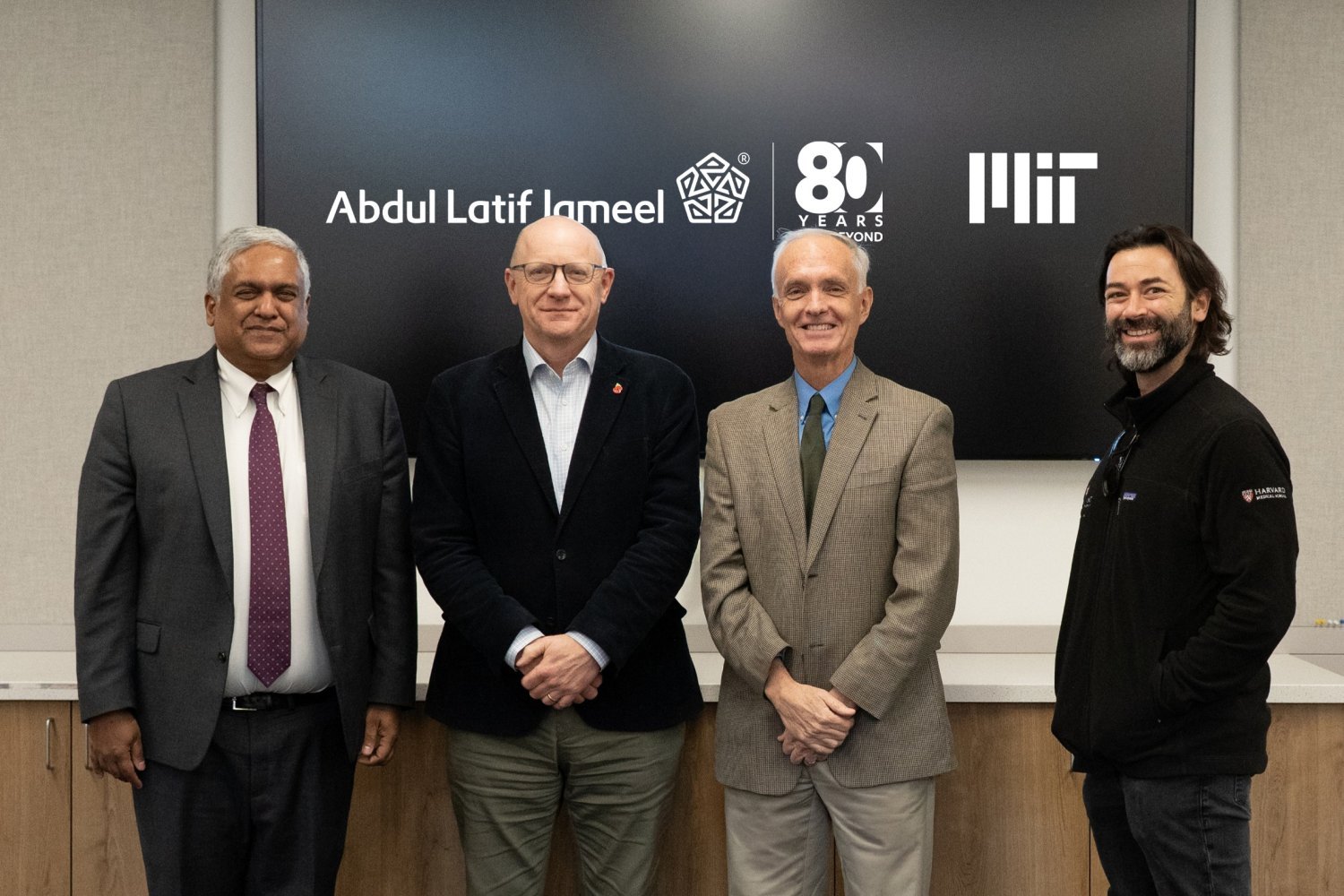
The research agreement signing ceremony brought together key stakeholders committed to addressing this global health challenge. From left: Bruce Currie from JIMCO Life Sciences, MIT professors Jim Collins and Alex Shalek, and Provost Anantha Chandrakasan. This collaboration represents the kind of multidisciplinary approach necessary to tackle complex problems like antimicrobial resistance.

As antimicrobial resistance continues to evolve as a global threat, initiatives like this one at MIT demonstrate how emerging technologies can be harnessed to develop novel solutions. By combining the predictive power of AI with the precision of synthetic biology, researchers are opening new pathways for addressing one of the most significant health challenges of our time.
Comments
Please log in or register to join the discussion