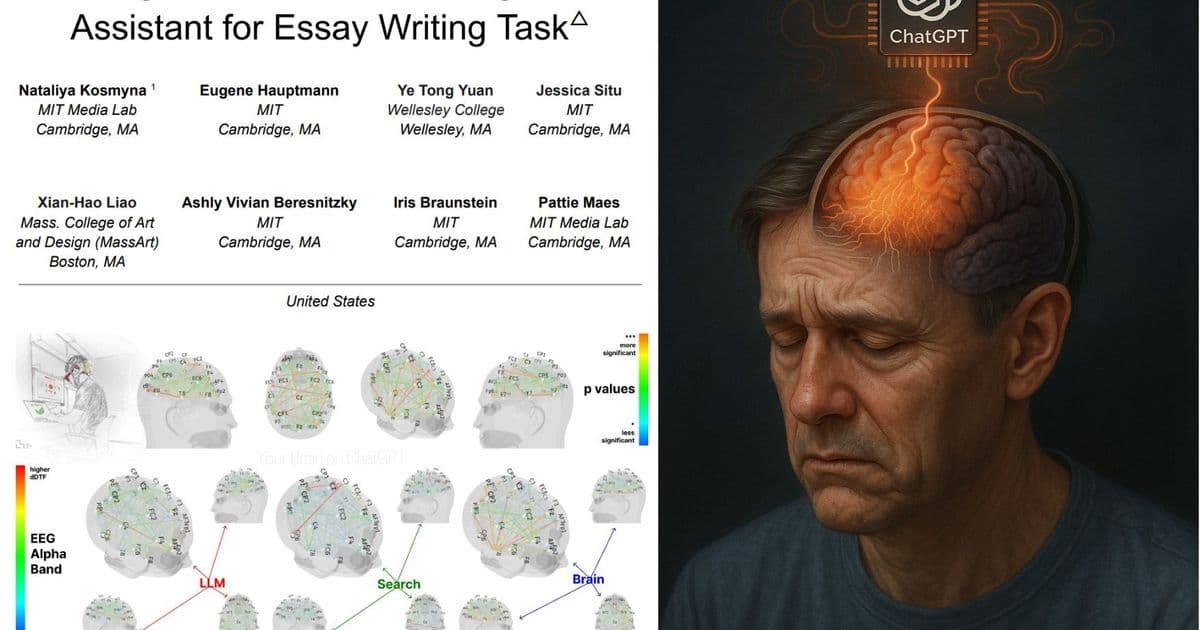
New MIT research shows that using AI assistants like ChatGPT for writing tasks reduces brain connectivity and impairs memory, with EEG scans confirming long-term cognitive deficits. Students exhibited diminished ownership of their work and failed to regain full neural function after stopping AI use, highlighting risks of dependency in tech-driven workflows.
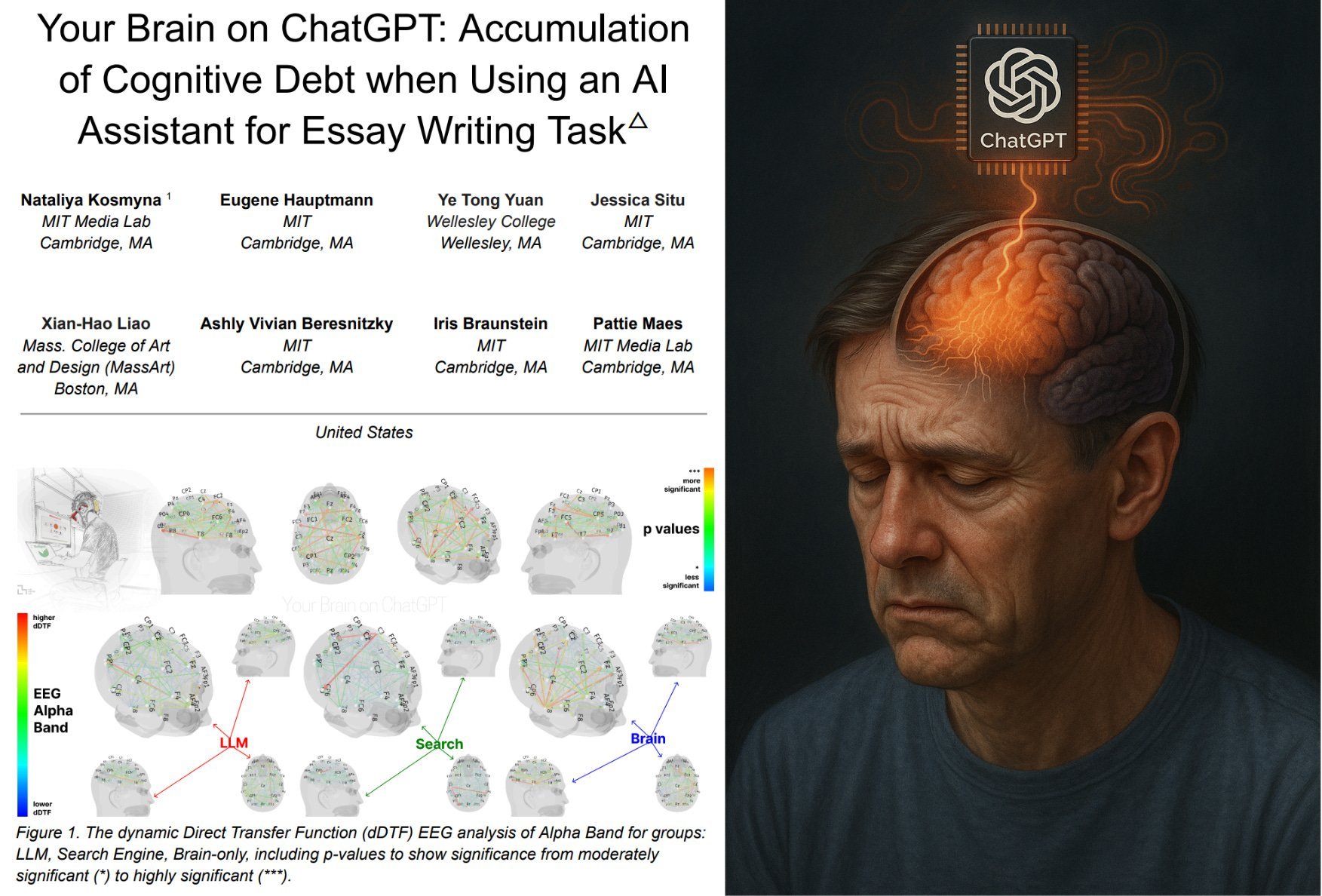
A groundbreaking MIT study titled Your Brain on ChatGPT: Accumulation of Cognitive Debt when Using an AI Assistant for Essay Writing Task has exposed alarming neurological consequences of relying on artificial intelligence for cognitive tasks. Conducted with students, the research used EEG brain scans to demonstrate that frequent use of large language models (LLMs) like ChatGPT reprograms neural networks, leading to measurable declines in memory, attention, and creative engagement. As developers and tech leaders increasingly integrate AI into daily workflows—from code generation to documentation—these findings underscore a hidden cost: the erosion of human cognitive capabilities.
The Neurological Toll of AI Assistance
EEG data revealed a stark gradient in brain connectivity based on task approach. Participants were divided into three groups: those writing unaided (Brain-only), those using search engines, and those relying on ChatGPT. The results were unequivocal:
- Brain-only group: Exhibited the strongest, most widespread neural connectivity.
- Search Engine group: Showed intermediate connectivity, maintaining robust executive function.
- LLM group: Recorded the weakest connectivity across alpha, beta, delta, and theta bands, indicating under-engagement in attention and visual processing networks.
In post-task interviews, 83.3% of LLM users couldn't quote a single sentence from their own essays, compared to 88.9% accuracy in non-AI groups. This points to a collapse in active memory retention during AI-assisted work.
Cognitive Offloading and Its Long-Term Fallout
The study identified a pattern of "cognitive offloading," where the brain adapts to AI dependency by reducing effort in synthesis and critical thinking. When participants who had used LLMs switched back to unaided writing in later sessions, their neural activity remained suppressed, failing to return to baseline levels. Key implications include:
- Diminished Ownership and Satisfaction: LLM users described their authorship as "50/50" or disowned it entirely, whereas unaided writers reported full ownership. This detachment correlated with lower self-reported satisfaction and more robotic, less integrated output.
- Memory Pathway Disruption: Previously AI-reliant individuals showed weakened recall and reduced alpha/beta wave engagement, suggesting the brain prioritizes short-term efficiency over deep learning.
- Industry-Wide Risks: For developers, this signals danger in overusing AI for coding or problem-solving. As one researcher noted, "The machines aren’t just taking over our work—they’re taking over our minds," potentially stifling innovation in fields like software engineering where original thought is paramount.
Why This Matters for the Tech Ecosystem
While AI tools offer productivity boosts, this study reveals they incur "cognitive debt"—accumulating deficits that could impair complex reasoning and adaptability. Search engine users, in contrast, maintained healthier neural activation, indicating that tools promoting active research may be less harmful. For a technical audience, the takeaway is clear: Integrate AI mindfully. Schedule regular breaks from automation to preserve neural plasticity, especially in creative or strategic roles. As LLMs become ubiquitous, safeguarding cognitive health isn't just personal—it's essential for sustaining a skilled, innovative workforce.
Source: Study by MIT, reported in the Public Health Policy Journal via Nicolas Hulscher, MPH. Original title: "Your Brain on ChatGPT."
Comments
Please log in or register to join the discussion