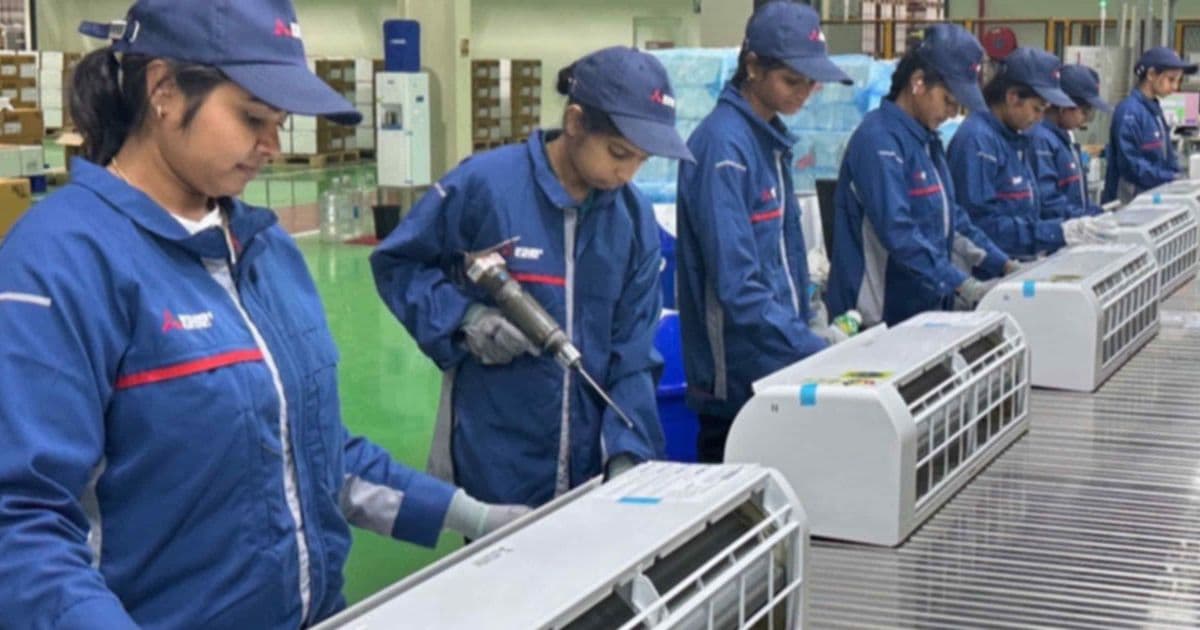
Japanese manufacturer invests $232 million in Tamil Nadu facility to produce 300,000 units annually, targeting India's expanding middle-class demand while competing with LG, Daikin, and local brands.
Mitsubishi Electric has commenced full-scale operations at its first home air conditioner manufacturing plant in India, marking a significant expansion into one of the world's fastest-growing consumer appliance markets. The Japanese electronics giant opened the facility in Tamil Nadu state on Friday with an investment of 21 billion rupees ($232 million), aiming to capitalize on India's surging demand for cooling solutions.
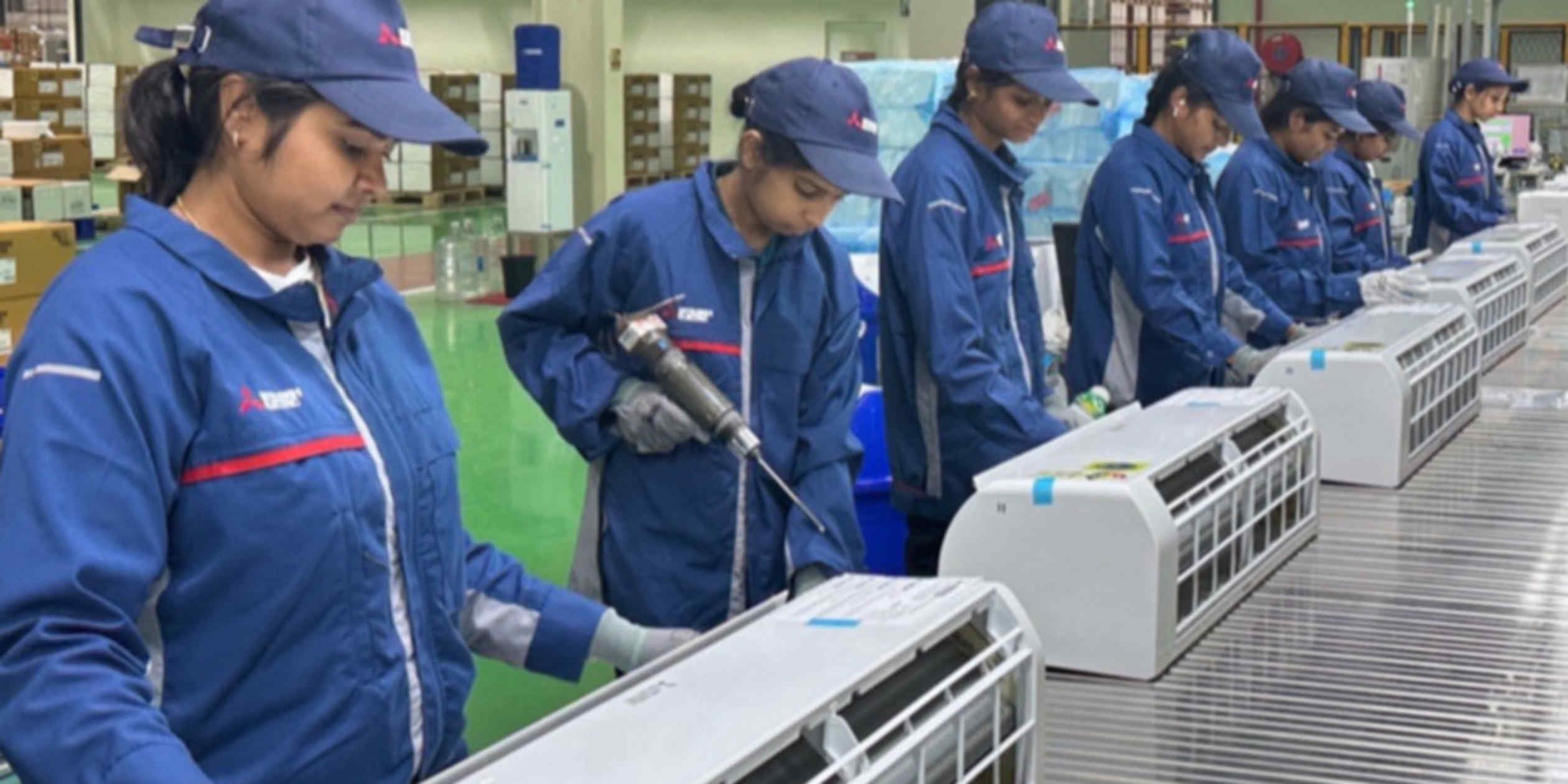
The plant is designed to produce 300,000 energy-efficient inverter room air conditioners and 650,000 compressors annually. Compressors, which circulate refrigerant within air conditioning systems, represent a critical component that Mitsubishi Electric will now manufacture locally rather than import.
India's residential air conditioner market grew 30% in 2024 to reach 11.63 million units, according to the Japan Refrigeration and Air Conditioning Industry Association. This growth has propelled India past Japan to become the world's second-largest air conditioner market, creating substantial opportunities for manufacturers willing to establish local production capabilities.
Atsushi Takase, managing director of Mitsubishi Electric India, emphasized the strategic importance of the new facility during the opening ceremony. "India will become a core base for its global air conditioning business," Takase stated, positioning the country as central to the company's international growth strategy.
Currently, Mitsubishi Electric's air conditioning business accounts for approximately half of its 42 billion rupees in sales across India, which also includes factory automation and semiconductor operations. The company has set ambitious targets, aiming for average annual sales growth of 10% or more through fiscal 2030 for its air conditioner segment, including commercial applications.
The Indian air conditioner market presents both opportunities and challenges. Three major players—India's Voltas, South Korea's LG Electronics, and Japan's Daikin Industries—collectively control nearly 50% of market share, according to British research firm Euromonitor. This concentration means Mitsubishi Electric must differentiate itself through product quality and technological advantages rather than competing solely on price.
Takase outlined the company's strategy to focus on premium market segments rather than volume sales. "Rather than focusing on sales volume, we're aiming for the premium zone," he explained. "We seek to leverage our technological capabilities to expand the number of energy-saving models."
The decision to manufacture in India offers multiple strategic advantages. Local production enables Mitsubishi Electric to reduce production costs and delivery times by increasing local procurement of components. This approach not only improves operational efficiency but also helps mitigate supply chain risks and currency fluctuations that can impact imported goods.
Looking beyond the domestic market, Mitsubishi Electric is considering using its Indian facility as an export hub for other regions. Takase indicated plans to potentially supply air conditioners to Africa and the Middle East from the Tamil Nadu plant, leveraging India's growing manufacturing capabilities and strategic geographic position.
The timing of Mitsubishi Electric's investment aligns with broader trends in India's consumer appliance sector. Rising middle-class incomes, increasing urbanization, and growing awareness of energy-efficient technologies are driving demand for premium air conditioning solutions. Additionally, climate change is contributing to longer and more intense summer seasons across many parts of India, further boosting the need for cooling systems.
Mitsubishi Electric's entry comes as other Japanese manufacturers are also expanding their presence in India. Daikin, already a market leader, has been targeting both the Indian domestic market and designing products specifically for other emerging markets like Brazil. Meanwhile, Toyota recently launched its first electric vehicle in India's crowded automotive market, demonstrating the broader trend of Japanese companies viewing India as a critical growth market.
The new plant represents Mitsubishi Electric's commitment to establishing a significant manufacturing footprint in India, joining other global electronics companies that have recognized the country's potential as both a consumer market and a production hub. As competition intensifies in India's air conditioner sector, the company's focus on premium, energy-efficient products and local manufacturing capabilities may provide the differentiation needed to capture market share from established players.
With India's air conditioner market expected to continue its rapid expansion, Mitsubishi Electric's $232 million investment positions the company to benefit from the country's growing middle class and increasing demand for modern home appliances. The success of this venture could serve as a model for further Japanese manufacturing investments in India's consumer electronics sector.
Comments
Please log in or register to join the discussion