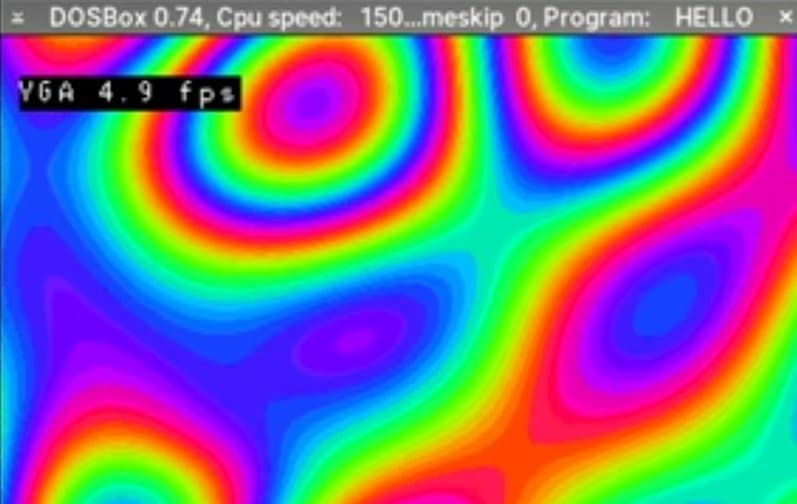
Discover how GCC, a staple of modern development, can be repurposed to compile native MS-DOS COM files, bypassing outdated tools for vintage hardware support. This technique overcomes limitations of DOS extenders but requires 80386+ CPUs and sacrifices libraries, offering a lifeline for retro enthusiasts and legacy system maintainers.

In 2024, the persistence of MS-DOS might seem anachronistic, yet for vintage computing aficionados or technicians maintaining legacy industrial systems, it remains a critical reality. The challenge? Finding a reliable compiler that doesn’t demand running on antiquated hardware. Enter GCC—the ubiquitous open-source compiler—which, with precise configuration, can generate true DOS-compatible COM files. This revelation, detailed by RenéRebe based on Chris Wellons' work, revitalizes development for a bygone era.
Why Modern Tools Fail Classic DOS
Traditional approaches like DJGPP fall short because they produce code for DOS extenders—software layers that emulate protected-mode environments. As Chris Wellons discovered, DJGPP struggles with modern toolchains and doesn’t output raw, bare-metal COM files needed for direct execution on true DOS systems. COM files are memory dumps without complex headers, ideal for the constrained 16-bit real-mode architecture of DOS but capped at 64KB. GCC sidesteps these issues by compiling directly to standalone binaries, though it demands a 80386 processor or newer, excluding older 8086–80286 chips.
The GCC Recipe for DOS Compatibility
The magic lies in specific compiler flags that strip away dependencies and enforce a minimalist output. Developers must use -nostdlib to exclude standard libraries and -fno-pie to disable position-independent code, ensuring a flat memory model. Here’s a snippet of the critical GCC invocation:
gcc -m16 -nostdlib -fno-pie -ffreestanding -Os -s -o output.com input.c
-m16: Generates 16-bit code compatible with 386+ CPUs.-ffreestanding: Assumes no OS support, requiring all I/O (like screen printing) to be hand-coded.-Os: Optimizes for size, crucial within the 64KB limit.
Developers must also write a small assembly stub to initialize registers and call the main function, alongside crafting custom linker scripts to produce the raw COM format. Wellons provides foundational code for these elements, allowing others to build atop his work.
Limitations and Real-World Impact
This approach isn’t without trade-offs. Beyond the CPU and file size constraints, the absence of libraries means reimplementing basic functions—e.g., direct hardware access for display output. Yet, this purity is its strength: it enables deterministic control for embedded DOS systems in machinery or retro gaming rigs. For context, alternatives like QuickBasic emulators exist, but GCC offers C’s power for performance-critical tasks.
As software preservation gains momentum, techniques like this underscore a broader truth: legacy systems aren’t obsolete if they still serve a purpose. By bridging decades with GCC, developers preserve not just code, but the ingenuity of an era where every byte mattered—an elegant hack ensuring that even the oldest tech never truly dies.
Source: Adapted from Hackaday and contributions by RenéRebe and Chris Wellons.
Comments
Please log in or register to join the discussion