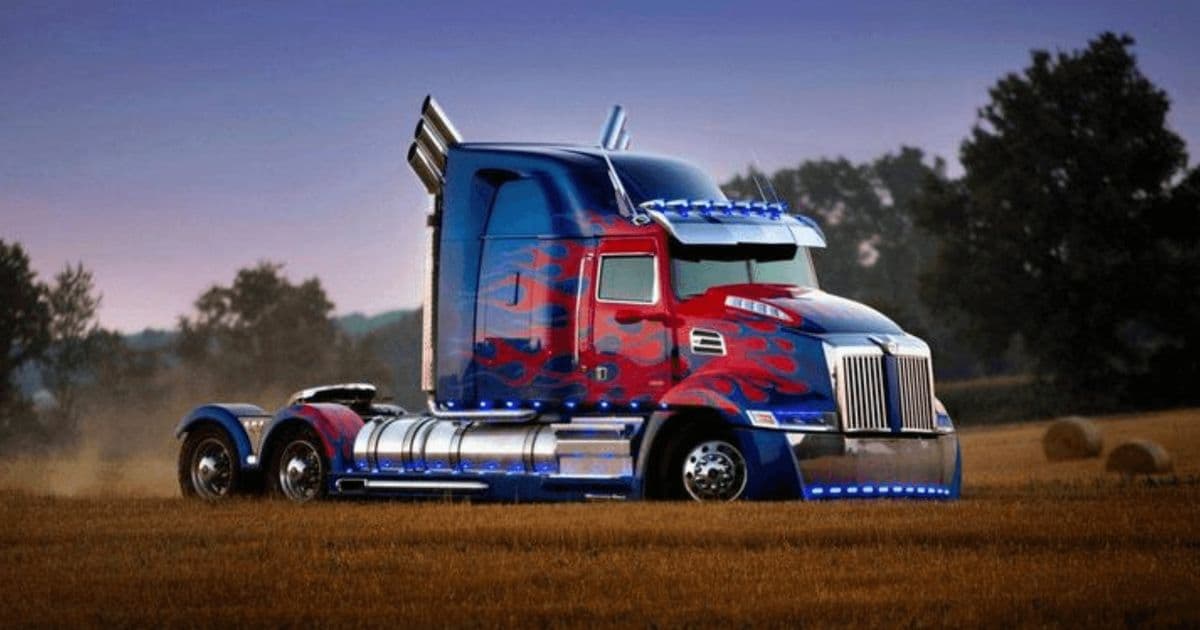
Chinese autonomous driving company Momenta is building an in-house team for autonomous trucking, marking its expansion from passenger vehicles into commercial applications.
Chinese autonomous driving company Momenta is making a significant strategic shift by building a dedicated in-house team for autonomous trucking, according to sources familiar with the matter. This move represents the company's expansion beyond its core passenger vehicle advanced driver assistance systems (ADAS) business into the commercial trucking sector.
Strategic Expansion into Commercial Applications
The company plans to establish an R&D team of several dozen engineers specifically focused on autonomous trucking technology. This is not Momenta's first foray into the commercial vehicle space - over the past two years, the company has made two investments in Zeron, a startup developing high-level intelligent driving systems for new-energy heavy-duty trucks.
According to sources, these investments served a strategic purpose: "One reason Momenta invested in Zeron was to integrate its systems into mass-produced trucks and validate whether the full business loop could work through real-world operations." The company appears to be using these partnerships as a testing ground before committing to a full-scale autonomous trucking strategy.
Building on ADAS Foundation
Passenger-vehicle ADAS remains Momenta's core business, with solutions deployed across more than 160 mass-production vehicle models. This extensive deployment has positioned Momenta as one of China's leading intelligent driving companies, giving it a substantial data advantage in the autonomous vehicle space.
The company's expansion strategy is built on what it calls a "flywheel-style L4 strategy." This approach leverages data generated from mass-produced ADAS vehicles to feed back into algorithm iteration through a closed-loop, data-driven system. This methodology supports Momenta's dual-track strategy of advancing both mass-production autonomous driving solutions and fully driverless systems.
Beyond Trucking: Robotaxi and Delivery Services
Momenta's autonomous trucking initiative is part of a broader expansion that includes Robotaxi services and autonomous delivery. Notably, the company has partnered with Uber to provide Robotaxi services in markets outside China and the United States, demonstrating its ambitions for international growth.
In 2025, Momenta Co-founder and CEO Cao Xudong indicated a shift in technical focus from a mass-production flywheel to an L4 flywheel, with the goal of achieving "driverless vehicles on the car side" for Robotaxi operations by the end of 2025. This technical pivot underscores the company's commitment to advancing toward higher levels of vehicle autonomy.
Industry Context and Implications
The move into autonomous trucking reflects broader industry trends where companies are seeking to diversify beyond passenger vehicles into commercial applications. The trucking sector offers several advantages for autonomous technology deployment, including predictable routes, highway driving conditions, and significant potential for operational efficiency improvements.
For Momenta, the expansion represents both a natural evolution of its technology and a strategic hedge against potential market saturation in the passenger vehicle ADAS segment. By building an in-house team rather than relying solely on partnerships, Momenta is signaling its long-term commitment to the autonomous trucking market and its confidence in developing proprietary solutions tailored to commercial vehicle requirements.
As the company moves forward with this multi-business strategy, the coming years are expected to mark a new phase of commercialization and deployment across its various autonomous driving initiatives, potentially positioning Momenta as a comprehensive provider of intelligent driving solutions across multiple vehicle categories and use cases.
Comments
Please log in or register to join the discussion