
A company called GRU Space is taking reservations for an inflatable Moon hotel with a $1 million deposit, but its plans rely on SpaceX Starship, unproven technology, and a customer base of ultra-wealthy tech enthusiasts.
Everest has been turned into a run-of-the-mill tourist attraction. Space tourism is over now that any celebrity can blast off into orbit. Next up: a hotel on the Moon, now taking reservations for only about six years from now, if you're willing to make a small deposit.
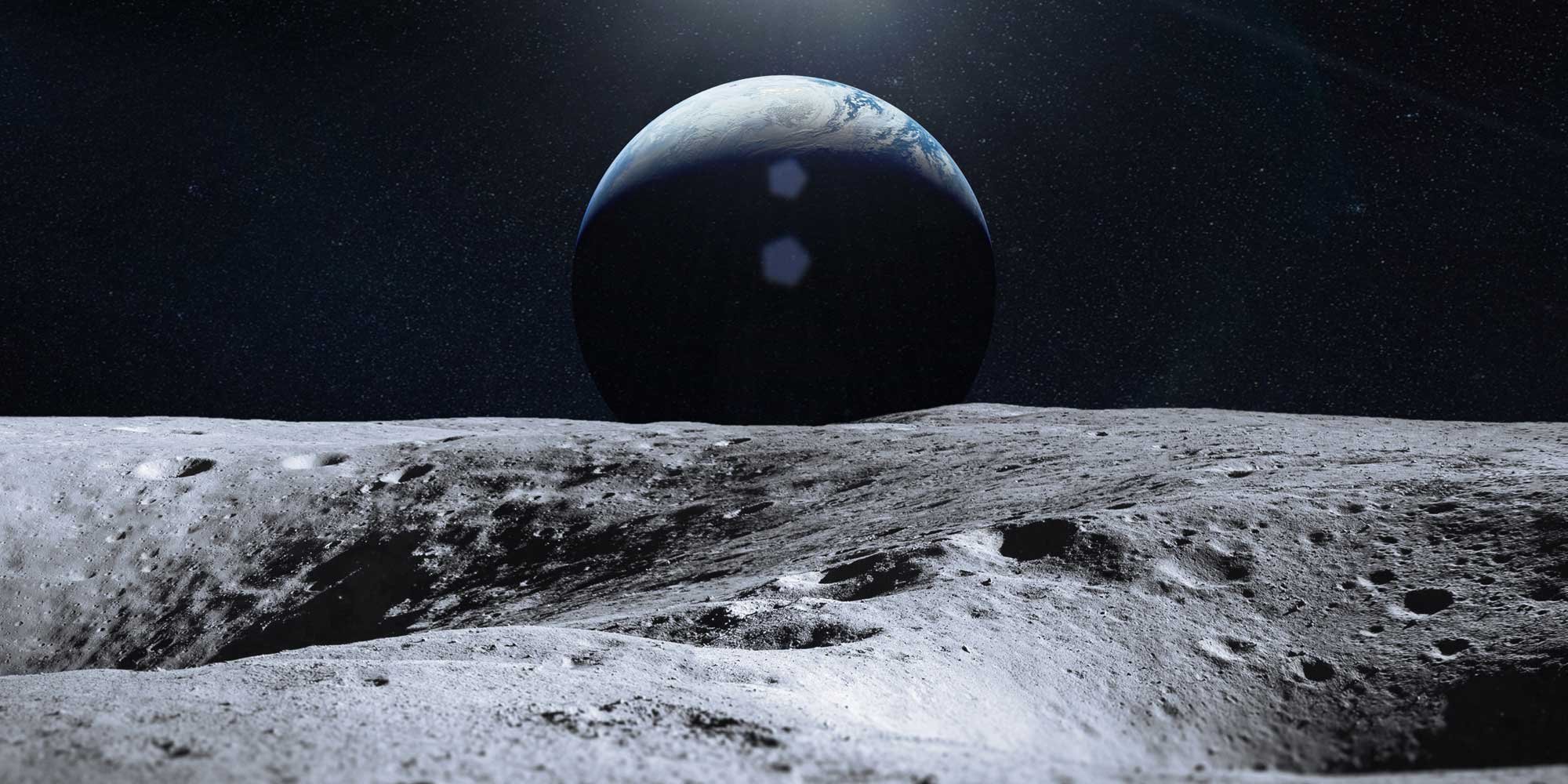
For the low, low deposit cost of either $250,000 or $1 million, depending on the option selected, you can get in on the inflatable ground floor of GRU's definitely-going-to-happen inflatable Moon hotel, which it said it wants to have deployed by 2032. Don't expect to foot the bill of a private five-day lunar expedition for you and up to three others for the meager deposit cost, though. "Final pricing has not yet been determined will likely exceed $10 million," the company states on its reservation website.
Yes, we know that sentence is missing either a coordinating conjunction or some critical punctuation. Cut GRU a break - it's too busy brainstorming Moon hotels to run its website copy through a grammar checker. For those hoping the company has a more grounded explanation of its Moon hotel fantasy elsewhere on its website, sorry - a "whitepaper" included on the site is just as fantasy-filled and hyperbolic as the rest of its corporate persona.
GRU's philosophy: conviction over consensus
"GRU Space rejects the notion that we must wait for external validation or government consensus to build the future," the company says in its whitepaper introduction, echoing a philosophy that's never been problematic in the history of tourist endeavors in hazardous environments. "Instead, we operate on the principle that conviction must bridge the gap between the status quo and the necessary future."
As anyone who saw 2001: A Space Odyssey knows, lunar hotels are absolutely a necessary part of the future.
GRU intends to first build an inflatable space hotel - the one it wants to have up by 2032 - which will follow a projected 2029 mission that will deploy a miniature version of the hotel along with a miniature drill unit, used to collect a sample of regolith as part of the company's plan to use in-situ resources. A second mission in 2031 will deploy a slightly larger test hotel in a lunar pit, where it imagines its eventual full-sized hotel to be inflated due to the protection from micrometeoroids and radiation the lava tube openings provide. The 2031 mission will also include more in-situ resource testing, and the first full-sized hotel will be deployed in 2032.
Once it gets its full-sized, inflatable, four-person hotel built, GRU said it plans to start work on a much fancier 10-person unit built from polymerized lunar regolith that it said will be based on the San Francisco Palace of Fine Arts.
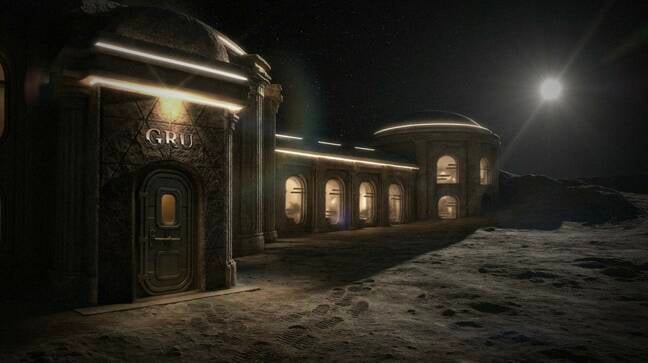
Even the first-generation full-sized hotel, however, will require a SpaceX Starship-sized craft to get it to the Moon, the company said in its whitepaper. Chalk that up as yet another catch that could slow the company down.
The regulatory void and commercial partnerships
The company also doesn't appear to have ownership rights to any of the Moon's surface on which to build anything at all, yet still hopes it will be part of NASA Administrator Jared Isaacman's professed Moon base plans, which GRU believes will necessitate commercial partnerships - and dual-use facilities like a Moon hotel.
"If the U.S. must field a base within the decade, there is no time to invent exotic, bespoke government-only infrastructure from scratch," GRU asserts in its whitepaper. "We believe the only viable path is to lean heavily on commercial hardware and dual-use surface systems with real unit economics."
The company seems to believe that it's going to have "revenue sovereignty," unlike a government agency, thanks to its ability to "tap into high-net-worth private capital" and its marketing of a product people will actually want. That, and "the AI explosion is also creating a new source of ultra wealth," the company said, making this sound more like a scam to separate gullible tech bros from their bank account balances than a concrete plan for lunar tourism.
"By anchoring our roadmap to a commercial product with intrinsic demand … we end-run competitors who are waiting for NASA to request a shovel," GRU said.
Skepticism warranted
With an incredibly small customer base, a whitepaper more full of assumptions, assertions, and Despicable Me–themed hyperbole ("It's time to steal the Moon" - really?) than actual technical details, and a website that suggests the company is more interested in selling Moon hotel merchandise than putting an actual date on the "dawn of lunar tourism," there's a lot of skepticism warranted.
That, and there's no mention of how the hotel is going to be staffed - with that in mind, and no publicly-stated difference between the two reservation packages, perhaps paying the higher price might be worth it?
GRU Space didn't respond to questions for this story.
Comments
Please log in or register to join the discussion