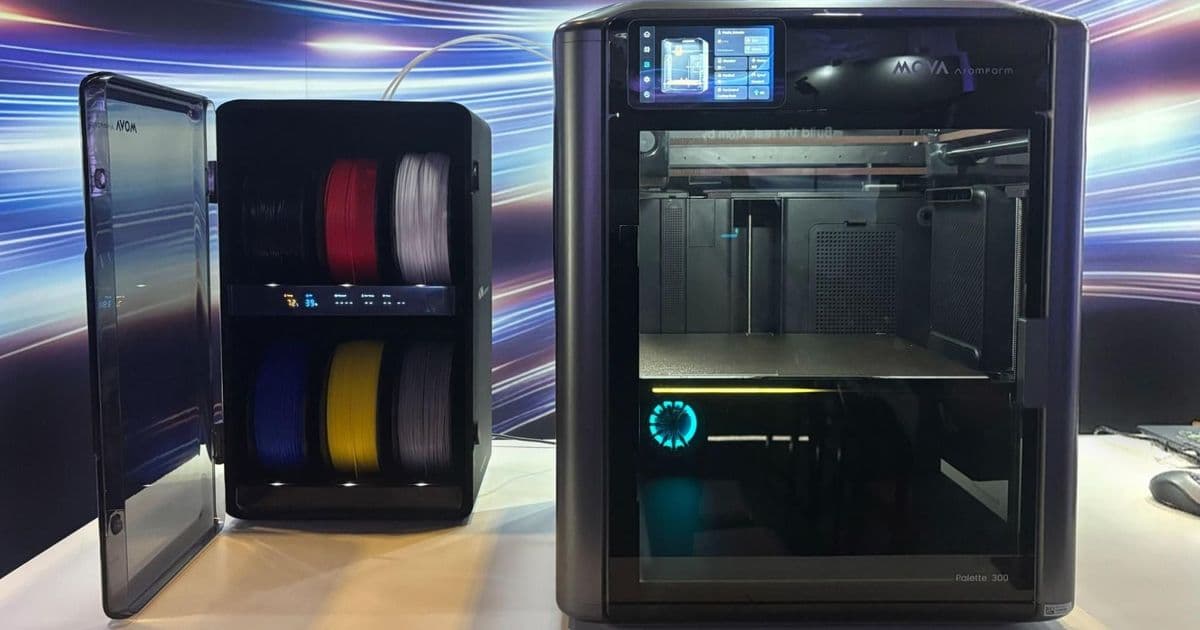
MOVA AtomForm unveiled the Palette 300, a helmet-class Core XY 3D printer with a 12-nozzle system and up to 36 spool capacity, targeting both beginners and professionals.
MOVA AtomForm officially unveiled its fledgling 3D printer at a Silicon Valley media event that felt more like a crash course on 3D printing for lifestyle content creators than a deep dive into the machine's capabilities for those of us familiar with 3D printing. The Palette 300 is a helmet-class Core XY machine with massive potential to rock Bambu Lab's Benchy with a 12-nozzle system that promises to reduce waste while increasing speed.
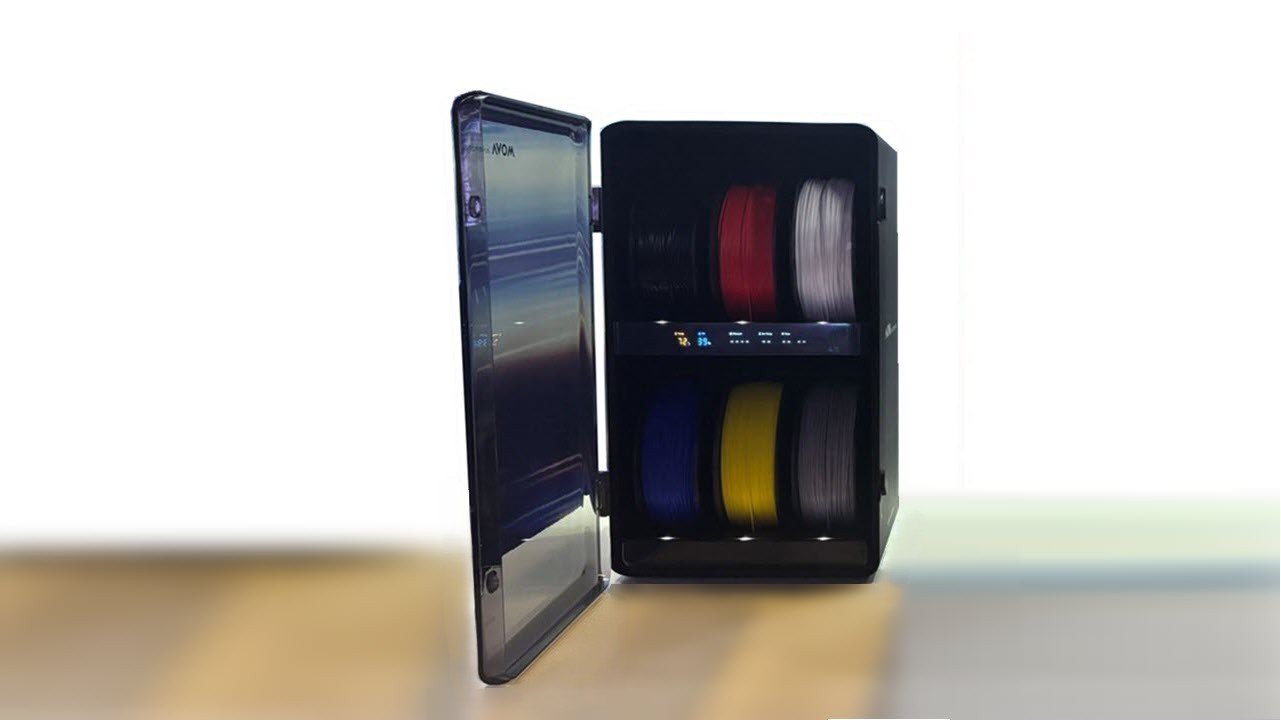
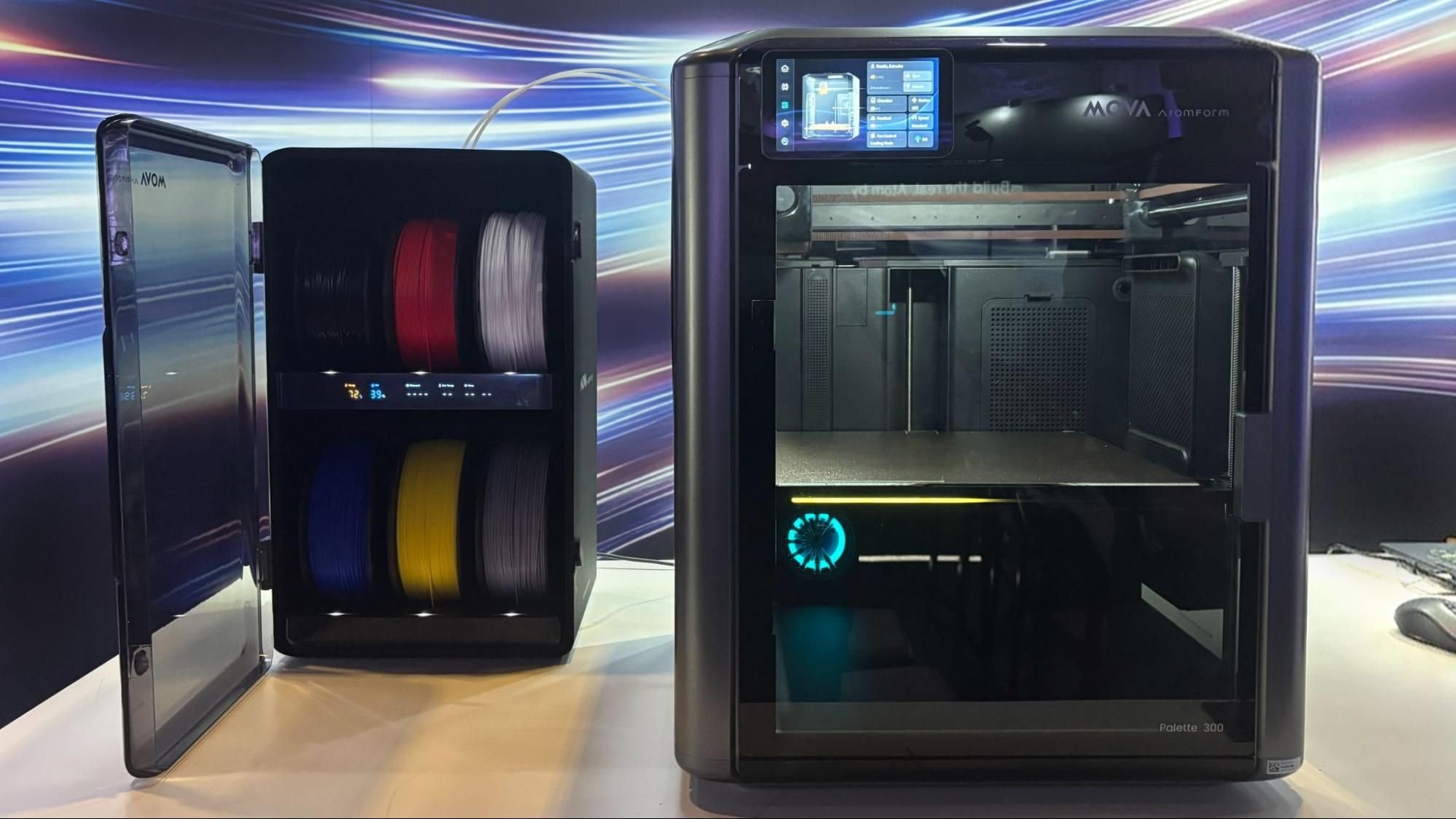
So far, this is all on paper, as the two machines on display were obviously prototypes, with only one printer reluctantly running a three-color print. Despite this hefty price tag, the Palette 300 was presented as a beginner-friendly machine that can handle up to 36 spools of filament. Each RFD-6 can store and feed six spools while doubling as a filament drier. The machine comes with one RFD-6 by default, but can use up to four. However, running more than 12 colors would result in filament waste like any other multicolor machine.
AtomForm has dubbed the nozzle-swapping device the "OmniElement Automatic Nozzle Swapping System." It is an extremely complex-looking system, with 12 nozzles held on a carousel with the tips pointing up. The carousel can be accessed at the bottom of the machine, and is given a cool blue "arc reactor" lighting effect. However, the positioning means the machine needs to reach down, grab a nozzle, flip it right side up, and then screw it into the tool head. It did not appear to have a magnetic attachment like Bambu Lab's H2C.
While the system wasn't explained during the program, I joined several printer reviewers who gathered around one machine to surreptitiously poke at it. The machine will use AtomForm Studio, which is based on Orca Slicer. This is good news as the open source software has already proven itself able to handle several brands of multicolor 3D printers. Orca Slicer is itself a fork of Bambu Studio.
Along with the printer's unveiling, MOVA AtomForm presented a lively discussion on the past, present, and future of 3D printing from a panel of experts ranging from a Stanford professor to a TikTok creator young enough to be his student. Moderated by presenter Isabelle Du, the panel featured 3D printing TikTok creator Robbie Burch (@robbiedoesthingz), retired Stanford adj. professor Barry Katz, and YouTubers Joel Telling (@3dprintingnerd) and Jerry Gomes (@theprinthouse). Telling, a prominent 3D printing educator and advocate, joined Gomes in providing a veteran's perspective on hardware, while Katz, a fellow at IDEO and author of Make it New: A History of Silicon Valley Design, stole the show with his insights on the history of design, the dangers of copyright regulations and ponderings on whether we should fear or embrace AI in 3D printing.
The presentation also lightly touched on AtomWorld, a website that may be like Prusa's Printables or Bambu's MakerWorld to host model files. Though they did not go into great detail, it was mentioned that 3D designers would be compensated in cash for their efforts.
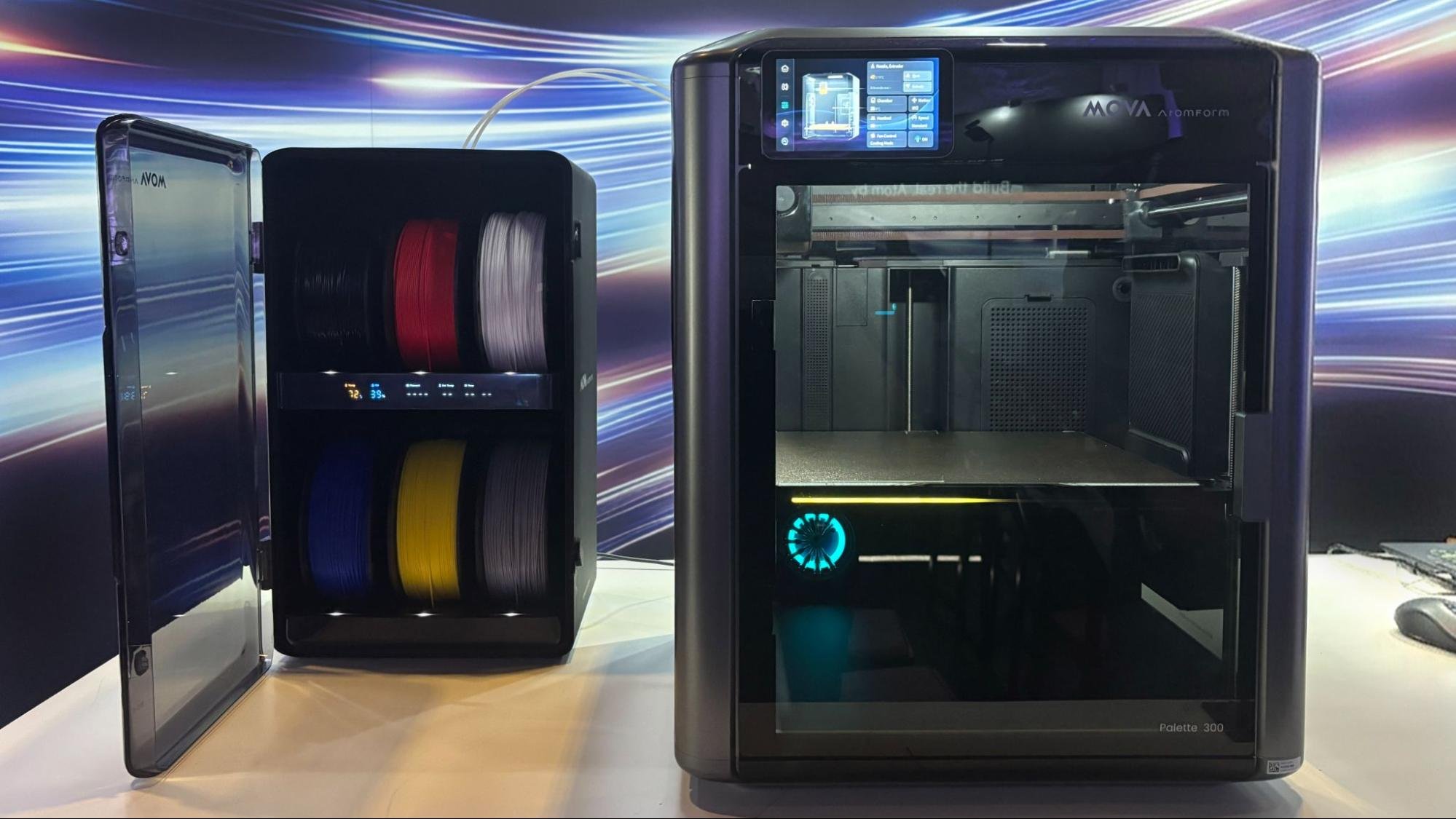
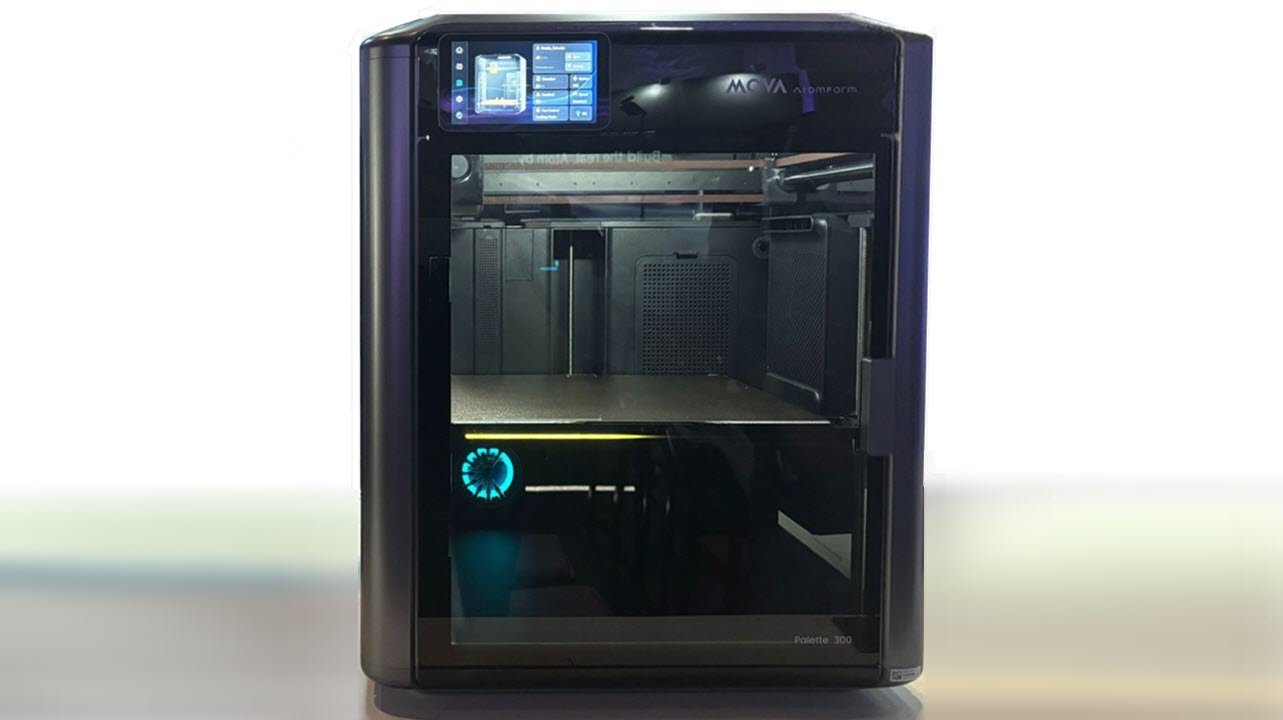
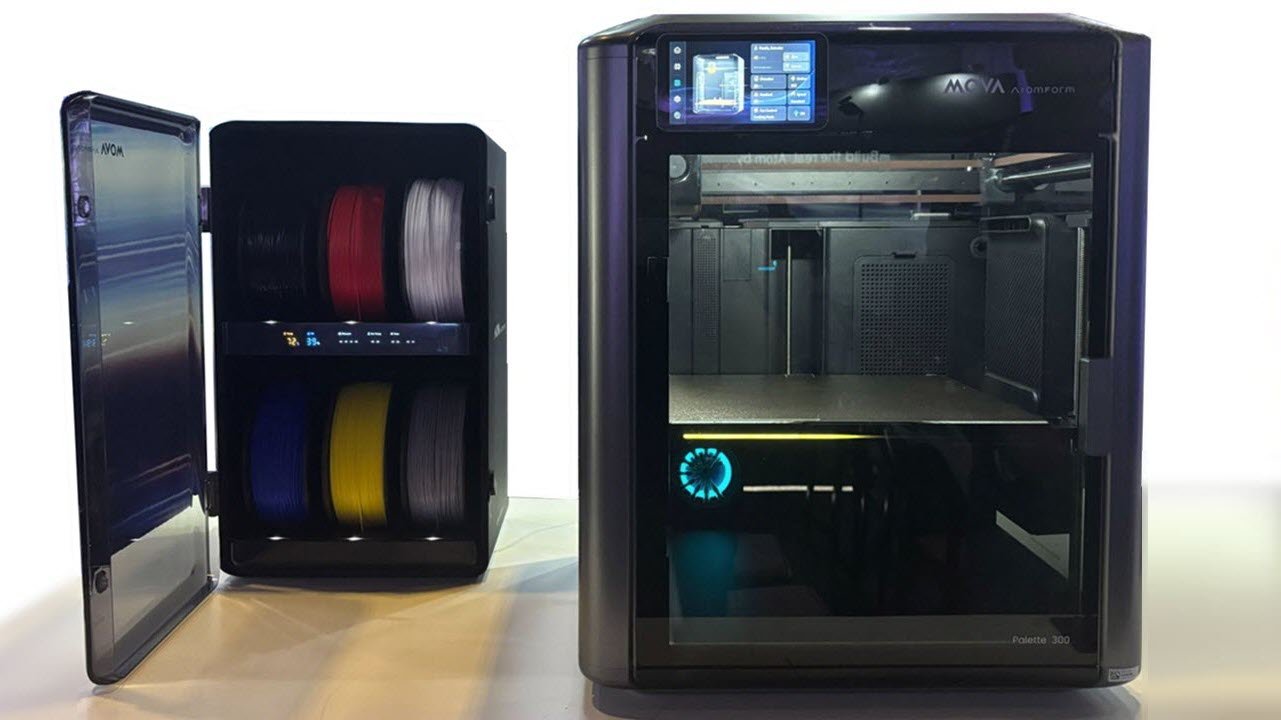
The Palette 300 represents a significant engineering challenge in multicolor 3D printing. Traditional single-nozzle printers achieve color changes through filament switching, which creates purge towers and waste. The 12-nozzle approach theoretically eliminates this waste while enabling true simultaneous multicolor printing. However, the mechanical complexity of swapping nozzles mid-print introduces new failure points and potential alignment issues.
Core XY kinematics, chosen for the Palette 300, offer several advantages for this application. The stationary bed design reduces moving mass, enabling faster print speeds and more precise movements. This is particularly important when coordinating nozzle changes with ongoing print operations. The "helmet-class" designation suggests a robust frame construction, likely using linear rails and metal components rather than the belts and plastic parts found in budget machines.
The RFD-6 filament storage units represent another engineering decision with significant implications. By integrating filament drying capabilities, AtomForm addresses a common pain point in 3D printing—moisture absorption in hygroscopic materials like PLA, PETG, and nylon. The ability to store and feed six spools per unit while maintaining optimal humidity levels could provide a competitive advantage, particularly for users working with engineering-grade materials.
Software compatibility through Orca Slicer's foundation suggests AtomForm is targeting the existing Bambu Lab user base while offering expanded capabilities. Orca Slicer's proven track record with multicolor printing, combined with its open-source nature, provides a solid foundation for the Palette 300's more complex nozzle management system.
The pricing strategy remains unclear, but the hardware complexity suggests a premium positioning. The target market appears to be professionals and serious enthusiasts who value reduced waste and increased print speeds over the simplicity of single-nozzle systems. The beginner-friendly positioning creates an interesting tension—the machine's complexity may actually increase the learning curve compared to more straightforward alternatives.
The panel discussion revealed AtomForm's broader vision for 3D printing's role in design and manufacturing. Professor Katz's comments on copyright regulation highlight the tension between open-source hardware philosophy and commercial interests in the 3D printing ecosystem. His question about embracing versus fearing AI in 3D printing touches on fundamental issues of automation, creativity, and the future of design work.
AtomWorld's proposed compensation model for designers represents a significant departure from existing model repositories. If successful, this could create a sustainable ecosystem for high-quality 3D models, addressing the current imbalance where most designers contribute content without financial reward while platform operators profit from traffic and premium features.
The Palette 300's success will depend on several factors beyond its technical specifications. Manufacturing reliability, software maturity, and customer support will be critical for a company entering a market dominated by established players like Bambu Lab, Prusa Research, and Creality. The prototype status of the displayed machines suggests significant development work remains before commercial availability.
For the 3D printing community, the Palette 300 represents both an exciting technological advancement and a potential fragmentation of the ecosystem. Its success could accelerate the adoption of multicolor printing while its failure might reinforce skepticism about complex, high-maintenance systems. The machine's impact will ultimately be determined not by its specifications on paper, but by its real-world performance and reliability when it reaches users' workshops.
Comments
Please log in or register to join the discussion